Golf 6 1.4 TSI review – if you're researching this car, chances are you already like the idea of owning one. A turbocharged petrol engine, low fuel consumption and decent pulling power, without the complications of diesel ownership. On paper, it sounds ideal, especially when we're talking about the VW Golf 6 (5K), produced from 2008 to 2012. But! Under the bonnet sits the EA111 1.4 TSI engine, and it has one weakness that can turn a good purchase into a very expensive repair. I'll tell you straight – before buying one of these Golfs, you need to know what to listen for, what to check and when to walk away.
Who is the Golf 6 1.4 TSI suitable for?
If you mainly drive around town but occasionally take longer journeys, the Golf 6 1.4 TSI is worth considering. Particularly if you don't want a diesel and prefer a petrol engine with decent pulling power. The 122 bhp version is the simpler option, while the 160 bhp version, also familiar from the Golf GT, is aimed more at driving enjoyment. The trouble is, that extra power comes with extra complexity. And when you're buying a used car, complexity isn't always an advantage.
I'd start by looking at the condition of the individual car rather than its power output. There's no point getting excited about 160 bhp if the engine rattles on the first cold start of the morning. The same applies to the 122 bhp version – a simpler design doesn't mean you can skip the inspection. The service history matters far more than the attractive photos in the advert.
What engines and gearboxes does the Golf 6 1.4 TSI have?
The Golf 6 1.4 TSI comes with two main versions of the EA111 engine. Both run on petrol, but they produce their power in different ways. That's important because you're not simply buying a car with a 1.4 TSI badge on the boot. You're buying a particular mechanical design.
- CAXA – 122 bhp (90 kW). A turbocharged engine and the simpler of the two versions.
- CAVD – 160 bhp (118 kW). An engine with both a supercharger and a turbocharger, giving it twincharging and a more complex design.
- Gearboxes – 6-speed manual or 7-speed DSG DQ200 with a dry clutch.
There's also plenty to consider when choosing a gearbox. The manual is one option, while the DSG DQ200 offers automatic gear changes but has its own characteristic problems. So don't focus entirely on the engine. If you're looking at a car with DSG, you need to check how the gearbox behaves. Even if the engine runs beautifully, juddering when pulling away can spoil the whole experience.
What common Golf 6 1.4 TSI problems do we see?
Timing chain and tensioner
Here's the main problem with the EA111. You start the engine from cold in the morning and hear a rattle for one, two or three seconds before it disappears. Plenty of people assume that because the noise has stopped, everything must be fine. No! That's a characteristic sign of a stretched timing chain and a tensioner that can no longer keep it properly tensioned. If you carry on driving like that, the chain can jump a tooth and damage the engine.
The frustrating part is that the noise might only occur on the first start of the day. Afterwards, the engine runs normally, making it easy to assume there's nothing wrong. That's exactly why I insist on hearing the car start from completely cold, rather than after the seller has already warmed it up. I've covered the issue in more detail in 1.2 and 1.4 TSI: timing chain, tensioner and turbo problems.
Turbocharger
Another area we pay close attention to is the turbocharger. Typical complaints include a rattling wastegate, whistling noises or a loss of power. Owners usually describe it very simply – the car doesn't pull like it used to. But a whistling noise doesn't automatically mean the turbocharger needs replacing. First, we need to establish where the noise is coming from and exactly what's causing the loss of power.
Carbon build-up on the valves and oil consumption
Direct injection in these engines causes carbon deposits to accumulate on the intake valves. Over time, this can lead to an uneven idle and engine misfires. Sometimes the owner notices that the engine isn't running smoothly but can't quite explain what's happening. In cases like these, I don't start replacing parts on a hunch. I start with diagnostics. You can read more about the causes and cleaning methods in our article on carbon build-up on the valves.
Oil consumption is another thing you shouldn't ignore. If the owner tells you the car uses oil, find out exactly what they mean. Don't accept the explanation that all TSI engines are like that. The condition of the engine needs to be checked before you decide whether the car is worth your money.
DSG DQ200
If the Golf has the 7-speed DSG DQ200, pay close attention to how it pulls away. Harsh engagement or juddering, particularly when setting off, is a complaint you shouldn't overlook. A quick lap around the dealership isn't enough to decide that everything is fine. You need diagnostics, a check of the adaptation values and a proper test drive. I've explained the subject in detail in DSG DQ200: why the gearbox jerks and judders.
What should I check before buying?
When choosing a Golf 6 1.4 TSI, I'd start with a cold start, followed by diagnostics and a service history check. I don't care how clean the engine looks or how convincingly the seller tells me everything has been serviced. What matters is what the car itself tells us. Here's the order I'd recommend following.
- Cold start – listen carefully during the first few seconds. Any timing chain rattle is a serious warning sign.
- Diagnostics – check the camshaft deviation values and stored fault codes. Don't rely solely on whether the engine management warning light is illuminated.
- Service history – find out when the engine oil was changed and whether the timing chain has been replaced. It's particularly important to establish whether the updated version was fitted.
- DSG DQ200 – check the adaptation values and take the car for a test drive. Watch for harsh engagement or juddering when pulling away.
We carry out all these checks during a pre-purchase inspection at Das Auto Service. The idea isn't simply to tell you whether the car starts and drives. I want you to understand exactly what you're buying and what signs of trouble are already present before you become its owner. Because once you've bought it, saying "I didn't know" won't fix the engine.
How should I service a Golf 6 1.4 TSI?
Regular servicing is particularly important on this engine because of the timing chain and tensioner. I don't recommend extending engine oil change intervals, regardless of what the LongLife service schedule says. For cars driven in Bulgaria, our rule is clear – change the engine oil and filters every 10,000 km or once a year, whichever comes first. Clean oil matters for the timing chain, and skipping a service offers no advantage whatsoever.
- Engine oil and filters – every 10,000 km or once a year, whichever comes first, regardless of the oil used or the LongLife interval.
- DSG DQ200 – change the gearbox oil every 60,000 km using genuine oil. Adaptation must always be carried out after servicing.
- Spark plugs – replace according to the manufacturer's service schedule.
- Antifreeze – replace every third heating season.
Alongside regular servicing, I recommend paying attention to how the engine runs on its first start of the day. If a new noise appears, don't wait for it to become permanent. The same applies to the gearbox – if it starts juddering, you need to find out why. Early diagnosis makes far more sense than carrying on driving and hoping the problem will disappear by itself.
WARNING! Rattling on a cold start is not "normal for a TSI". It's a characteristic sign of a timing chain and tensioner problem that requires immediate inspection and replacement if confirmed. Don't put it off, because a timing chain that jumps a tooth can cause engine damage.
What's my verdict on the Golf 6 1.4 TSI?
Would I buy a Golf 6 1.4 TSI? Yes, provided the timing chain has been replaced with the updated version, the engine oil has been changed regularly and the inspection reveals no serious problems. I like the 122 bhp version as the simpler choice, while the 160 bhp version offers more driving enjoyment but also greater complexity. I wouldn't buy a car that rattles on start-up and has no clear service history. No matter how good it looks, that simply isn't enough.
The truth is, the Golf 6 1.4 TSI isn't a car you should dismiss purely because of the engine's reputation. But it's not a car you should buy with your eyes closed either. Check the timing chain, turbocharger, engine operation and DSG gearbox, if fitted. Then make your decision based on the car's condition, not the seller's promises.
Tip from Kris Mladenov: Listen to the car first thing in the morning, when the engine is completely cold, before you even start discussing a purchase. Those first three seconds can tell you more than the seller will. If it rattles, don't accept the explanation that it's normal for a TSI. Insist on diagnostics and a timing chain inspection.
I hope you've found this article useful! If you have, I'd appreciate you sharing it with a friend who drives a Golf 6 1.4 TSI or is thinking of buying one. My mission is simple – when I know something, I want more people to know it too. Because an informed owner makes better decisions and doesn't have to learn everything through expensive repairs.
The solution in our shop

Genuine Longlife III FE 0W30 oil 5L
LongLife III oil for regular engine servicing. For cars driven in Bulgaria, we change it together with the filters every 10,000 km or once a year, regardless of the LongLife interval.
View in shop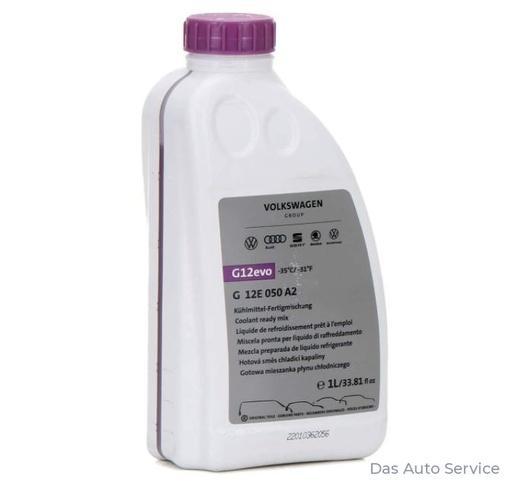
Genuine VAG G12Evo antifreeze G12E050A2 1.0l
Genuine G12evo antifreeze for the cooling system. At our workshop, we replace the antifreeze every third heating season.
View in shopRead more
- Pre-purchase inspection
- DSG and S tronic gearbox repair
- 1.4 TSI Timing Chain Problems: Rattle and Turbo Noise
- DSG DQ200 Problems: Jerking and Harsh Gear Changes
- TFSI Intake Valve Carbon Build-Up: Causes and Cleaning
Frequently asked questions
What's the timing chain problem on the 1.4 TSI?
On EA111 engines, the timing chain can stretch and the tensioner may no longer hold it correctly. The characteristic symptom is a rattle lasting 1–3 seconds on a cold start. If the chain jumps a tooth, it can damage the engine.
Which is better – 122 or 160 bhp?
The 122 bhp CAXA is the simpler turbocharged version. The 160 bhp CAVD has both a supercharger and a turbocharger, offering more driving enjoyment but also greater complexity. I'd choose based on the condition and service history of the individual car.
Does the Golf 6 1.4 TSI use oil?
Oil consumption is something you need to check before buying. If the engine uses oil, don't automatically accept it as normal. Find out what's causing it.
Should I check the DSG DQ200 before buying?
Yes. Check the adaptation values and take the car for a test drive to see whether the gearbox engages harshly or judders when pulling away. Don't skip this inspection just because the engine runs well.