You're sitting at traffic lights when suddenly the red oil warning light comes on. You give the engine a little rev, the light goes out and you tell yourself it's probably just a faulty sensor. But this is one of the most serious warning lights on your dashboard because it could mean your engine isn't getting enough oil pressure. And the worst part? When the light goes out as you rev the engine, many people assume the problem has gone away. It hasn't! I'll explain why the oil pressure warning light comes on at idle, what could be causing it and why you shouldn't keep driving.
What does the red oil pressure warning light mean?
The red oil warning light tells you that the oil pressure may have dropped below the safe minimum. Engine oil doesn't just sit inside the engine lubricating parts. It's pumped under pressure to the places where metal surfaces move against each other. If that pressure isn't high enough, the protective film of oil starts to break down and parts wear out very quickly. That's why this warning light has nothing to do with an ordinary service reminder. It's warning you about a problem that could destroy your engine.
So why does it come on just as you stop at traffic lights? Because at idle, the engine is running at its lowest speed and the oil pump produces the least pressure. If there's wear, a blockage or another problem in the system, that's when the pressure can drop below what's needed. When you rev the engine, the pump spins faster, the pressure may temporarily increase and the light goes out. But! That doesn't mean your engine is now protected.
Can I keep driving if the oil light goes out when I rev?
No! This is the most important thing I want you to remember from this entire article. If the red oil pressure warning light comes on, pull over somewhere safe and switch off the engine. Don't try revving it to see whether the light goes out, and don't attempt to drive to the workshop. The reason is simple: if the oil pressure really is low, every extra minute the engine runs could cause serious damage.
The engine bearings and turbocharger rely on a constant supply of pressurised oil. When that supply disappears, metal parts start running without the protection they need and can be damaged in literally minutes. And repairing an engine in that condition is a completely different matter from changing the oil or replacing a sensor. That's why I'd much rather see the car arrive at our workshop on a recovery truck than arrive with an engine that's already knocking. The difference can be enormous.
What causes the oil pressure warning light at idle?
There are several possible causes, and that's exactly why I don't like seeing people replace parts based on guesswork. The same red warning light can appear because of a faulty sensor or serious wear inside the engine. You can't tell which one it is just by looking at the dashboard. Here's what we check.
- Low engine oil level. If there isn't enough oil in the engine, the pump may struggle to maintain the required pressure. This is one of the first things we check, but it doesn't mean topping up the oil will automatically solve the problem.
- Old, diluted or incorrect engine oil. Oil needs to maintain the right properties to protect the engine. If it's too old, diluted or doesn't meet the required specification, the pressure may become too low, especially at idle.
- Worn oil pump or a problem with its drive. The oil pump is responsible for supplying oil under pressure. Some 2.0 TDI engines with balance shafts have a well-known problem with the oil pump drive. I've covered it in detail in my article about the 2.0 TDI oil pump problem.
- Blocked oil pickup strainer in the sump. The strainer is a mesh filter through which the oil pump draws oil from the sump. If it becomes blocked, not enough oil reaches the pump and the pressure can drop.
- Worn engine bearings. When the bearings inside the engine wear out, oil escapes through the larger clearances and the pressure can fall. This is already a serious mechanical problem.
- Faulty oil pressure sensor. Yes, the sensor itself can send an incorrect signal even when the actual oil pressure is normal. This is the least serious possibility on the list, but it needs to be confirmed by measuring the pressure, not by guessing.
How do we find out what's causing the problem?
At Das Auto Service, we start with the most important question: does the engine actually have low oil pressure? I don't consider simply reading fault codes, clearing them and telling the customer to drive around a proper diagnosis. We need to know what's really happening inside the engine. That's why we follow a specific order of checks.
- We check the oil level and condition. This tells us whether there's enough oil and whether the oil itself could be part of the problem.
- We measure the oil pressure with a mechanical pressure gauge. This tool shows the actual pressure, regardless of what the car's sensor is reporting. It's this test that tells us whether the warning is genuine.
- We check the oil pressure sensor and its wiring. If the measured pressure is normal, we look for the cause of the incorrect signal.
- We inspect the oil pickup strainer and oil pump. If the pressure really is low, we need to find out why the oil isn't reaching the engine as it should.
WARNING! Don't blindly top up the oil and carry on driving just to "see if the light goes out". Even if the oil level is normal, the pressure could still be dangerously low. The first step is to measure it with a pressure gauge.
How can I reduce the risk of oil pressure problems?
The most important thing is not to leave your engine oil in for too long. For cars driven in Bulgaria, I recommend changing the engine oil and all filters every 10,000 km or once a year, whichever comes first. That includes the oil filter, fuel filter, air filter and cabin filter. It doesn't matter whether you're using LongLife oil. If you want to understand why I insist on this interval, read when to change your engine oil and filters.
One more thing: not all dashboard warning lights mean the same thing. Some allow you to drive safely to a workshop, but the red oil warning light isn't one of them. That's why I've put together the most important warnings in Dashboard warning lights: which are dangerous and which can wait. Give it a read, because sometimes reacting correctly in those first few seconds can save your engine.
Tip from Kris Mladenov: If the red oil pressure warning light flashes even once, don't wait for it to happen again. Switch off the engine and arrange for the car to be transported to a workshop. Believe me, a recovery truck costs a lot less than a new engine, and measuring the oil pressure will tell us whether the problem is serious.
I hope you've found this article useful! If you have, I'd really appreciate you sharing it with a friend who drives an Audi, VW, Škoda, SEAT, Cupra, Porsche, Bentley or Lamborghini. My mission has always been simple: when I know something, I want more people to know it too. Because sometimes getting the right information at the right time can save you a lot of trouble and a ruined engine.
The solution in our shop

Genuine Longlife III FE 0W30 oil 5L
Genuine LongLife III oil is an option for engines designed to use it. What matters is choosing the correct oil and not extending the oil change interval.
View in shop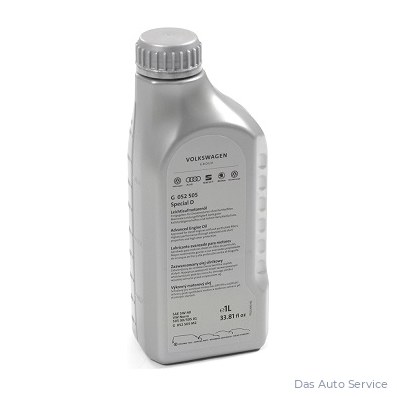
Genuine SpecialD 5W40 Volkswagen diesel oil 1L
SpecialD 5W40 oil is designed for the pump-injector diesel engines it's suitable for. Choosing the correct oil is important for protecting your engine.
View in shopRead more
- Diagnostics
- Engine overhauls
- Dashboard warning lights: which are dangerous and which can wait
- 2.0 TDI Oil Pump Failure: The Balance Shaft Problem
- VAG Oil Change Interval: When to Service Your Car
Frequently asked questions
Why does the oil pressure warning light come on at idle?
Because at low engine speeds, the oil pump produces the least pressure. If there's a problem with the oil or pump, or wear inside the engine, the pressure can drop below the safe minimum and trigger the warning light.
Can I drive if the oil pressure warning light is flashing?
No. Pull over somewhere safe, switch off the engine and get help from a workshop. Continuing to drive could cause severe engine damage in just minutes.
Could it just be a faulty oil pressure sensor?
Yes, that's possible. But we first need to measure the actual oil pressure with a mechanical pressure gauge. We can't risk damaging the engine based on a guess.
Why does the oil pressure warning light go out when I rev the engine?
At higher engine speeds, the oil pump may produce more pressure, causing the warning light to go out temporarily. That doesn't mean the problem has been fixed or that it's safe to keep driving.