If you're looking for a Passat B8 2.0 TDI review, you've probably already read all sorts of opinions about the VW Passat B8 2.0 TDI 150 hp and 190 hp versions. And there's a good reason for that. The Passat B8 (3G), produced since 2014, is the most commonly imported large Volkswagen from Germany. It's spacious, comfortable and built to cover serious mileage. But here's something I really want you to understand. The B8 is considerably more complicated than the B6 and B7. More technology means more things that can go wrong. I'll tell you what we see at Das Auto Service and what I'd personally check before spending my own money on one.
Who is the Passat B8 2.0 TDI best suited to?
If you travel a lot, have a big family and need a car you can rely on every day, the Passat B8 is a very good choice. It loves long journeys, not constantly crawling around the same few city streets. There's also the Alltrack with 4MOTION, which is great for mountain trips and rougher roads. But don't assume that because it's a practical family car, it'll be cheap to maintain. With the B8, I'm far more interested in its mechanical condition than how shiny it looks in the photos.
Which engines and gearboxes are available in the Passat B8?
We're talking about the 2.0 TDI diesel from the EA288 family. We'll look at the 150 and 190 hp versions. Both are good engines if the car has been properly checked and maintained. Personally, though, I wouldn't choose based on horsepower alone. What matters more is which gearbox you're getting and how the power reaches the wheels.
- 2.0 TDI EA288 – 150 and 190 hp versions.
- Gearboxes – 6-speed manual or a wet-clutch DSG with 6 or 7 gears, depending on the version.
- 4MOTION and Alltrack – all-wheel drive with fifth-generation Haldex.
What are the common problems with the Passat B8 2.0 TDI?
Now this is where things get interesting. The EA288 has several systems I really want you to check carefully, because you might not notice a thing on a short test drive. The car can drive beautifully, but once we connect the diagnostic equipment, a completely different story comes out. That's why seeing the engine start and the check engine light stay off isn't enough for me. I want to know what's actually happening inside those systems.
The AdBlue system
This is one of the Passat B8's biggest headaches. The usual troublemakers are the pump, heater and NOx sensors. Things get particularly unpleasant when a countdown appears on the dashboard, showing how many kilometres you've got left before the engine won't start. We're not talking about some annoying little warning light you can simply ignore. I've explained exactly how the system works and what tends to fail in my article about AdBlue on the 2.0 TDI EA288.
The EGR cooler
The EGR cooler is another weak point on the EA288. You know the story: "The coolant keeps disappearing, but there's no leak anywhere." You keep topping it up, watching the expansion tank and wondering where it's all going. But just because there's no puddle under the car doesn't mean everything is fine. If the coolant level keeps dropping, we need to find out why. Constantly topping it up isn't a solution.
The DPF
The Passat B8 2.0 TDI is built for the open road. If you mainly drive it around town, the DPF starts getting clogged and the problems begin. Think carefully about that, especially if you're buying a diesel just to cover a few kilometres each day. It might be a fantastic car, but simply the wrong one for the way you drive. That's why I always ask how you're planning to use it before telling you whether I'd recommend it.
DSG and Haldex
The wet-clutch DSG needs an oil change every 60,000 km, and genuine oil is a must. We always carry out an adaptation afterwards. If the car has 4MOTION, there are two more oils you need to think about – the Haldex 5 oil and the rear differential oil. We change both every 30,000 km. Don't leave them for "some other time". I've explained more about these gearboxes in my article about the DSG DQ381 and DQ500.
What should you check before buying a Passat B8 2.0 TDI?
I wouldn't buy a Passat B8 just because the paintwork shines, the interior looks tidy and it's managed a quick lap around the dealer's forecourt. Many of these cars have been company vehicles, and their genuine mileage matters enormously. Even more important is how they've been maintained over those kilometres. Here's what I'd definitely check before handing over my money.
- A full diagnostic check of the AdBlue system, NOx sensors, EGR and DPF. Just because there are no warning lights on the dashboard doesn't mean everything is fine.
- The coolant level and any signs that the car is losing coolant.
- When the DSG was last serviced and, if it's a 4MOTION, when the Haldex was serviced too.
- The genuine mileage and the car's history, especially if it's been a company vehicle.
That's exactly why we offer a pre-purchase inspection. I'm not trying to put you off the car. I want you to know exactly what you're buying before you pay for it. Because there's a huge difference between a properly checked Passat and one that simply looks good.
What's the correct Passat B8 2.0 TDI service schedule?
This is one thing I'm absolutely firm about. Don't wait for something to break before thinking about servicing. With this Passat, keeping on top of maintenance is particularly important for the engine, DSG and drivetrain. Let me tell you exactly which service intervals we follow at our workshop.
- Engine oil and filters – every 10,000 km or once a year, whichever comes first. It doesn't matter which oil you use or what the LongLife interval says.
- DSG – we change the oil every 60,000 km, using genuine oil only, and always carry out an adaptation afterwards.
- Haldex 5 and rear differential – we change both oils every 30,000 km.
- AdBlue – use only fluid that meets ISO 22241. No extra "additives".
I've laid out the full maintenance plan in the VW Passat B8 2.0 TDI service schedule. I'd also recommend bringing the car in for an inspection every 6 months. That way, you'll know how it's doing instead of finding out there's a problem when something has already broken.
WARNING! Don't let the AdBlue countdown reach zero. If a fault appears and the car starts counting down the kilometres until "Engine start not possible", get it diagnosed immediately. Don't tell yourself, "I'll just drive it a bit longer." This really isn't something worth putting off.
Is the Passat B8 2.0 TDI worth buying?
In my opinion, yes. The Passat B8 2.0 TDI is a brilliant car for travelling and for a big family, as long as you know what you're buying. I'd look for one with a properly checked AdBlue system, no coolant loss and a proven gearbox service history. If it's a 4MOTION, I'd definitely check the Haldex too. Choose based on condition, my friend, not just the equipment and horsepower.
Advice from Kris Mladenov: Whenever I inspect a Passat B8 before purchase, I always check the AdBlue system. To me, it's the new "EGR" on these engines – something you simply can't afford to overlook. Check it alongside the EGR cooler, DPF and DSG service history.
I hope I've helped you out! If I have, send this article to a friend who drives a Passat B8 or is thinking of buying one. The way I see it is simple – if I know something important about these cars, I want you to know it too. That way, we can all make better decisions and save ourselves a lot of unnecessary headaches.
The solution in our shop
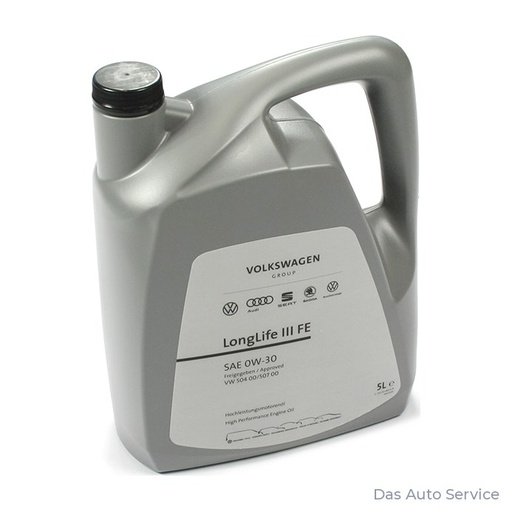
Genuine LongLife III FE 0W30 5L engine oil
LongLife III oil is a good choice for the engine. But whatever oil you use, change it every 10,000 km or once a year.
View in our shop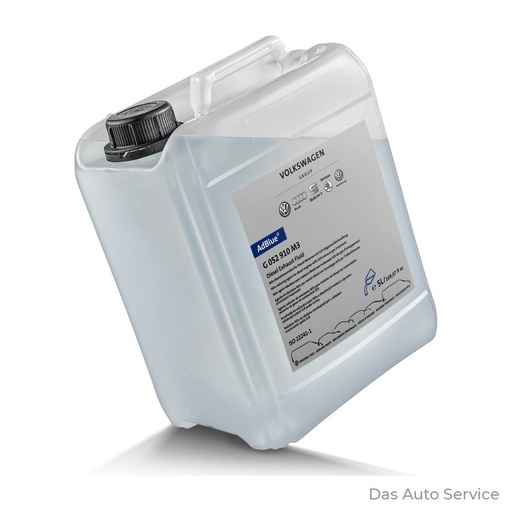
Genuine VAG AdBlue® fluid G052910M4 10 l
Genuine AdBlue in a 10-litre container for the exhaust emissions treatment system. The important thing is that the fluid meets ISO 22241.
View in our shop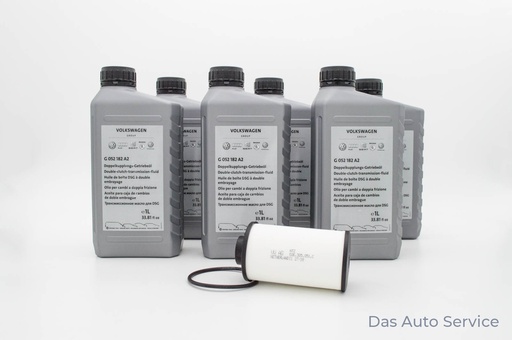
Genuine service kit for the 6-speed DSG DQ250, including oil, filter and seals. We always carry out an adaptation after the oil change.
View in our shopRead more
- Pre-purchase inspection
- Diagnostics
- VW Passat B8 2.0 TDI service schedule
- AdBlue on the 2.0 TDI (EA288): Engine won't start after 1,000 km
- Wet-clutch DSG DQ381 and DQ500: When should you change the oil?
Frequently asked questions
Passat B8 2.0 TDI – should I choose 150 or 190 hp?
Both EA288 versions are good choices. I'd look at the genuine mileage, condition and service history first. Horsepower isn't the most important thing.
What AdBlue problems does the Passat B8 have?
The most common troublemakers are the pump, heater and NOx sensors. If something fails, the countdown to "Engine start not possible" can begin. Don't wait around. Get the car diagnosed.
When should I change the Haldex oil on a Passat B8 4MOTION?
On Haldex 5, we change the oil every 30,000 km. We also change the rear differential oil at the same interval. Don't skip either one.
How often should the DSG gearbox be serviced on a Passat B8?
We service every DSG version with genuine oil every 60,000 km. After the oil change, we always carry out a gearbox adaptation.