You're looking at a SEAT Leon 1.4 TSI because you want a turbocharged petrol engine that drives well, costs less than the diesel and feels livelier than a naturally aspirated engine. Sounds good, doesn't it? But whenever someone asks me for my opinion on the SEAT Leon 1.4 TSI, the first thing I want to know is which generation we're talking about. That's because the Leon 2 and Leon 3 have different engines, different timing systems and very different problems. One might greet you with a rattling timing chain, while the other might have a leaking water pump. And those are exactly the things I want you to know before you hand over your money.
Who is the SEAT Leon 1.4 TSI right for?
If you mainly drive around town, occasionally head out on longer journeys and don't cover 30,000 km a year, this Leon makes a lot of sense. You get a turbocharged petrol engine that's enjoyable to drive every day, without having to worry about a DPF and the problems that come with it. Not everyone needs a diesel, no matter how much people praise them on the forums. What matters is choosing the right engine, because the 1.4 TSI badge alone doesn't tell you enough.
What engines and gearboxes does the SEAT Leon 1.4 TSI have?
This is where the big difference between the two generations comes in. The Leon 2, known as the 1P, was produced from 2005 to 2012, while the Leon 3, known as the 5F, was produced from 2012 to 2020. Both are available as a 1.4 TSI, but what's under the bonnet is quite different. So don't assume every review of this engine is talking about the same car.
- SEAT Leon 2 – 1.4 TSI EA111, 125 hp. This engine has a timing chain, which is one of its main weak points.
- SEAT Leon 3 – 1.4 TSI EA211, 122 and 140 hp, plus a 150 hp version with ACT – a system that switches off some of the cylinders. This engine uses a timing belt instead of a chain.
- Gearboxes – manual versions are available, and some cars also come with the 7-speed DSG DQ200 with a dry clutch.
When you're looking through adverts, don't judge a car by its horsepower alone. Check which generation it is, exactly which engine it has and what gearbox it's fitted with. Those details determine what you need to inspect and where an expensive repair might be waiting for you.
What problems do we see at the workshop?
Why does the timing chain rattle on the Leon 2?
The timing chain and tensioner problem on the EA111 is well known. Owners usually describe it like this: "When I start the engine in the morning, something rattles for a few seconds, then it stops." And that's where people make a mistake. Because the noise goes away, they assume everything is fine. But the chain and tensioner can cause serious trouble, and in the worst case, the chain can jump a tooth. If you want to understand exactly why this happens, read 1.2 and 1.4 TSI EA111: timing chain rattle.
Why does the Leon 3 lose coolant?
The EA211 no longer has a timing chain, which removes one of the biggest worries with the older engine. But! There's another weak point here – the plastic housing that contains the water pump and thermostat. Over time, it can start leaking coolant. So if the level in the expansion tank keeps dropping, don't assume that topping it up is normal. I've explained this problem in detail in 1.4 TSI EA211: water pump and thermostat.
Why does the DSG DQ200 jerk and judder?
If your Leon has the 7-speed DSG DQ200, pay close attention to how it pulls away and changes gear. This gearbox uses a dry clutch, and when something goes wrong, owners usually tell me: "The gearbox jerks", "It judders when I pull away" or "It bangs into gear." Don't immediately assume it's the mechatronic unit – the electronic and hydraulic system that controls the gearbox. First, we need to find out what's actually causing the problem. For more details, read DSG DQ200: why the gearbox jerks and judders.
What should I check before buying a SEAT Leon 1.4 TSI?
Don't buy a car just because the interior looks nice, the paintwork is shiny and the seller tells you "everything's been serviced". These cars have specific weak points, and those are exactly what you need to check. Here's what I'd look at.
- On a Leon 2, ask to hear the engine start from completely cold. Listen carefully for a timing chain rattle during the first few seconds after starting.
- On a Leon 3, check the coolant level and look for signs of leaks around the water pump and thermostat.
- If the car has a DSG gearbox, test how it pulls away on a hill and use diagnostics to check the gearbox adaptation values.
These checks could save you a nasty surprise after buying the car. If you're not sure what you're looking at, it's better to book a pre-purchase inspection. I want you to know exactly what you're buying, rather than discovering the problems once the car is already yours.
How should I service my SEAT Leon 1.4 TSI?
There's nothing complicated here, as long as you don't wait for the car to tell you something has broken. I recommend shorter service intervals because I want your engine to last, not just meet the manufacturer's environmental requirements. LongLife doesn't mean you should leave the same oil in the engine for as long as possible.
- Engine oil and all filters – oil, fuel, air and cabin – change them every 10,000 km or once a year, whichever comes first. This applies regardless of the oil you use or the LongLife service interval.
- DSG – change the gearbox oil every 60,000 km using genuine oil. Always carry out a gearbox adaptation after the service.
- EA211 timing belt – on engines built after 2015, replace it every 180,000 km or 5 years, whichever comes first, together with the tensioner and idler pulleys.
- Crankcase ventilation filter on the petrol engine – replace every 60,000 km.
If you'd like to see the service schedule for the same engine in another model, have a look at the VW Golf 7 1.4 TSI service schedule. The important thing is not to skip servicing just because the car still drives perfectly well.
IMPORTANT! A rattling noise on a cold start in the Leon 2 1.4 TSI is not "just how the engine sounds". It could mean there's a problem with the timing chain and tensioner. Don't put off getting it checked, because the chain could jump a tooth.
Which SEAT Leon 1.4 TSI would I choose?
If I had to choose between the two generations, I'd go for the Leon 3 with the EA211 engine. For me, it's the less worrying choice because it doesn't have the troublesome timing chain found in the EA111. That doesn't mean you can ignore the water pump and thermostat. The Leon 2 isn't necessarily a bad buy either, but I'd only consider one with a clear service history and proof that the timing chain has been replaced. Otherwise, you risk buying someone else's problem.
Tip from Kris Mladenov: If you're looking at a Leon 2, don't settle for the seller saying "the chain's been changed". Ask which timing chain kit was fitted and whether it was the latest revised genuine kit. Ask for proof of the repair. That will tell you far more about the car than the seller's promises.
I hope you've found this article useful! If you have, I'd really appreciate you sharing it with a friend who drives a SEAT Leon 1.4 TSI or is thinking about buying one. My mission is simple – when I know something useful, I want more people to know it too. Because checking something at the right time can save you a major repair, and at the end of the day, that repair comes out of your own pocket.
The solution in our shop

Genuine Longlife III FE 0W30 oil 5L
Genuine LongLife III oil is a suitable choice for servicing when it meets the requirements of your particular engine. Regardless of the LongLife label, I recommend changing it every 10,000 km or once a year.
View in shop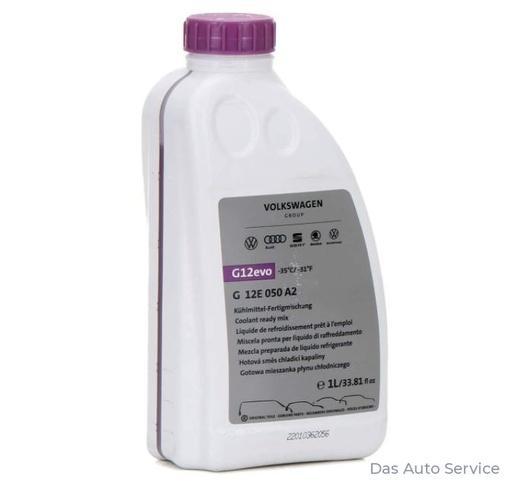
Genuine VAG G12Evo antifreeze G12E050A2 1.0l
Genuine G12evo coolant is suitable for topping up and for use after replacing the water pump, provided it meets the cooling system's requirements.
View in shopRead more
- Pre-purchase inspection
- Routine servicing
- 1.4 TSI Timing Chain Problems: Rattle and Turbo
- 1.4 TSI EA211: water pump and thermostat
- DSG DQ200 Problems: Jerking and Gearbox Faults
Frequently asked questions
What are the most common SEAT Leon 1.4 TSI problems?
On the Leon 2 with the EA111 engine, the main problem is the timing chain and tensioner. On the Leon 3 with the EA211 engine, watch out for water pump and thermostat leaks. If the car has a DSG DQ200 gearbox, also check for jerking and juddering.
Does the SEAT Leon 1.4 TSI have a timing chain or a timing belt?
The Leon 2 with the 125 hp EA111 engine has a timing chain. The Leon 3 with the 122–150 hp EA211 engine has a timing belt.
Does the SEAT Leon 1.4 TSI use oil?
I wouldn't tell you that every 1.4 TSI burns oil. Check the particular engine and its history rather than relying entirely on what people say on forums.
Which is better – the Leon 2 or Leon 3 1.4 TSI?
I'd choose the Leon 3 with the EA211 engine. The Leon 2 can also be a good option, but only if it has a clear service history and proof that the timing chain has been replaced.