How many times have you seen a SEAT Leon Cupra advertised as being in "perfect condition, with a few extra horses"? Those are exactly the words that make me look twice as carefully. The Cupra is the quick Leon that drives like a GTI, costs less and can put a huge smile on your face. But there's a catch! There's a world of difference between a well-looked-after Cupra and one that's had the life thrashed out of it. I'm talking about the second-generation 1P (2007–2012) with the 2.0 TFSI producing 240 hp, the Cupra R with 265 hp, and the third-generation 5F (2014–2020) with the 2.0 TSI EA888 producing 265–300 hp. I'll tell you what I look for and where I'd be careful before handing over my money.
Who is the SEAT Leon Cupra for?
If you love driving rather than just getting from A to B, you'll definitely enjoy the Cupra. It's a car for someone who wants to feel the engine, enjoy the acceleration and get out of the driver's seat with a smile. But there's another side to it. You need to enjoy looking after your car just as much as driving it. Because a powerful engine won't put up with an owner who only remembers the workshop exists when the engine warning light comes on.
I love cars like these when they end up in the right hands. You don't need to keep one locked away in a garage like a museum piece. Quite the opposite. These cars were made to be driven. You just need to know when to put your foot down and when to give the car some mechanical attention. Otherwise, the fun can quickly turn into an expensive repair.
What gearboxes does the SEAT Leon Cupra have?
The difference between the generations matters here, especially if you're buying used. Don't just look at the horsepower in the advert. Check which gearbox is fitted too, because it's the gearbox that has to handle all that power.
- Leon 2 Cupra – manual gearbox. My main concern here is the clutch, especially if the engine has been remapped.
- Leon 3 Cupra – manual gearbox or 6-speed DSG DQ250. With the DSG, I check how it changes gear and whether there's a proper service history.
Both can be good choices. What matters is how they've been driven and maintained. Just because a gearbox behaves perfectly when you're driving gently doesn't mean everything is fine when you ask the engine for full power. That's why you need a proper inspection, not just a quick spin around the dealer's forecourt.
What are the most common SEAT Leon Cupra problems?
Leon 2 Cupra – fuel pump cam follower and ignition coils
There are two things I wouldn't overlook on the second generation. The first is the worn fuel pump cam follower. It's a small part that helps drive the high-pressure fuel pump. Wear on this part is not something you want to ignore. That's why I always make a point of checking it when inspecting one of these Cupras.
The other things are the ignition coils and spark plugs. When an engine starts misfiring or shaking, plenty of owners immediately fear the worst. But sometimes it's simply an ignition problem. That doesn't mean you should start replacing parts at random. First you check, find the cause and then fix it. Simple, isn't it? Yet you'd be surprised how often people do it the other way round!
Leon 3 Cupra – water pump and thermostat
On the third-generation EA888, I pay particular attention to water pump and thermostat leaks. These parts are responsible for keeping the engine cool, and when they start leaking coolant, you shouldn't put off the repair. Don't wait until the temperature gauge starts climbing before you believe there's a problem. Checking for coolant leaks is an absolute must for me when inspecting one of these Cupras.
DSG DQ250 – when the mechatronic unit starts playing up
If you're looking at a Leon 3 Cupra with DSG, you also need to know about DQ250 mechatronic problems. The mechatronic unit is the gearbox's brain. It controls the gear changes. When an owner tells me "the gearbox kicks" or "it sometimes jerks", I don't immediately assume the mechatronic unit needs replacing. First, we need to find out what's actually causing it. But don't accept "all DSG gearboxes do that" as a diagnosis either.
Engine remapping – more power, but can the car handle it?
Almost every Cupra you're considering deserves a check to see whether the engine software is still original. Plenty of these cars have been modified because the temptation to squeeze out a bit more power is hard to resist. The problem is that the clutch and gearbox are usually the first parts to feel the extra strain. I've got nothing against someone wanting a faster car. But I want to know exactly what's been done to it before I can say it's a good buy.
What should I check before buying a Leon Cupra?
I wouldn't rely on a lovely interior, shiny paintwork and the seller's promises. A Cupra can look fantastic and still be hiding problems you won't discover until after you've bought it. I'd start with three specific checks.
- Is the engine software original? Check whether the engine is still running its factory settings or has been remapped for more power. If it's been modified, ask exactly what was done.
- How do the clutch and DSG behave under full throttle? You need to check that the power gets through properly, without clutch slip, harsh gear changes or jerking.
- Are there any coolant leaks? Inspect the cooling system carefully, especially the water pump and thermostat on the third generation.
These are the first things I'd check, but they're no substitute for a full inspection. If you've found a particular car you like, book a pre-purchase inspectionbefore you pay for it. Not afterwards. Because the seller can tell you all day how wonderful the car is, but you'll be the one paying for any repairs.
How should I service my SEAT Leon Cupra?
My approach is the same whether you've got the second or third generation. Don't wait for something to break before you start looking after your car. That's especially important when we're talking about a powerful petrol engine and a gearbox that has to cope with serious loads.
- Engine oil and all filters – oil, air, fuel and cabin – every 10,000 km or once a year, whichever comes first. That's my recommendation for cars driven in Bulgaria, regardless of the oil used or the LongLife service interval.
- DSG DQ250 – change the gearbox oil every 60,000 km, always using genuine oil, followed by a gearbox adaptation.
The manufacturer's longer service intervals also take environmental requirements into account, but my first priority is keeping the engine healthy. That's why I wouldn't put off an oil change beyond 10,000 km or one year. The same goes for the DSG. Servicing it properly makes far more sense than waiting until the gearbox starts kicking between gears.
IMPORTANT! If the Cupra has "a few extra horses", always ask for the clutch and gearbox service history. Extra power puts extra strain on the parts that have to handle it. And those parts don't get an easier life just because the remap sounds good.
Is the SEAT Leon Cupra worth buying?
Yes, absolutely. The Leon Cupra is one of the best-value hot hatches around, provided you find one that hasn't been thrashed and has been properly maintained. I love its character, I love what it's all about, and I completely understand why so many people want one. But I wouldn't buy the first example that looks good and boasts the most horsepower in the advert. I'd choose the car with the clearest history and the best mechanical condition. Because a good Cupra should put a smile on your face, not turn you into a regular customer at the workshop.
Tip from Kris Mladenov: Take a good look at the tyres and brakes when choosing a Cupra. They can tell you a lot about how the car has been driven. Then check the engine, clutch and gearbox before making your decision. Don't buy a car just because of its horsepower.
I hope you've found this article useful! If you have, I'd love you to share it with a friend who owns or is looking for a SEAT Leon Cupra. My mission is simple: when I know something useful, I want more people to know it too. Because one inspection at the right time can save you a lot of headaches, and when a repair bill comes along, it's always your own pocket that pays for it.
The solution in our shop

Genuine Longlife III FE 0W30 oil 5L
Genuine LongLife III engine oil is a good choice when it meets the requirements of your particular engine. Even with this oil, I recommend changing it every 10,000 km or once a year.
View in shop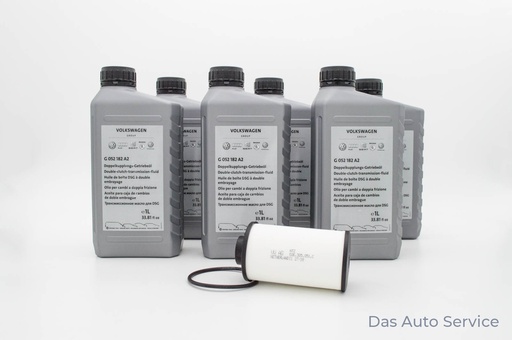
Genuine service kit for the 6-speed DSG DQ250 in the Leon 3 Cupra. Using genuine gearbox oil is important for keeping the gearbox working properly.
View in shopRead more
- Pre-purchase inspection
- Routine servicing
- 2.0 TFSI Fuel Pump Cam Follower Wear
- 2.0 TFSI Ignition Coils and Spark Plugs
- EA888 Gen3 Water Pump Leak: Causes and Fix
- DSG DQ250 Mechatronic Problems: Signs and Causes
Frequently asked questions
What are the common problems with the Leon Cupra?
On the Leon 2 Cupra, I check the fuel pump cam follower, ignition coils and spark plugs. On the Leon 3 Cupra, I look out for water pump and thermostat leaks, as well as DSG DQ250 mechatronic problems.
Should I choose a Leon 2 Cupra or Leon 3 Cupra?
Both generations are worth considering if they've been properly maintained. The Leon 2 has a manual gearbox, while the Leon 3 also offers the DSG DQ250. I'd choose whichever car has the better history and mechanical condition.
How long does the DSG gearbox last in a Leon Cupra?
There's no honest mileage figure that applies to every gearbox. It depends on how the car has been driven, whether the engine has been remapped and how well the gearbox has been maintained. I recommend genuine gearbox oil every 60,000 km, followed by a mandatory gearbox adaptation after servicing.
Should I be worried about buying a remapped Cupra?
Not every car with a remap is a bad buy, but you need to know exactly what's been done. Pay particular attention to the clutch and gearbox, because they're the parts that have to cope with the extra load.