Looking for a big, comfortable car with a simple petrol engine that won't empty your wallet every time you visit the garage? Then you've probably come across the Škoda Octavia 2 1.6 MPI. I'm talking about the second-generation Octavia (1Z), built from 2004 to 2013, with an eight-valve petrol engine, 102 hp and a timing belt. No turbo, no direct injection, and plenty of these cars run on LPG too. Sounds like a recipe for trouble-free motoring, doesn't it? Almost. Let me tell you what we see at the workshop and what you need to watch out for, because even a simple engine needs looking after.
Who is the Škoda Octavia 2 1.6 MPI right for?
If you want a spacious car that's relatively cheap to maintain, and you're not bothered about being first away from every set of traffic lights, this engine makes a lot of sense. With 102 hp, it's hardly going to pin you to your seat, but that's not what it's built for. The appeal is somewhere else: simple engineering, familiar repairs and fewer complicated systems waiting to give you a headache. I like cars like this because you know what you're getting. Provided the previous owner has looked after it, of course.
What gearboxes does the Octavia 2 1.6 MPI have?
You'll find two gearbox options with this engine. Both have their place, and which one suits you depends on how you like to drive. What matters more than choosing between manual and automatic is finding a car with a gearbox that's actually in good condition.
- 5-speed manual gearbox – for someone who likes changing gears themselves and wants to keep things as simple as possible.
- 6-speed Tiptronic automatic – for someone who prefers the comfort of an automatic, especially for everyday driving.
With the automatic, pay attention to how the car pulls away and changes gear. If the gearbox kicks, bangs or jerks, don't accept the excuse that "they all do that". They don't. First we find out what's causing it, then we decide what needs fixing.
Škoda Octavia 2 1.6 MPI common problems: what do we see?
Now for the interesting bit. The 1.6 MPI is a simple engine, but age isn't kind to rubber hoses, seals or ignition components. Owners often arrive saying things like "there's a whistling noise", "it shakes when I'm stopped" or "the engine warning light is on". That doesn't automatically mean an expensive repair. But you do need to find the actual cause rather than just clearing the fault codes.
Why does the engine whistle and show lean mixture faults?
One of the first things I check is the crankcase ventilation system. Its job is to carry gases out of the engine, but over time the valve and hoses deteriorate. You can end up with whistling noises, leaks and lean fuel mixture fault codes because the engine is drawing in air where it shouldn't. You'll find all sorts of theories in owners' groups. I'd rather check the valve and hoses first than start replacing parts and hoping for the best.
Where is the oil leaking from?
Two other familiar trouble spots are the rocker cover and the sump. As the years go by, the seals deteriorate and oil starts seeping out. Sometimes it looks harmless. But when you spot oil around the engine, you need to find out exactly where it's coming from. Not every oil leak means a major repair, but that doesn't mean you should ignore it either. I've explained this in more detail in my article about oil leaks from the rocker cover and sump.
Why does the engine misfire when you accelerate?
If your Octavia starts misfiring under load, the ignition system is one of the first things I check. The ignition coil and spark plugs can cause exactly these symptoms. You feel the car jerking and immediately start worrying about something seriously wrong with the engine. But sometimes the cause is much simpler. The important thing is to test it properly, not replace everything in sight.
Why does the idle speed keep fluctuating?
The throttle body controls how much air enters the engine. When it gets dirty, the idle can become uneven and the engine may start shaking. You'll notice it most when the car is standing still. Don't rush to blame half the engine. Check the throttle body and its condition first.
What should I check before buying one?
If you've found an Octavia 2 1.6 MPI you like, don't fall in love with the shiny interior and lovely photos just yet. These cars are getting on a bit now, and their actual condition matters far more than the promises in the advert. There are a few things I'd definitely check before handing over my money.
- Cold start and idle – see how the engine starts from cold and whether it runs smoothly without shaking or misfiring.
- Oil leaks underneath – inspect the engine and sump for oil. Don't just have a quick look from above.
- LPG installation – if the car runs on LPG, ask for the paperwork and find out who fitted the system.
- Timing belt – check when it was last replaced and whether there's proof the work was done.
If you're not sure what you're looking at, get a pre-purchase inspection. I'm not saying that to frighten you. I'm saying it because once you've bought the car, every problem you missed becomes your problem to pay for.
How should I service my Škoda Octavia 2 1.6 MPI?
A simple engine doesn't mean you can forget about servicing. Quite the opposite. If you want this Octavia to serve you well for years, you need to stay on top of its maintenance. I don't rely on extended LongLife service intervals because manufacturers' recommendations often focus on meeting environmental standards rather than getting the longest possible life out of the engine. Here's what I recommend for cars driven in Bulgaria.
- Engine oil and all filters – oil, air, fuel and cabin filters – every 10,000 km or once a year, whichever comes first, regardless of which engine oil you use.
- Timing belt – follow the prescribed interval for the engine and replace the rollers at the same time. If you have no proof of when it was last done, don't put the job off.
- Automatic gearbox – follow the manufacturer's recommendations and, at our workshop, we assess it by inspection. We always carry out an adaptation after servicing.
- Crankcase ventilation filter – every 60,000 km on petrol engines.
- Brake fluid – every 2 years, and coolant every third heating season.
- Air conditioning – service it every spring, including a system check and replacement of the receiver-drier and the oil in the system. Simply topping up the refrigerant isn't enough.
- General vehicle inspection – every 6 months, so you can catch problems before they become serious.
If you're also considering a diesel Octavia, I've written a separate service schedule for the Škoda Octavia 2 1.9 and 2.0 TDI. Don't confuse the servicing requirements of the petrol MPI with those of the TDI. They're different engines with different things to watch out for.
IMPORTANT! If your Octavia 2 1.6 MPI runs on LPG, pay extra attention to the ignition system and valves. Don't wait until the engine starts misfiring or running unevenly before getting them checked.
Is the Škoda Octavia 2 1.6 MPI worth buying?
My verdict is yes. The Octavia 2 1.6 MPI is one of the most sensible older cars you can buy if you want space, simple engineering and relatively affordable maintenance. It won't impress you with its acceleration, but it's not pretending to be a sports car either. Look after it properly and it rarely throws any major surprises your way. Just don't confuse a simple engine with one that doesn't need servicing. That's where a lot of owners go wrong.
Tip from Kris Mladenov: If the car runs on LPG, make absolutely sure you check how it starts and runs on petrol too. Don't settle for someone telling you "it runs perfectly on gas". I want to see that engine running properly on both fuels before I'm happy to say everything is fine.
I hope you've found this article useful! If you have, I'd love you to share it with a friend who drives one of these Octavias or is thinking about buying one. My mission is simple: when I know something useful, I want more people to know it too. Because having the right information today can save you a serious headache tomorrow.
The solution in our shop

Genuine Longlife III FE 0W30 oil 5L
Genuine LongLife III engine oil is an option for servicing this engine, provided it meets the required specification. Whatever it says on the LongLife label, I recommend changing the engine oil and all filters every 10,000 km or once a year, whichever comes first.
View in shop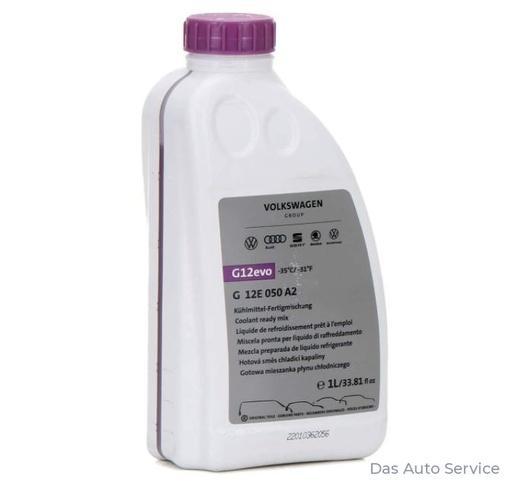
Genuine VAG G12Evo antifreeze G12E050A2 1.0l
Genuine G12evo coolant can be used for topping up, provided it's compatible with your car's cooling system. Keep an eye on the level and don't ignore coolant loss.
View in shopRead more
- Pre-purchase inspection
- Routine servicing
- Škoda Octavia 2 1.9 & 2.0 TDI Service Schedule
- Valve Cover Oil Leak: Causes and Repairs
- Lambda Sensor Fault: Sensor or Catalytic Converter?
Frequently asked questions
What are the most common problems with the Škoda Octavia 2 1.6 MPI?
The things I check most often are the crankcase ventilation system, oil leaks, ignition coil, spark plugs and a dirty throttle body. Symptoms can include whistling noises, misfires, rough idling and an illuminated engine warning light.
Is the 1.6 MPI engine suitable for LPG?
Yes, plenty of these cars run on LPG. What matters is that the system has been installed properly and that the ignition system and valves are checked regularly.
How much fuel does the Škoda Octavia 2 1.6 MPI use?
Fuel consumption depends on how you drive, the condition of the engine and whether you're running on petrol or LPG. I wouldn't promise you a particular figure without knowing how and where you drive.
What's the most important thing to check when buying an Octavia 2 1.6 MPI?
Check the cold start, idle, oil leaks and timing belt replacement history. If the car has an LPG system, check the paperwork and make sure the engine runs properly on both petrol and LPG.