The VW Golf 4 1.6 petrol was the first car for so many people that I bet you know someone who's owned one. Cheap, simple, parts everywhere, and an engine that doesn't need much fuss to keep running. But here's the thing! We're now talking about cars that are over 20 years old, and that changes everything. At Das Auto Service, we see what happens to these cars as the years catch up with them. I'll walk you through the VW Golf 4 (1J), built from 1997 to 2004, explain what to check before buying one, and help you avoid turning a cheap purchase into an endless stream of repairs.
Who is the Golf 4 1.6 petrol right for?
If you want a cheap runabout for town or your first car, the Golf 4 with the 1.6 petrol engine makes perfect sense. Just don't expect it to push you back into your seat when you put your foot down. That's not what this car was built for. Its biggest strength is its simplicity: relatively easy maintenance, familiar mechanical parts, and spares you can find without hunting around. Just remember you're buying an old car, and its actual condition matters far more than how lovely it looks in the photos.
Which engines and gearboxes came with the Golf 4 1.6?
There are two main versions of the Golf 4's 1.6 petrol engine, and it's worth knowing the difference. Both do the job, but they're built differently. So don't just look at the 1.6 badge on the boot. Make sure you know exactly which engine you're buying.
- 1.6 SR – the eight-valve engine with 100–102 hp. Simpler in design and reliable when it's been properly looked after.
- 1.6 16V – the newer version with 105 hp and 16 valves. A little more power, but a few extra things to consider when servicing it.
- Gearboxes – you'll usually find a 5-speed manual, while the 4-speed automatic is less common.
What are the most common VW Golf 4 1.6 petrol problems?
On a car this old, little problems can quickly pile up. One sensor isn't working properly, a hose has cracked, the engine starts shaking, and suddenly the owner doesn't know where to begin. There's no point throwing parts at a problem and hoping for the best. At our workshop, we find the cause first. Then we fix it.
Coolant temperature sensor
This little sensor tells the engine computer how warm the engine is. As it gets older, it can start sending incorrect readings, making the car difficult to start, increasing fuel consumption or causing the cooling fan to behave strangely. You notice the symptoms, but you've no idea what's causing them. And sometimes, this tiny part is the whole problem. That's why testing beats guessing every time.
Throttle body and air hoses
If the engine won't idle smoothly, don't immediately assume the whole engine is on its way out. A dirty throttle body and cracked crankcase ventilation hoses are well-known problems. Air gets in through those cracks without the engine computer properly accounting for it, making the fuel mixture too lean. The result is a rough idle and stored fault codes. The important thing is to find where that unwanted air is getting in, not just plug in a diagnostic tool and clear the faults.
Oil leaks
On the Golf 4 1.6, the rocker cover gasket and the sump often need attention. Over the years, the seals harden and start letting oil escape. Don't assume an oily engine is normal just because the car is old. First, find out exactly where the oil is coming from. I've explained what we check in more detail in my guide to oil leaks from the rocker cover and sump.
Timing belt
The timing belt is one thing I never like taking chances with. On these engines, it needs replacing according to the manufacturer's recommendations, together with the tensioners and rollers. The 1.6 16V also has a second, smaller belt connecting the camshafts. Both belts need replacing together. If the seller can't show you when the work was done, don't take "it's been changed" as proof.
Electric windows and door locks
Not every Golf 4 problem is hiding under the bonnet. Electric window mechanisms and door locks are among the most common little bodywork-related repairs. They might seem insignificant, but once several start playing up, they become a real nuisance. When viewing a car, test every window and every door. Don't just check whether the engine starts.
What should I check before buying a Golf 4 1.6?
The biggest mistake is buying a car simply because it looks well looked after. A tidy interior and a shiny engine don't prove everything underneath is in good condition. I'd start with a few basic checks. They'll tell you far more than any promises from the seller.
- Cold start and idle – see how easily the engine starts from cold and whether it runs smoothly without shaking.
- Compression and leaks – check the engine's actual condition, not just how it sounds. Have a look at how we check an engine's health.
- Timing belt – ask for paperwork showing when it was replaced and exactly which parts were changed.
- LPG conversion – if the car runs on LPG, check who installed the system and whether there's paperwork for it.
If you're not sure how to carry out these checks, don't take a gamble just to get the purchase over with. A proper pre-purchase inspection can show you what condition the car is really in before you hand over your money. That's especially important with a car of this age. It's much better to know what you're buying than to find out after the first repair bill.
How should I service my Golf 4 1.6 petrol?
A simple engine doesn't mean an engine that needs no maintenance. Quite the opposite. Regular servicing is what helps it keep running properly. Don't just assume the previous owner changed everything on time. If there's no paperwork, your first job is to find out what's actually been done.
- Engine oil and all filters – oil, air, fuel and cabin filters must all be changed every 10,000 km or once a year, whichever comes first. That's my recommendation for cars driven in Bulgaria, regardless of the oil used, including LongLife oil.
- Timing belt – replace it according to the manufacturer's recommendations, or sooner if you're unsure about its service history.
- Automatic gearbox – service it according to the manufacturer's recommendations and, at our workshop, based on inspection. We always carry out an adaptation after servicing.
- Crankcase ventilation filter – replace every 60,000 km.
- Brake fluid – replace every 2 years, and coolant every third heating season.
- Workshop inspection – every 6 months, so we can catch problems before they get worse.
IMPORTANT! If the timing belt snaps on the 1.6 16V, you're looking at a cylinder head repair. If you don't have proof of when it was replaced, get it changed straight away. It's simply not worth risking the engine because you've put off one service.
Is the Golf 4 1.6 petrol still worth buying today?
Yes, if you're looking for a cheap, simple car with a clear service history. No, if you expect an old car that will never need repairs. Personally, I'd choose a Golf 4 with proper maintenance records over a polished example advertised as "perfect" but with no proof of what's been done to it. You can't turn back the clock. But you can check the car's condition and make a sensible decision.
Tip from Kris Mladenov: Before buying, check whether the Check Engine warning light is on and what condition the catalytic converter is in. Don't automatically assume every fault code means the catalytic converter has failed. Read my explanation of when the lambda sensor and catalytic converter are really to blame. And most importantly, look for maintenance records, not promises.
I hope you've found this article useful! If you have, I'd really appreciate you sharing it with a friend who owns a Golf 4 or is thinking of buying one. I've always believed that if I know something useful, more people should know it too. Because if you overlook an important problem, you're the one who'll end up paying for the repair out of your own pocket. And my goal is to help you avoid exactly that.
The solution in our shop

Genuine Longlife III FE 0W30 oil 5L
Genuine LongLife III engine oil is an option for servicing your engine, provided it meets the engine's requirements. Whatever oil you use, change it every 10,000 km or once a year.
View in shop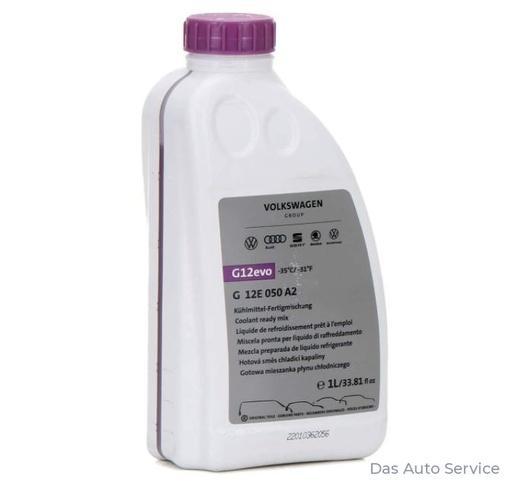
Genuine VAG G12Evo antifreeze G12E050A2 1.0l
Genuine G12evo coolant can be used for topping up when it's suitable for your car's cooling system. The important thing is knowing which coolant is already in there.
View in shopRead more
- Pre-purchase inspection
- Routine servicing
- Engine Compression Test: How We Check Engine Health
- Lambda Sensor Fault: Sensor or Catalytic Converter?
- Valve Cover Oil Leak: Causes and Repairs
Frequently asked questions
What are the most common problems with the Golf 4 1.6 petrol?
The coolant temperature sensor, dirty throttle body, cracked crankcase ventilation hoses and oil leaks. Electric window mechanisms and door locks are also common trouble spots.
Which engine is better, the 1.6 SR or the 1.6 16V?
The 1.6 SR is the simpler eight-valve engine, while the 1.6 16V is newer and slightly more powerful. I'd choose whichever one has been better maintained and has a clear service history.
How much fuel does the Golf 4 1.6 petrol use?
Fuel consumption depends on the engine's condition and how you drive. If it's using an unusually large amount of petrol, check the coolant temperature sensor, throttle body and air hoses before assuming that's just normal for the car.
Should I replace the timing belt immediately after buying one?
Yes, if there's no paperwork showing when it was last replaced. That's especially important on the 1.6 16V, where a snapped timing belt can mean a cylinder head repair.