VW Golf 6 1.6 TDI review – if you're looking for an economical diesel with low road tax, affordable insurance and good fuel economy, chances are you've already got your eye on this Golf. The VW Golf 6 (5K) was built from 2008 to 2012 and came with the EA189 1.6 TDI common rail engine, producing either 90 or 105 hp, with a manual gearbox or DSG. People like it because it's economical and seems like a sensible buy. But here's the thing! Saving money on fuel is one thing. Knowing what might be waiting for you after 200,000 km is quite another. I'll tell you what we see on these cars at Das Auto Service, where their weak spots are and when they're genuinely worth your money.
Who is the Golf 6 1.6 TDI right for?
If you're a relaxed driver, cover plenty of miles and want a car that's cheap to run, the Golf 6 1.6 TDI is a perfectly sensible choice. It's a Golf for getting from A to B economically, not for chasing a sporty driving experience. The engine does its job well, as long as you don't expect more from it than it can deliver. And that's where I want you to ask yourself one important question: how are you actually going to use this car?
If you often travel with a fully loaded car and want plenty of pulling power for overtaking, the little TDI won't blow you away. When you need to accelerate quickly, you'll notice there isn't a huge amount of power to play with. Don't get me wrong, it's not a bad engine. I just want you to know exactly what you're buying, so you're not left wondering later why it doesn't pull the way you imagined.
Which engines and gearboxes came in the Golf 6 1.6 TDI?
With this engine, the Golf 6 keeps things fairly simple. You've got two versions of the EA189 1.6 TDI common rail engine and two gearbox options. The difference isn't just about horsepower. It's also about how the car feels to drive every day. And if you've got your eye on an automatic, there's something in particular I want you to watch out for.
- 1.6 TDI common rail EA189 with 90 hp – for relaxed driving and low fuel consumption.
- 1.6 TDI common rail EA189 with 105 hp – the same engine, but with a little more power.
- 5-speed manual gearbox – if you prefer changing gears yourself.
- 7-speed DSG DQ200 with a dry clutch – the automatic where you really need to pay attention to the clutch and mechatronic unit.
I've already written a detailed article about this engine and everything you need to know: 1.6 TDI EA189 – what you need to know before buying one. Give it a read if you've already decided this is the engine you want. Here, we're looking at the Golf 6 as a whole and the problems we most often need to check.
What are the common problems with the Golf 6 1.6 TDI?
When a Golf 6 1.6 TDI with over 200,000 km comes into Das Auto Service, I don't immediately start listing everything that needs replacing. First, I listen to what the car is doing. Then I check the diagnostics, and only after that do I start looking for the cause. There are a few areas I pay particular attention to, because they're exactly the things that can turn an economical little car into a purchase you'll seriously regret.
EGR and DPF – why is the engine warning light on and the car down on power?
This diesel really doesn't like spending its whole life doing short journeys around town. When you're constantly starting it, driving a few kilometres and switching it off again, soot builds up in the DPF and the EGR valve gets clogged. Then you come to me saying, "The engine warning light is on, it's going into limp mode and there's no power." Sound familiar? The trouble is, the DPF isn't always the only thing causing it.
I'm very clear about this: we don't remove the DPF. We run diagnostics, check how the system is working and find out why the problem developed in the first place. If you only deal with the symptoms and leave the cause untouched, the problem will come straight back. And remember, the way you drive this engine makes an enormous difference.
Injectors – why is the engine running unevenly?
Another area we check very carefully is the common rail injectors. If the engine runs roughly or struggles to start, they're among the things we investigate. We use diagnostics to check their correction values in the measuring blocks, rather than immediately telling you, "You need four new injectors." Because having a symptom is one thing. Proving what's actually causing it is another. And I don't want you paying for somebody's guesswork.
If you'd like to understand how we check their condition, have a read of Common rail injectors – when they need replacing and why it's often all four. I've explained everything in detail there. And if you're buying a used Golf 6, please don't skip this check.
DSG DQ200 – why does it jerk and judder when pulling away?
If you're looking at an automatic Golf 6, pay particular attention to the DSG DQ200. It's a 7-speed DSG with a dry clutch, and problems with the clutch or the mechatronic unit – the gearbox's brain – can show up as jerking and juddering when you pull away. Don't reassure yourself with, "It's an old car, that's normal." It's not something you should simply accept. Get the gearbox checked before you decide whether to buy the car.
I've also written a separate article about the DQ200: DSG DQ200: why the gearbox jerks and judders. I've explained exactly what's going on in that article. If you feel juddering during the test drive, don't tell yourself, "It'll sort itself out." Find out what's causing it now.
Dual-mass flywheel – why does it rattle and vibrate?
The dual-mass flywheel, or simply the dual-mass, is another part that deserves attention. If you hear rattling at idle or feel vibrations when pulling away, it's one of the first things we check. Of course, I can't tell you it needs replacing based on one noise alone. But if the car rattles and shakes when you set off, don't buy it until we've worked out why.
What should you check before buying a Golf 6 1.6 TDI?
You've found a Golf you like. It looks good, the engine starts and the dashboard isn't lit up like a Christmas tree. Lovely, but don't rush to put down a deposit. There are a few important things I want you to check on this model before handing over your money. I'd start with a full diagnostic scan and finish with a proper test drive. Here's what we look at.
- Full diagnostics – we read the fault codes, check the soot load in the DPF and look at the injector correction values in the measuring blocks.
- DSG check – if the car has a DQ200, we check the clutch adaptation values and how the gearbox behaves.
- Timing belt and water pump check – we find out when they were last replaced and whether there's a service history to back it up.
- Test drive – we check how the car pulls away, how the gearbox changes gear and whether the engine delivers normal pulling power.
We check all of this as part of our pre-purchase inspection. I don't want us to simply read the fault codes and tell you, "It starts, so it must be fine." I want you to know exactly what you're buying, what condition it's in and whether there are problems you wouldn't spot during a quick look around. Believe me, it's much better to check before buying than to find yourself wondering where to start with the repairs afterwards.
What is the Golf 6 1.6 TDI service schedule?
If you want this Golf to stay economical and keep serving you well, regular servicing really matters. At Das Auto Service, we follow clear service intervals, and we don't stretch them just to save you one visit to the workshop. Especially for cars driven in Bulgaria, I'm very particular about changing the engine oil regularly. And remember one thing: LongLife doesn't mean the same oil should stay in your engine forever.
- Engine oil and filters – every 10,000 km or once a year, whichever comes first, regardless of whether you're using LongLife oil. The engine requires VW 507 00 specification oil.
- DSG DQ200 – we change the gearbox oil every 60,000 km using genuine oil. Afterwards, we always carry out an adaptation.
- Timing belt and water pump – we service them according to the manufacturer's specified interval.
- Brake fluid – we replace it every 2 years.
- Coolant – we replace it every third heating season.
- Workshop inspection – every 6 months, so we know how the car is doing.
IMPORTANT! If all you do is drive 5 km at a time around town, the Golf 6 1.6 TDI with a DPF isn't the car for you. I'm telling you this because I don't want you spending your money on DPF and EGR problems later. You're much better off choosing something that actually suits the way you drive.
Is the Golf 6 1.6 TDI worth buying in my opinion?
I'll tell you straight. Yes, the Golf 6 1.6 TDI is worth buying if you do plenty of driving outside town, the car has a clear service history and the inspection doesn't reveal any serious problems. It's an economical Golf, as long as you understand what to expect from the smaller diesel. But if you're only going to use it for short trips around town, or the DSG is already jerking and juddering, I'd think very carefully before buying. After all, what's the point of saving money on fuel if you're constantly worrying about the next repair?
Advice from Kris Mladenov: With this little diesel, don't just look at the mileage on the clock. How the car has been driven matters just as much. Regular longer journeys are a good sign, but I'd personally walk away from a Golf that's spent its whole life doing short trips around town. Check the DPF, injectors and gearbox before buying. Those are exactly the areas where nasty surprises can be waiting for you.
I hope I've helped you work out whether this Golf is right for you! If you've found the article useful, share it with a friend who drives a Golf 6 or is thinking about buying one. I believe in something very simple: when I know something useful about cars, I want you to know it too. That way, you can make better decisions and save yourself a lot of unnecessary headaches.
The solution in our shop
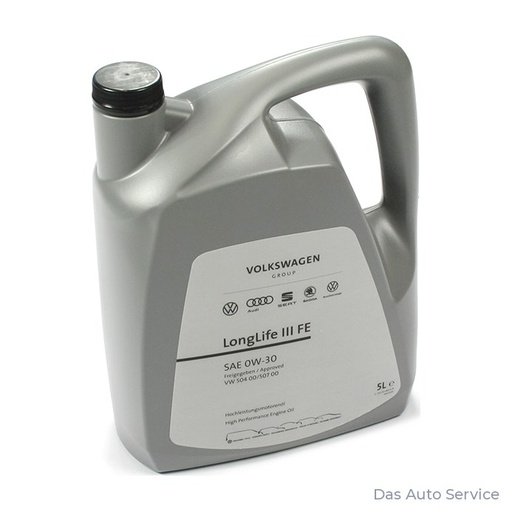
Genuine LongLife III FE 0W30 5L engine oil
Genuine LongLife III engine oil meeting VW 507 00 specification is suitable for servicing this engine. At our workshop, we change it every 10,000 km or once a year, whichever comes first, regardless of the LongLife designation.
View in our shop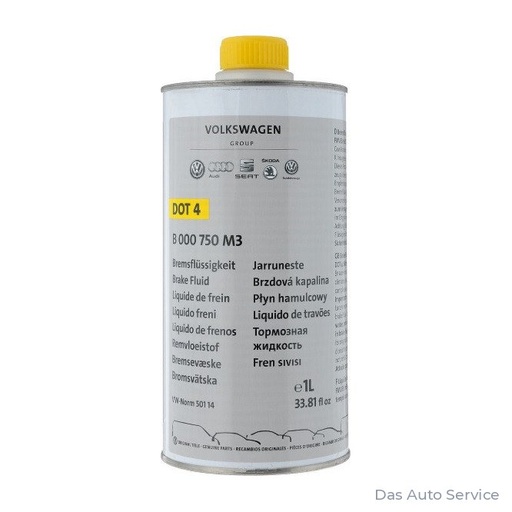
Genuine VAG DOT 4 brake fluid B000750M3 1 litre
Genuine DOT 4 brake fluid is used for regular brake system servicing. We replace it every 2 years.
View in our shopRead more
- Pre-purchase inspection
- DSG and S tronic gearbox repairs
- 1.6 TDI (EA189): what you need to know before buying one
- DSG DQ200 with a dry clutch: why does the gearbox jerk and judder?
- TDI common rail injectors: when they need replacing and why it's often all four
Frequently asked questions
How much fuel does the Golf 6 1.6 TDI use?
One of the main reasons people love the Golf 6 1.6 TDI is its low fuel consumption. But what you'll actually get depends on how you drive and the conditions you use the car in.
Which is better in the Golf 6 – the 1.6 or 2.0 TDI?
If you want relaxed driving and low fuel consumption, the 1.6 TDI is a good choice. But if you like having plenty of pulling power, especially when overtaking with a fully loaded car, the smaller diesel won't quite give you what you're looking for.
Does the Golf 6 1.6 TDI have a DPF?
Yes, this 1.6 TDI has a DPF, and it doesn't like being driven on short journeys around town all the time. If something goes wrong, we don't remove the filter. We find out what's causing the problem.
Should I worry if the DSG judders when pulling away?
Yes, my friend, that's not something I'd ignore. On the DSG DQ200, juddering can come from the clutch or the mechatronic unit. So get it diagnosed before you buy.