The VW Passat B5 1.9 TDI. You've probably heard the stories about these cars covering 500,000 km. And there's a good reason for that. They're spacious, comfortable, economical and capable of covering huge distances if someone has looked after them properly. Built between 1996 and 2005, the B5 and B5.5 (3B) are still a familiar sight on our roads. But! Age catches up with everything, even the legendary 1.9 TDI. Today, I'll explain what we see at the workshop, where these cars tend to go wrong and when buying one still makes sense.
Who is the Passat B5 1.9 TDI right for?
If you want a big, comfortable car that can cover plenty of miles without swallowing half your wages at the fuel pump, the Passat B5 is definitely worth considering. It's a car for someone who values practicality over fancy extras. There's plenty of room, the ride is comfortable and the engine has a reputation for lasting a very long time. Just don't expect the quiet cabin or clever electronics of a modern car. This is proper old-school motoring, and you need to be happy with that.
Here's something I really want you to understand: a cheap car isn't necessarily a cheap car to maintain. Especially when it's been through several owners and nobody knows when it last had a proper service. That's why I always look at the condition of the car, not just the number on the odometer. Genuine mileage and a clear service history matter far more than a convincing story in the advert.
What engines, gearboxes and drivetrains are available?
The Passat B5 and B5.5 came with several versions of the familiar 1.9 TDI engine. The main difference is how they deliver fuel to the cylinders. Earlier engines use a rotary injection pump, while later versions have unit injectors, often called PD. Both can last a very long time, but each has its own things to watch out for.
- 1.9 TDI with rotary injection pump – 90 and 110 hp. These are the older versions with the familiar fuel injection system.
- 1.9 TDI PD unit injectors – 100, 115 and 130 hp. Here, each injector generates the pressure needed to inject fuel into its cylinder.
- Gearboxes – 5-speed and 6-speed manuals, plus a 5-speed Tiptronic automatic.
- 4Motion – four-wheel drive with a Torsen centre differential that distributes torque between the front and rear axles.
What problems do we see most often at the workshop?
PD unit injectors
On PD engines, the fuel injection system deserves particular attention. If your car starts shaking, idling roughly or feeling less powerful than it used to, don't immediately blame the turbo. We need to check how the injectors are working and assess the overall condition of the engine. This system has its quirks, and guessing your way through repairs is a bad idea. I've explained it in more detail in my article about 1.9 and 2.0 TDI PD unit injectors.
Front suspension
Hearing a knocking noise from the front when you drive over a pothole? That's a familiar story with the Passat B5. Its multi-link front suspension is similar to the setup used on the Audi A4 and A6 of the same era. It gives you a comfortable ride, but there are quite a few suspension arms, bushes and ball joints that wear out over time. A quick glance underneath followed by "everything looks fine" simply isn't good enough. You need to find exactly where the noise is coming from. If you'd like to understand more, read my article on why suspension arms start knocking.
Dual-mass flywheel and clutch
On the more powerful versions with the 6-speed manual gearbox, I pay particular attention to the dual-mass flywheel. Its job is to absorb vibrations between the engine and gearbox. As it wears out, you might hear a distinctive rattling noise at idle or when pulling away. Sometimes an owner tells me, "Something rattles, but once I get moving, it goes away." Don't ignore that. We also check the clutch because the two work together.
EGR valve and intake manifold
Diesel engines produce soot, and some of it gradually builds up inside the EGR valve and intake manifold. The EGR valve sends some exhaust gases back into the engine, while the intake manifold supplies air to the cylinders. When they become clogged, the car can lose power, produce smoke and struggle to accelerate properly. But that doesn't mean every loss of power is caused by the EGR. Diagnose first, repair second. Otherwise, you're just replacing parts and hoping one of them fixes the problem.
What should I check before buying a Passat B5?
With a car this old, I wouldn't trust a shiny exterior and the seller's promises. Even if the engine runs beautifully, the rest of the car might need quite a bit of attention. That's why I always recommend a proper inspection, both while the car is stationary and out on the road.
- Cold start and smoke – check how easily the engine starts, how it runs immediately afterwards and whether there's any unusual smoke.
- Front suspension – drive over uneven surfaces and listen for knocking from the suspension arms and ball joints.
- Clutch and dual-mass flywheel – check for noises, vibrations and anything unusual when pulling away.
- 4Motion – pay attention to the oils and listen for unusual noises from the rear drivetrain.
If you don't have much experience with cars, don't try to judge everything yourself. A proper pre-purchase inspection can reveal problems you'd never notice during a short test drive. It's much better to know what you're buying than to spend the next few months wondering which repair to tackle first.
How should I service my VW Passat B5 1.9 TDI?
Now we come to the really important part. The old 1.9 TDI might be tough, but that doesn't mean you should keep driving until something breaks. I recommend regular maintenance, not waiting for a warning light to appear on the dashboard. The service intervals we follow at Das Auto Service are based on driving conditions in Bulgaria and one simple goal: keeping your car healthy for as long as possible.
- Engine oil and all filters – every 10,000 km or once a year, whichever comes first. Change the oil filter, fuel filter, air filter and cabin filter together, regardless of which engine oil you use.
- Engine oil specification – always use oil with the correct VW approval for your particular 1.9 TDI engine. This is especially important on PD unit-injector engines.
- Tiptronic – service it as prescribed by the manufacturer and, at our workshop, according to an inspection of its condition. We always carry out an adaptation after servicing.
- Torsen and differentials – service them together with the gearbox oil. I've explained more in Torsen quattro: servicing the differential and transfer case.
- Brake fluid – every 2 years, and coolant every third heating season.
- Air conditioning – service it every spring, including a system check, replacing the receiver-drier and changing the system oil. Simply topping up the refrigerant isn't enough.
- Preventative inspection – every 6 months, so we can spot wear and leaks before they become serious problems.
IMPORTANT! On PD unit-injector engines, using the wrong engine oil can cause camshaft wear. Don't choose your oil based only on its viscosity or what it says on the bottle. The correct VW oil approval for your engine is essential.
So, is the Passat B5 1.9 TDI still worth buying?
Yes, I'd still recommend a Passat B5 1.9 TDI, but only if it's been properly maintained. It's an honest, old-school car that doesn't pretend to be anything it isn't. You get plenty of space, comfort and an economical diesel engine. But if you buy a neglected example, that legendary reliability won't save you from expensive repairs. Look at the condition, check the service history and don't blindly trust the mileage. I'm telling you this as a friend: when the repair bill arrives, you're the one who'll have to pay it.
Tip from Kris Mladenov: When you're looking at a Passat B5, make sure you drive it along a rough road. If the multi-link front suspension has worn suspension arms or ball joints, you'll soon hear about it. Don't settle for a quick drive around the block on perfectly smooth tarmac.
I hope you've found this article useful! If you have, I'd really appreciate you sharing it with a friend who owns a Passat B5 or is thinking about buying one. My mission has always been simple: when I know something useful, I want more people to know it too. Because an informed car owner makes better decisions, looks after their car properly and saves themselves money in the long run.
The solution in our shop
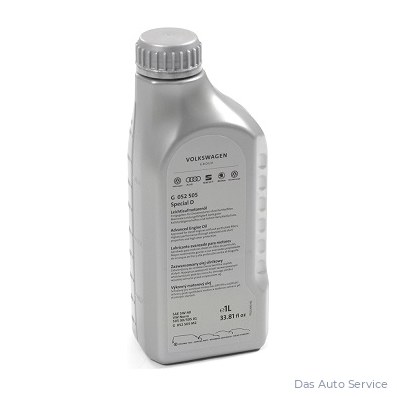
Genuine SpecialD 5W40 Volkswagen diesel oil 1L
Genuine SpecialD 5W40 engine oil meets VW 505 00 and VW 505 01 specifications. Using oil with the correct VW approval is particularly important for the 1.9 TDI PD unit-injector engine, helping protect the camshaft against wear.
View in shopRead more
- Pre-purchase inspection
- Routine servicing
- 1.9 TDI PD Common Problems and Weak Points
- Audi A4 Suspension Knocking: Worn Control Arms
- Torsen quattro: servicing the differential and transfer case
Frequently asked questions
How long does a Passat B5 1.9 TDI last?
This engine is famous for being capable of covering 500,000 km. But it all depends on how well it's been maintained, how it's been driven and its current condition. The mileage alone guarantees absolutely nothing.
Which 1.9 TDI engine is best in the Passat B5?
There are rotary injection pump versions with 90 and 110 hp, and PD unit-injector versions with 100, 115 and 130 hp. Personally, I'd choose a well-maintained engine with a clear service history rather than chasing a particular power output.
Should I buy a Passat B5 with Tiptronic or a manual gearbox?
The manual gearbox is a good choice, but make sure you check the clutch and dual-mass flywheel. The Tiptronic is worth considering too, provided it's in good condition and has been serviced properly.