Your cigarette lighter, radio or brake light suddenly stops working, and your first thought is, "It's probably a fuse." I hear that all the time at the workshop. And quite often, you're right. A blown fuse is one of the first things to check when something electrical stops working. But here's the catch! On the Passat B6, Passat B7 and Golf, the fuses are spread across several locations, and they don't always match what you've found online. I'll show you where to look, how to find the right fuse and how to replace it without turning a small problem into a much bigger one.
Where are the fuses on the Passat B6, B7 and Golf?
The first thing I want you to know is that your car doesn't have just one fuse box. There are several, with the fuses grouped according to the electrical systems they protect. So if you open one cover and can't find the fuse you're looking for, that doesn't mean it isn't there. You're probably just looking in the wrong place. Here are the main fuse box locations on the Passat B6, B7 and Golf.
- Inside the car – at the side of the dashboard, next to the driver's door. Open the door, remove the side panel from the dashboard and you'll see the fuses behind it. This is one of the first places I check.
- In the engine bay – there's a fuse box above the battery or right next to it. This box also protects important electrical circuits, so don't forget to check it.
- Under the dashboard – you'll find additional relays and fuses here. Relays are electrical switches that turn different circuits on and off. Not everything is tucked away behind that side panel.
The important thing is not to start pulling out fuses one after another until you find the one you need. I know it looks easy, especially when you're in a hurry. But your car has quite a lot of electronics, and it's much better to work out exactly where you should be looking first. You'll save yourself unnecessary dismantling and wasted time.
How do I identify the right fuse on my VW Passat B6?
This is where a lot of people go wrong. You search Google for "VW Passat B6 fuse locations", open the first picture, spot a fuse number and assume that's the one you need. But the fuse numbering can vary depending on the car's year and equipment. Two cars that look identical from the outside won't necessarily have the same fuse layout. That's exactly why I don't want you relying on a random picture from the internet.
The right way is to check the fuse diagram on the back of the cover or in your car's owner's manual. That will show you which fuse protects which electrical circuit. Find the fuse connected to the device that's stopped working, and only then check it. If your radio has stopped working, there's no point pulling out every fuse and hoping you get lucky. We're not playing the lottery here. We're trying to find a specific fault.
How do I replace a blown fuse?
Replacing a fuse is easy enough, and you certainly don't need to be a mechanic to do it. But there are a few things I want you to get right. Most importantly, you must use the correct fuse rating. That fuse is there for a reason. Its job is to cut the power before the wiring or another part of the electrical system gets damaged. Here's how to do it properly.
- Switch off the ignition. Before touching any fuses, turn the car off. Don't start pulling them out while everything is still running.
- Find the correct fuse using the diagram and remove it with the fuse puller from the cover. Take your time and be careful not to disturb the neighbouring fuses.
- Fit a new fuse with exactly the same current rating. The colour and number must match the old one. Don't use a different fuse just because it's the only one you've got handy.
Once you've replaced it, check whether the device works again. If your cigarette lighter or radio comes back to life, great. But if the new fuse blows straight away or shortly afterwards, don't keep replacing it. That's a sign the problem goes beyond the fuse itself. And this is where proper fault diagnosis begins.
Why does the new fuse keep blowing?
Think of a fuse as a little protector that sacrifices itself to save the rest of your car's electrical system. When it blows, it's telling you something is wrong. If you fit a new one and that blows too, the most likely cause is a short circuit or a faulty electrical component – something that draws power. The fuse itself isn't the problem. It's simply doing its job.
Now, here's one of the worst pieces of advice you could ever hear: "Just fit a higher-rated fuse and it won't blow." No! All you're doing is removing the protection instead of fixing the fault. That leaves the wiring at risk, and a small electrical problem can quickly turn into something much more serious. It's simply not worth it.
At Das Auto Service, we use diagnostic testing equipment to find where the problem is and what's causing it. Simply clearing the fault codes and hoping everything will be fine isn't enough. You need to find the cause, not just get rid of the symptom. If you'd like to learn more, have a read of my article about diagnostic testing and what measuring blocks tell us.
WARNING! Never fit a higher-rated fuse just to stop the old one blowing. That's a quick way to end up with overheated wiring or even a fire. If a fuse keeps blowing, find out why before you carry on using the device.
Tip from Kris Mladenov: Keep a few spare fuses in your glovebox. They take up hardly any space, but they could save you a lot of hassle and even a call to roadside assistance. I'd also add a small torch, because fuse boxes aren't always in the easiest places to see or reach. And remember – a spare fuse is useful when the problem happens just once, but it won't fix a short circuit.
I hope you've found this article helpful! If you have, I'd really appreciate you sharing it with a friend who drives a Passat or Golf. My mission is simple – when I know something useful, I want more people to know it too. Because one little mistake with a fuse could end up costing you a lot of money, and I'd much rather help you avoid that repair bill.
The solution in our shop
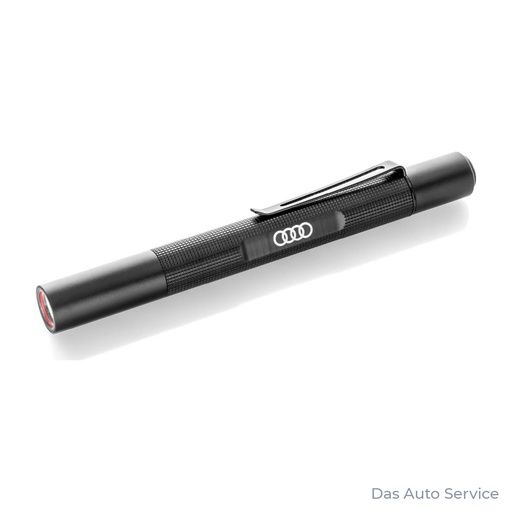
Compact LED torch to help you see the fuses, even in those dark corners under the dashboard. Handy when you need to check something and there just isn't enough light.
View in shop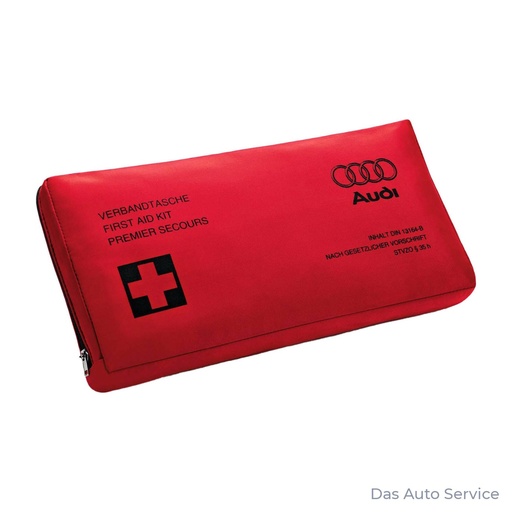
Genuine Audi first aid kit that's worth keeping close to hand in your car. One of those sensible bits of equipment to have on board.
View in shopRead more
Frequently asked questions
Where are the fuses on a Passat B6?
The main fuses are located at the side of the dashboard next to the driver's door, in the engine bay above or beside the battery, and underneath the dashboard. Check your car's fuse diagram to find the correct one.
Where are the fuses on a Golf?
The Golf also has fuses at the side of the dashboard, in the engine bay and underneath the dashboard. Their exact locations and numbering depend on the particular car and its equipment.
Why does a fuse keep blowing?
The most common causes are a short circuit or a faulty electrical component. Don't fit a higher-rated fuse. Have the fault diagnosed and find out what's causing it.