VW Touareg common problems – that's what almost everyone searches for when they've got their eye on a big Touareg and are wondering whether to buy one. And I can see why. It's a big, comfortable, solid car that makes you feel like you could drive just about anywhere. But there are two things that can really spoil the experience: the air suspension and the transfer case. I've covered the engines in the Touareg 7L and 7P in separate articles, so here I want to talk you through these two systems, how to spot trouble and what to check before you hand over your money.
Why does the Touareg air suspension sag?
Picture this. You park your Touareg in the evening and everything seems fine. The next morning, you find it leaning to one side or sitting right down on its suspension. You start the engine, the compressor kicks in, the car slowly rises and you think, "Well, that's sorted." No, my friend. It isn't sorted. The system is simply trying to compensate for a problem that's already there.
The air suspension uses air springs, which hold the car at the right height using compressed air. The compressor supplies the air, while the valve block distributes it to the individual air springs. When air starts leaking somewhere, the car loses height. The compressor tries to make up for it and ends up running longer than it should. Leave it like that and the problem won't magically disappear.
The most common culprits are leaking air springs, the valve block and the compressor itself. Sometimes you'll get suspension warnings on the dashboard. Other times, the first sign is simply finding the car sagging after it's been parked. What matters is finding where the problem is coming from instead of blindly replacing parts. I've explained this in more detail in my article on why air suspension sags. Give it a read. It could save you a lot of headaches.
How can I tell if my Touareg transfer case is faulty?
The transfer case is the other component I really want you to pay attention to. It's part of the drivetrain that helps transfer engine torque to the front and rear wheels. Put simply, it's one of the reasons your big Touareg can put its four-wheel drive to work. But when something inside the transfer case, or in the system controlling it, starts playing up, the car can let you know in a pretty unpleasant way.
The most typical signs are unusual noises, vibrations when turning and faults in the 4MOTION system. Sometimes an owner comes in and says, "It shudders when I turn, but it drives perfectly fine in a straight line." That's exactly when we need to check the transfer case and its control system. Not every vibration means the transfer case is faulty, but just because a car drives smoothly in a straight line doesn't mean everything is healthy either. We need proper diagnostics, not guesswork.
There's something else that's really important here: servicing. On the Touareg, the Tiptronic gearbox oil needs changing every 90,000 km, together with the transfer case and differential oils. Don't wait until something starts making noises before remembering there's oil inside it. That oil doesn't last forever. Servicing is something you can plan for. Repairs usually come as a surprise.
What other problems should I expect with a VW Touareg?
The Touareg is a heavy car, and that puts plenty of strain on its components. That doesn't mean they're all going to fail. It just means you need to inspect them carefully, especially when you're buying a car and don't know how well it's been looked after. There are three things I certainly wouldn't skip.
- Suspension – the bushes and suspension arms take a lot of punishment. During an inspection, I look for wear, excessive play and anything that could be causing knocking noises. Don't assume every rattle is normal just because the car is big.
- Tiptronic – the automatic gearbox should operate smoothly, without harsh jolts or jerking. The oil is changed every 90,000 km using genuine oil, and we always carry out a gearbox adaptation afterwards. That's the procedure that allows the gearbox control system to adjust how the gearbox operates.
- Electronics – the Touareg has plenty of control modules and wiring. That's why I don't just look for warning lights on the dashboard. I run diagnostics on every control module, because having no warning lights doesn't prove there are no problems.
What should I check before buying a VW Touareg?
This is where I really want you to listen to me. Don't buy a Touareg just because it looks fantastic, the interior is immaculate and you loved the test drive. Those are all good things, but they tell you very little about the condition of the suspension, transfer case and other systems. Before making any decision, I'd go through four checks.
- Check the car's ride height after it's been parked overnight. Look for any corner that's dropped and pay attention to how long the compressor runs when you start the engine. Don't assume everything is fine just because the car eventually rises.
- Take it for a proper test drive, including turns and acceleration. Listen for unusual noises and feel for vibrations. The transfer case and drivetrain need to be checked while driving, not just with the car standing still.
- Run diagnostics on every control module. Not just the engine and gearbox, but the entire car. I want to know what faults are stored in the systems before I tell you the car is in good condition.
- Inspect the underside for leaks. Getting the car up on a lift is important because there are things you simply can't see while standing next to it in a car park.
If you already own a Touareg, have a look at the service schedules too: Touareg 7P 3.0 TDI and Touareg CR 3.0 TDI. And if you're still looking for the right car, book a pre-purchase inspection. It's much better to know exactly what you're buying before it becomes yours. Once you've bought it, any problems you discover are coming out of your own pocket.
WARNING! When you're buying a big, expensive car, mistakes can be expensive too. If you miss a serious problem before buying, you're the one who gets the bill. Not the seller. Not the workshop. You.
Is a VW Touareg 7L or 7P worth buying?
Yes, absolutely. The Touareg is an excellent car when you know what you're buying and you're prepared to maintain it properly. I'm not trying to scare you away with stories about air suspension or transfer case problems. I just want you to know where to look so you don't end up with a lovely car and a nasty surprise. Check those two systems, allow some money in your budget for them and then make your decision with confidence. A big VW can be a wonderful car to own, as long as you don't turn a blind eye to its condition.
Tip from Kris Mladenov: When you're buying a Touareg, set aside some money for the air suspension right from the start. Have the transfer case checked too, rather than assuming everything is fine just because you can't hear any noises. If nothing needs repairing, brilliant – that money stays in your pocket. But if something does need attention, at least you won't be caught unprepared.
I hope you've found this article helpful! If you have, I'd love you to share it with a friend who owns a Touareg or is thinking about buying one. My mission is simple: when I know something useful, I want more people to know it too. Because the better you understand your car, the harder it is for someone to mislead you, and the fewer nasty surprises you'll end up paying for out of your own pocket.
The solution in our shop
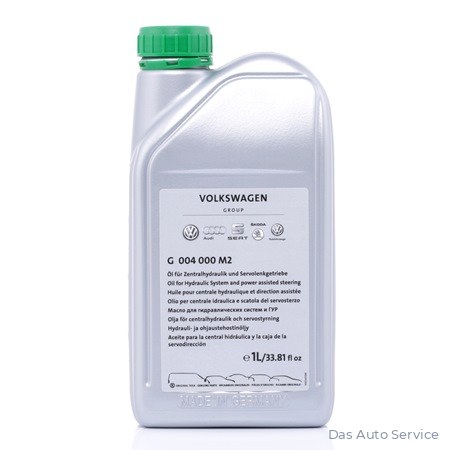
Genuine VAG hydraulic fluid G004000M2 1l
Genuine hydraulic fluid for systems that specifically require it. Only use fluid that meets the requirements of your particular vehicle.
View in shop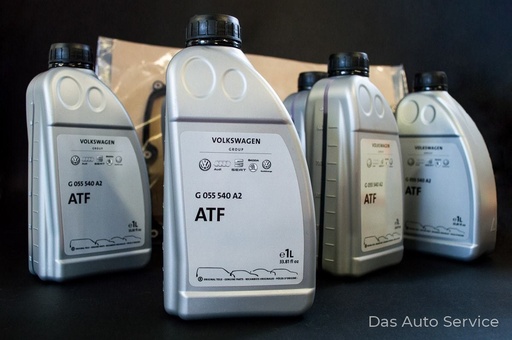
Genuine Tiptronic gearbox service set for Q7 / Cayenne / Touareg
Genuine Tiptronic service kit for the Touareg. Using the correct oil and servicing the gearbox properly are important for keeping the automatic gearbox working as it should.
View in shopRead more
- Pre-purchase inspection
- Diagnostics
- Audi Air Suspension Problems: Why Does It Sag?
- VW Touareg 7P 3.0 TDI Service Schedule
- VW Touareg CR 3.0 TDI Service Schedule
Frequently asked questions
What are the most common VW Touareg problems?
On the Touareg 7L and 7P, pay particular attention to the air suspension and transfer case. You should also check the suspension arms, bushes, Tiptronic gearbox and electronics.
Why does my Touareg sag after being parked?
It could be caused by leaking air springs or a faulty valve block. The compressor also needs checking, especially if it runs for too long.
Is the Touareg transfer case reliable?
The transfer case can work perfectly well, but you need to check its condition. Unusual noises, vibrations when turning and 4MOTION faults are all reasons to have it diagnosed. Its oil also needs changing every 90,000 km, together with the gearbox oil.