"Coolant lasts forever." I hear that so often I've lost count of how many people believe it. And I get it. Your car runs fine, the engine doesn't overheat, the heater works and nothing's leaking. So why change something that's supposedly good for life? I'll tell you why. Because the biggest problem with old coolant isn't the cold weather outside. It's what that coolant does inside your engine. Especially to the aluminium engine block. And you won't see any of that damage until one day your car starts losing coolant.
When to change engine coolant?
At Das Auto Service, we change engine coolant every third heating season. That's what I recommend for your car too, whether you drive a VW, Audi, Škoda, SEAT, Cupra, Porsche, Bentley or Lamborghini. We don't wait for the coolant to turn cloudy, for a leak to appear or for the engine to start overheating. We change it on time, while everything's still working properly. Because the whole point of servicing your car is to prevent expensive repairs, not wait for them to happen.
There's something else that's important too. Every autumn, before the first frost, we check the coolant's freeze protection. That's a separate check. It doesn't mean you need to replace the coolant every year. I just want to know that when the temperature drops, your car's cooling system is ready for it. You really don't want to find out something's wrong on the first freezing morning of winter.
Why doesn't engine coolant last forever?
This is where most people get it wrong. They think coolant is only there to stop the engine from freezing. But it has another really important job: protecting the metal parts inside the cooling system. Coolant contains special additives that protect the aluminium engine block, cylinder head, water pump and radiators. The trouble is, those additives don't last forever. They gradually wear out, and the coolant slowly loses its ability to protect everything inside.
Think of it this way. Your engine might look absolutely fine from the outside, but inside, old coolant could already be eating away at the aluminium. Tiny areas of damage start appearing, almost like little pits in the metal. You can't hear them, you won't feel anything different when you're driving, and you certainly won't spot them just by opening the bonnet. Until one day, a leak appears. And now we're not talking about a simple coolant change any more. We're dealing with a problem that could have been avoided.
That's exactly why I don't like the phrase "lasts a lifetime". Whose lifetime are we talking about? The coolant's or the engine's? I want your engine to last as long as possible, not gamble on a liquid keeping its protective properties forever. I'm telling you this because I care about your car and the money you'll have to spend if something goes wrong. Preventative maintenance might seem unnecessary. Right up until the repair bill arrives.
How do I know when it's time to change the coolant?
The easiest way is to know when your coolant was last changed. But I know how it goes. You buy a car, get it serviced, time passes, and suddenly you're not quite sure when this or that was last done. So let me explain what we look for and which warning signs you shouldn't ignore. You don't need to wait for all of them to appear at once.
- Three heating seasons have passed since the last coolant change. That's reason enough to replace it, even if it looks perfectly fine.
- The coolant looks cloudy or contains sediment. If the liquid no longer looks clean, don't assume everything's fine just because the engine isn't overheating.
- The autumn check shows that the coolant's freeze protection isn't good enough for the temperatures expected. That means the liquid won't give your engine the protection it needs in cold weather.
- Someone has topped it up with water or a different type of coolant. Once that happens, you can't be confident the mixture still has the right protective properties.
There's one thing I really want you to remember. Even if the coolant looks clean and passes the freeze protection test, that doesn't mean the protective additives inside are still as good as new. That's exactly why we have a replacement interval. We don't judge coolant by its colour alone, and we don't rely on the engine running at a normal temperature as proof that everything's fine.
What exactly happens during a coolant change?
Changing the coolant isn't just a matter of opening a drain plug, letting whatever comes out drain away and pouring in some fresh liquid. The cooling system needs to be serviced properly. Otherwise, you could fill it with excellent new coolant but leave old contamination or trapped air inside. That's why we follow a proper procedure at our workshop.
- First, we drain the old coolant and flush the cooling system. The idea is to remove the old contamination rather than leave it circulating inside.
- Next, we fill the system using only genuine coolant mixed in the correct proportion. We don't randomly mix different fluids together.
- We bleed the system following the manufacturer's procedure. That simply means removing any trapped air that shouldn't be there.
- Finally, we check for leaks and measure the freeze protection. I want to know everything's right before I hand your car back to you.
People often ask me whether different types of coolant can be mixed. That's not something I'd ever answer just by looking at the colour. If you'd like to understand more, read my article on G12, G12++, G13 and G12evo – can you mix them?. And before the cold weather arrives, take a little time to read about the autumn car check – ten minutes that can save you trouble in winter. Both are worth knowing about if you want peace of mind with your car.
IMPORTANT! Don't top up your cooling system with tap water. You'll dilute the coolant's protection and introduce limescale into the system. And don't mix different types of coolant without knowing what you're doing. Use only genuine coolant that's correctly specified for your car.
Which coolant and other fluids should I use?
I insist on genuine fluids because I don't want to cut corners on the things protecting your car's expensive components. With coolant, it's not just about preventing freezing. It's also about protecting the metal parts inside the engine. And while we're talking about fluids, let me remind you of something else. Brake fluid needs changing too. At our workshop, we replace it every two years. Don't forget about that one.
Tip from Kris Mladenov: Write the year of the coolant change on the expansion tank cap. That way, you'll never have to wonder when it was last done. Three winters later, you'll know it's time again. Couldn't be simpler, but it works brilliantly.
I hope you've found this article useful! If you have, I'd love you to share it with a friend who cares about their car too. My mission has always been simple. When I know something useful, I want more people to know it. Because I'd much rather explain how to look after your engine now than have to explain one day why it needs an expensive repair. Look after your car. And your wallet.
The solution in our shop
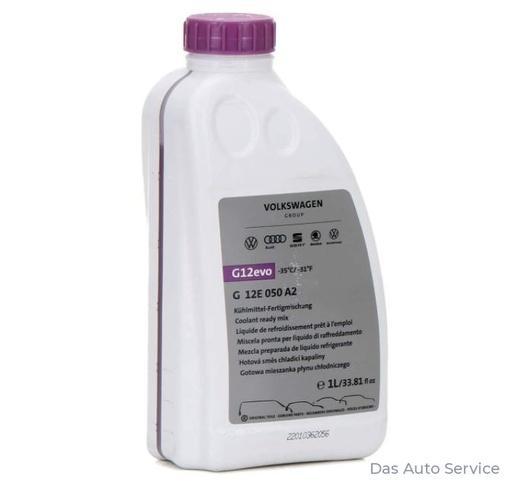
Genuine VAG G12Evo antifreeze G12E050A2 1.0l
Genuine G12evo coolant. We use genuine coolant because choosing the right fluid and mixing it in the correct proportion are essential for protecting the cooling system.
View in shop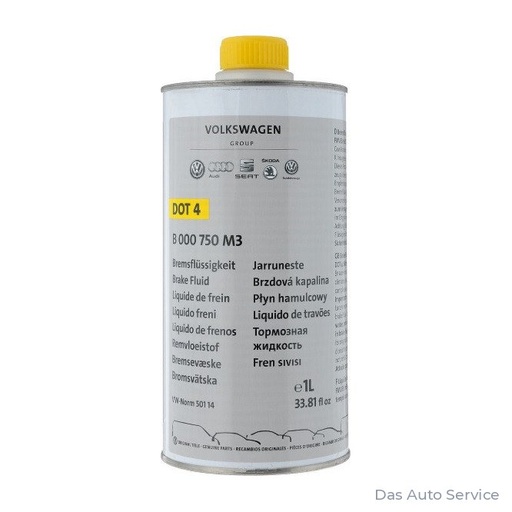
Genuine Audi/Volkswagen DOT 4 brake fluid B000750M3 1l
Genuine DOT 4 brake fluid. We replace brake fluid every two years so this important part of your car's maintenance doesn't get overlooked.
View in shopRead more
- Routine servicing
- G12, G13 and G12evo Coolant Compatibility Guide
- Car Winter Preparation Checklist: 10 Essential Checks
Frequently asked questions
How often should engine coolant be changed?
At Das Auto Service, I recommend changing the coolant every third heating season. We also check the freeze protection separately every autumn, before the first frost.
Why doesn't engine coolant last forever?
Because its protective additives gradually wear out. Old coolant can start corroding the aluminium engine block, cylinder head, water pump and radiators without you noticing anything wrong until a leak appears.
Can I top up with water instead of coolant?
I wouldn't recommend it. Tap water dilutes the coolant's protective properties and introduces limescale into the cooling system. Use genuine coolant mixed in the correct proportion.
If the coolant looks clean and the engine isn't overheating, do I still need to change it?
Yes, once three heating seasons have passed. Clean-looking coolant and a normal engine temperature don't mean the protective additives inside haven't worn out.