Do you know the worst thing about a car battery? You usually find out there's a problem when you're in the biggest hurry. One cold morning, you get into your car, press the start button and... nothing. Everything was fine yesterday, but today the car won't start. I hear this all the time at the workshop. The truth is, a battery rarely gives you a clear warning, but there are almost always signs we can spot early. The question is whether you know what to look for and when to get it checked, before it leaves you stranded in a car park.
How can I tell if my car battery is getting weak?
A battery doesn't always die suddenly. It often starts losing its ability to deliver enough power, especially when the car is cold or has been parked for a few days. The problem is that many people think the early signs are normal. They're not. They're warning signs. Here's what to look out for.
- The starter motor turns more slowly in the morning. If your engine used to start straight away but now you can hear the starter struggling, the battery might no longer have enough power. Especially if this happens after the car has been parked for a while.
- Start/Stop stops working. The system may disable automatic engine stop when the battery doesn't have enough charge. That doesn't necessarily mean the battery is faulty, but it's a good reason to have it checked. I've explained in detail why Start/Stop stops working in winter.
- Low-voltage warning messages appear. When you start the car, you might see warning lights or messages on the dashboard, or various systems might start flashing. Don't be too quick to blame the electronics. We need to check the power supply first.
- The car won't start after being parked for a few days. If the battery can't hold enough charge, it could be a sign that it's getting weak. But something in the car might also be drawing power while it's locked.
Here's something important. None of these signs, on its own, means you definitely need to buy a new battery. And this is where the difference lies between replacing parts on a guess and finding out what's actually wrong. Because you could fit a brand-new battery and find yourself with a flat battery again a few days later. Not much point in that, is there?
How do we check whether the battery really needs replacing?
Quite often, someone measures the voltage with a voltmeter, sees a number and immediately declares the battery good or bad. But voltage doesn't tell the whole story. A battery can show what looks like a perfectly normal voltage, then fail to deliver enough power when the starter motor needs it. That's why, at Das Auto Service, we check not just the battery itself, but also the conditions it's working under.
- We measure the voltage with the engine off and during starting. This shows us how the battery behaves when the car is at rest and how it responds when the starter motor puts it under load. These two measurements tell us much more than a single reading on a voltmeter.
- We test the battery's capacity with a specialist tester. This is a device that assesses the condition of the battery rather than simply displaying its voltage. It helps us work out whether the battery still has enough power to do its job.
- We check the charging system and alternator. If the car isn't charging the battery properly, even a new battery won't solve the problem. So we need to make sure the charging system is working as it should.
- We check for a parasitic battery drain when the car is locked. Put simply, we look for anything that keeps using electricity while the car is parked. If something is draining the battery, replacing it won't fix the underlying cause.
After these checks, we can tell whether the battery has become weak, whether it isn't charging properly or whether something is draining it while the car is parked. That's the right way to do it. Not replacing parts until we happen to stumble across the problem. Unfortunately, that approach is still common in the trade.
What should I know when replacing a car battery?
This is where we come to one of the most commonly overlooked details. In modern Audi, VW, Škoda, SEAT and other Volkswagen Group cars, the battery isn't just a box you connect two cables to. The car monitors its condition and adjusts the charging accordingly. So it's not enough for the new battery simply to fit where the old one was. There are three things we need to get right.
- The correct battery type. If your car has Start/Stop and came from the factory with an AGM or EFB battery, we need to take that into account. We don't just pick any battery because its dimensions happen to match.
- The correct battery capacity. The replacement battery must meet the car's requirements. We don't guess whether a higher or lower capacity will be suitable. We check exactly what your particular car needs.
- Coding the new battery. After replacing it, we need to tell the car's electronics that a new battery has been fitted. Otherwise, the system may continue managing the charging incorrectly, as though the old battery were still installed.
IMPORTANT! On a car with Start/Stop, replacing the battery without the necessary coding can lead to incorrect charging and shorten the life of the new battery. Don't skip this step.
When is the best time to replace a car battery?
The best time isn't the morning your car refuses to start. If testing shows that the battery's capacity has dropped, I recommend replacing it before winter. Cold mornings are exactly when a weak battery is most likely to leave you stranded. That's why an autumn battery check can save you a lot of trouble. Have a look at why I also recommend an autumn car check.
I wouldn't replace a battery just because someone has decided it's about time. First, we test it, check the charging system and look for any unwanted power drain. If the results show that the battery is weak, then replacing it makes sense. That way, you're not spending money on something that might not even be causing the problem.
Tip from Kris Mladenov: If your car is going to be parked for a long time without being driven, use a suitable battery maintenance charger. It's one of the best ways to look after the battery. And have it checked before winter, even if everything seems fine. Better to discover a problem at the workshop than in a car park.
I hope you've found this article useful! If you have, I'd be happy if you shared it with a friend who also drives a Volkswagen Group car. My mission is simple: when I know something, I want more people to know it too. Because the more you understand how your car works, the harder it is for someone to convince you to replace parts for no good reason.
The solution in our shop
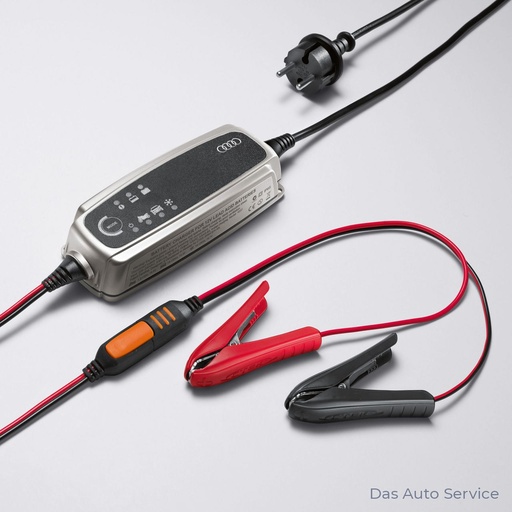
Genuine Audi battery charger. A practical way to maintain the battery's charge when the car is parked for long periods without being used.
View in shop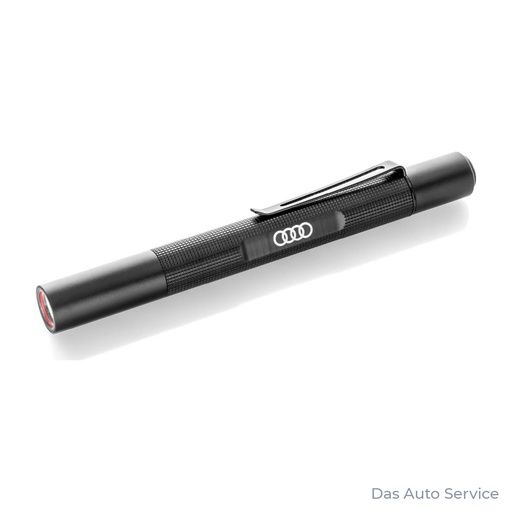
Compact LED torch. Handy to keep nearby when you need to check something around the car in the dark, especially if the car won't start.
View in shopRead more
- Electrical faults and control modules
- VW Battery Coding: Why Start/Stop Stops in Winter
- Car Winter Preparation Checklist: 10 Essential Checks
Frequently asked questions
How do I know if my car battery needs replacing?
If the starter motor turns slowly, Start/Stop isn't working or the car won't start after being parked, have the battery tested. These signs alone aren't enough to say for certain that it needs replacing.
Does a new car battery need coding?
Yes, if the car has a battery management system that requires it. Coding is particularly important on cars with Start/Stop to make sure the battery charges correctly.
Should I choose an AGM or EFB battery for my car?
Choose the type specified for your particular car. If it came from the factory with an AGM or EFB battery, you need to take that into account rather than simply buying a battery with the same dimensions.
Can a new car battery go flat after just a few days?
Yes, if the car isn't charging it properly or something is draining power while it's parked. That's why we check both the alternator and the electrical power consumption when the car is locked.