"Tell me which car to buy!" I hear this every day at the workshop. Friends ask me, customers ask me, even people I've never met ask me. Everyone wants a specific make, model and engine that won't give them any trouble. But that car doesn't exist. For me, the question isn't which car is the most reliable in the world. It's which car suits you best and what condition the particular car you've found is actually in. I don't have one answer that works for everyone, but I do have a few rules that could save you thousands.
What should I consider when choosing a used car?
First, I need to know how you're going to use the car. There's no point recommending a diesel for high mileage if you mostly drive a few streets around town. And the opposite is true too. If you're constantly travelling on motorways, the right choice could be completely different. So before we talk about makes and models, I want you to answer three questions.
- How many kilometres do you drive a year, and where? Mostly around town, on motorways or a mixture of both? That's the first thing that determines which engine you should look for.
- What's your budget? I'm not just talking about the money you'll spend buying the car. You need to set aside a separate budget for servicing and maintenance during the first year. Buying the car is the beginning of the expense, not the end.
- What's the history of the particular car? A model might have a brilliant reputation, but the one in front of you could have been neglected. And a car with more kilometres on the clock could be a much better buy than another that looks brand new.
Which used cars do I recommend most often?
I'll give you some specific examples from the VW, Audi and Škoda models we work on. But! Don't take this list as a guarantee that every one of these cars is a good buy. I only recommend them when they have a clear history, have passed a diagnostic check and are in the condition the seller claims.
If you cover a lot of kilometres
I'd look at the VW Golf 7 and Škoda Octavia 3 with the 2.0 TDI engine. Also the VW Passat B7 and B8, Škoda Superb and Audi A4 B8 or B9 with the 2.0 TDI. These are cars I often discuss with people who do a lot of driving. But I insist on two things: documented maintenance and a clean diagnostic report. Just because a car has a 2.0 TDI badge doesn't mean it's a good buy.
If you mostly drive around town
Here I'd look at the VW Golf 7 and Škoda Octavia 3 with the newer-generation 1.4 TSI, as well as the more recent 1.5 TSI engines. A petrol engine doesn't have the DPF, the diesel particulate filter we're familiar with on diesel cars. That's one less thing to worry about when driving around town. Of course, you still need to check the individual car. Don't buy it just because it has a petrol engine.
If you're looking for a family car
Here I'd choose based on how much space you actually need. The VW Touran, Škoda Octavia Combi, Škoda Superb and VW Tiguan are among the options I'd consider. Not everyone needs a big car, and not every family can fit comfortably into a smaller one. Choose the size that suits your everyday life, then look for the best-maintained example you can find.
What should I check before paying for a used car?
This is where the real work begins. Plenty of people spend weeks comparing adverts, photos and equipment lists, but when they finally find a car they like, they're in a rush to hand over the money. I'd do exactly the opposite. You've found a car you like, but before buying it, you need to check whether the claims in the advert match reality.
- Service history. Not just a service book full of stamps, but genuine documents showing the repairs and servicing that have been carried out. I've explained in detail how to check a car's genuine service history.
- Diagnostics using the manufacturer's diagnostic equipment. It's not enough for someone to tell me there are no warning lights on the dashboard. I want to see what the car's systems are reporting.
- An inspection underneath the car. A car can look fantastic on the outside but tell a completely different story underneath. See how we inspect a car from underneath during a pre-purchase inspection.
- A test drive with the engine cold and at operating temperature. I want to feel how the engine and gearbox behave under different conditions. If the gearbox jerks or snatches, that's not something I'd just smile and ignore.
We carry out all these checks as part of our pre-purchase inspectionat Das Auto Service. The idea isn't to put you off buying the car. It's to make sure you know what you're buying. If there's a problem, it's better to find out before the car becomes yours. At that point, you still have a choice.
What are the biggest traps when buying a used car?
There are a few things sellers say that immediately make me ask more questions. It doesn't necessarily mean the seller is lying to you. It means you need to check a bit more before taking their word for it.
- "There's no service book, but the car is perfect." Fine, but how do we prove that? Words are no substitute for documents.
- "It's an old car, but it's done very few kilometres." That's possible. But low mileage on its own proves nothing about the car's history or condition.
- "It's just been imported from Germany, but there are no documents." That's a reason to investigate further. Read what to check before paying for a car from Germany.
WARNING! The cheapest car often turns out to be the most expensive one when it has no history. A low purchase price means nothing if you then start paying to fix problems nobody told you about.
Which used car would I buy myself?
If I had to choose between a car with higher mileage but a clear history and another with suspiciously low mileage but no documents, I'd choose the first one, provided an inspection confirmed its condition. For me, knowing how a car has been maintained matters far more than the number on the odometer. And there's one more thing. I want a workshop I can trust to look after it. If you're wondering how to find one, read which questions to ask when choosing a workshop.
After buying the car, I'd start with a proper service. At Das Auto Service, I recommend changing the engine oil and all filters — oil, fuel, air and cabin — every 10,000 km or once a year, whichever comes first. This applies to cars driven in Bulgaria, regardless of which oil is used or the LongLife service intervals. For me, keeping the engine healthy matters more than extended service intervals, which are also linked to environmental requirements.
Tip from Kris Mladenov: Don't choose a car just because it has low mileage. Look for a clear service history, good mechanical condition and a workshop you can trust to look after it. That's a much more sensible way to buy a used car.
I hope you've found this article useful! If you have, I'd be grateful if you shared it with a friend who's currently looking for a car. My mission is simple: when I know something, I want more people to know it too. Especially when that knowledge could save them from making an expensive mistake.
The solution in our shop

Genuine Longlife III FE 0W30 oil 5L
Genuine LongLife III oil is an option for the first service after buying the car, provided it meets the engine's requirements. Using the correct oil is important, but it doesn't replace regular oil changes.
View in shop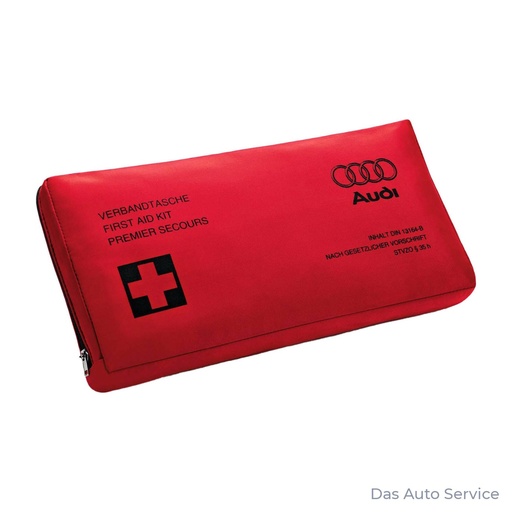
The genuine Audi first aid kit is a practical addition to your car's equipment. Check whether the car you're buying has all the necessary accessories.
View in shopRead more
- Pre-purchase inspection
- Used car import from official dealers in Germany
- How to Choose a VAG Specialist Garage in Sofia
- Buying a Car from Germany: What to Check
- Used Car Inspection: What to Check Underneath
Frequently asked questions
Which used car is the most reliable?
There's no single model that's the best choice for everyone. I'd choose a car with a proven service history, good diagnostic results and a condition that's been confirmed by an inspection.
What should I check before buying a used car?
The service history, diagnostics using the manufacturer's equipment, the condition underneath the car and how it behaves on a test drive, both cold and at operating temperature. Don't rely solely on the advert or what the seller tells you.
Is a pre-purchase inspection worth it?
Yes, absolutely. It's much better to know about any problems before you pay than to discover them after the car is already yours.