You're driving along, the car feels great, pulls nicely, and then suddenly starts jerking, almost as if someone's yanking the handbrake on and off. The engine management light starts flashing. Then it stops flashing but stays on. With the 1.8 and 2.0 TFSI, it's usually an ignition problem – a coil or spark plug. Catch it early and it's a half-hour repair. That's why I want you to recognise the signs of 2.0 TFSI ignition coil problems before they turn into something more expensive.
Why do ignition coils and spark plugs work harder on a TFSI?
Turbocharged engines with direct injection run at pretty high pressures inside the cylinders. To produce a spark under that pressure, the ignition coil has to deliver a higher voltage than it would in an older naturally aspirated engine. And if the spark plug is already worn, it needs even more voltage. The coil gets hot, struggles to keep up and eventually burns out. See how one old spark plug can ruin a perfectly healthy ignition coil?
How do you recognise 2.0 TFSI ignition coil problems?
- You put your foot down, the engine misfires and the car jerks, especially when you ask more of it.
- The engine management light flashes. That's the car telling you the engine is misfiring right now.
- At idle, the engine runs unevenly and you can feel the whole car shaking.
- A diagnostic scan shows misfire fault codes from P0300 to P0304. For individual cylinder misfires, the last digit tells us exactly which cylinder is affected.
If the engine management light is flashing, don't keep driving. When the engine misfires, unburnt fuel reaches the catalytic converter and overheats it. Believe me, replacing an ignition coil and spark plug is a much smaller headache than replacing a ruined catalytic converter.
How do we tell whether it's the coil, spark plug or something else?
- First, we read the fault codes and identify exactly which cylinder is misfiring.
- We swap its ignition coil with the one from the neighbouring cylinder.
- If the misfire follows the coil, we've found the culprit. If it stays on the same cylinder, we check the spark plug and fuel injector.
- We also look down the spark plug well to see whether any oil has collected there.
On these engines, we quite often find oil around the spark plug, down inside its well. Usually, the valve cover gasket is leaking. The oil damages the rubber part of the ignition coil, and the spark starts escaping to the outside instead of reaching the spark plug. When that happens, we replace the seals too. Otherwise, you fit a brand-new coil and, before long, you're back with exactly the same problem.
How often should you change the spark plugs?
I've explained this in more detail in my article about service intervals. On petrol engines, the spark plugs should be changed every 60,000 km. We fit genuine plugs matched to the specific engine, with the correct electrode gap, and tighten them using a torque wrench. Don't overlook that last bit. Overtighten a spark plug and you could damage the threads in the aluminium cylinder head.
If one ignition coil fails, should you replace all of them?
It depends on how old the others are. If one coil has failed and the rest have been there for years, I'd replace the lot. After all, they've all done the same amount of work, and the next one might give up soon. But if the coils are relatively new, there's no reason to replace them all. In that case, we change only the faulty one.
A tip from Kris Mladenov: Don't wait for your spark plugs to start causing trouble. Change them on time and your ignition coils will last a lot longer. And if the engine management light starts flashing, don't put the engine under any more load. Come and see us so we can find out what's causing the misfire.
If you drive a 1.8 or 2.0 TFSI and notice the car jerking while the engine management light flashes, don't put off getting it checked. I want you to understand what's happening under the bonnet and why acting early can save you a lot of trouble. If you've found this helpful, send the article to a friend who drives a TFSI too.
Find it in our shop
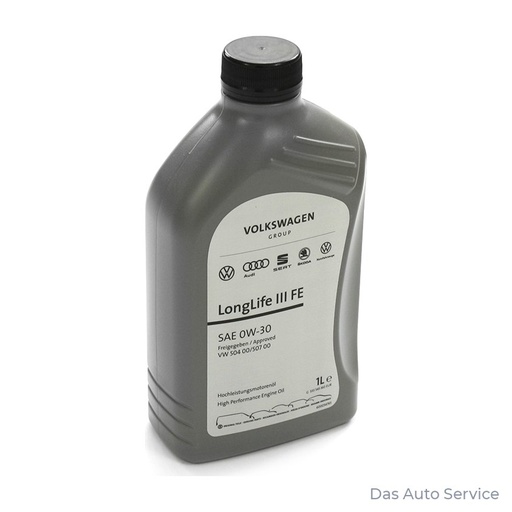
Genuine LongLife III FE 0W30 engine oil
Genuine LongLife III FE 0W30 engine oil, 1 litre, for topping up according to your engine's specification.
View in our shopRead more
- Vehicle diagnostics at Das Auto Service
- Routine servicing
- Service intervals for transverse-engine platforms (Golf, Passat…)
- 2.0 TFSI (EA113 and EA888 Gen1): worn fuel pump cam follower
- The torque wrench: why we tighten everything to the correct torque
- 1.8 and 2.0 TSI (EA888 Gen3): water pump and thermostat leaks
- 2.0 TFSI burning oil and whistling: crankcase ventilation problems
Frequently asked questions
Why is the engine management light flashing on my 2.0 TFSI?
Because the engine is misfiring right now. Most often, it's an ignition coil or spark plug. A diagnostic check tells us which cylinder is misfiring.
How often should I change the spark plugs on a TFSI?
Every 60,000 km. Make sure you use genuine spark plugs that are exactly right for your engine.
Why is there oil in the spark plug well?
Usually, the valve cover gasket is leaking. If the oil has damaged the ignition coil, we replace both the coil and the gasket. Otherwise, the same problem will come back.