I've talked to you about 3.0 TDI timing chain replacement before in my Audi A4 B8 3.0 TDI service schedule, where I explained that the timing chains are one of the biggest headaches with these engines. I know what a lot of people think: "It's got a timing chain, so it'll last forever." I wish that were true, my friend, but it isn't. Timing chains wear out too, and sooner or later they need replacing. I want to show you why this is such a big job, exactly what we do and why I really don't want you putting it off. The photos are from a real repair we've carried out at Das Auto Service.
Where are the timing chains hidden on the V6 TDI?
On most engines, the timing chain or timing belt sits at the front, near the radiator, where it's easier to get to. But on the Audi and VW 3.0 V6 TDI, the timing chains are at the back of the engine, right next to the gearbox. This makes the engine shorter and helps it fit into the engine bay. Clever design, but there's one big drawback. To reach those chains, we have to take the entire engine out. There's no cover at the front that we can simply remove to get the job done.
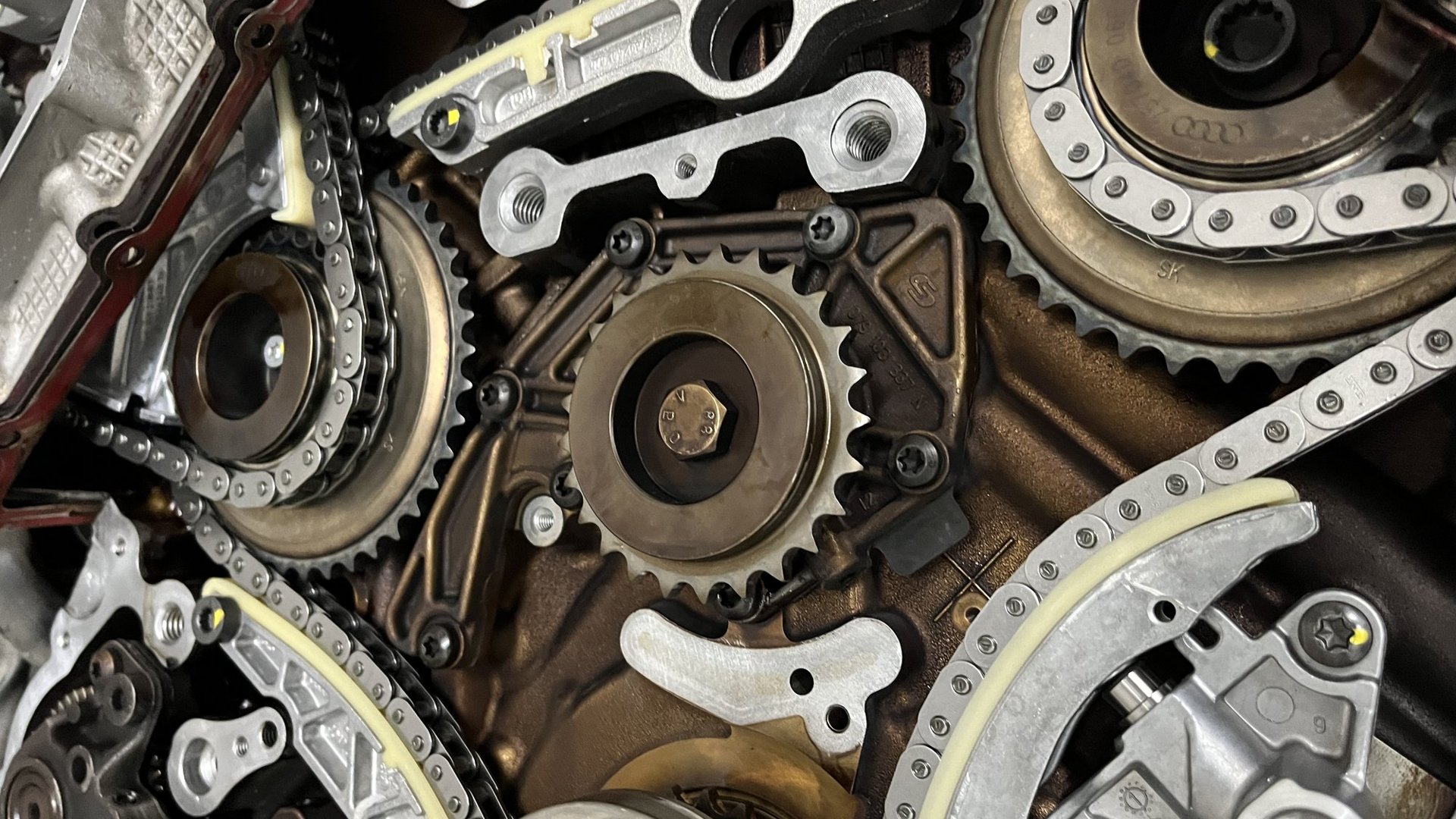
How can you tell if your 3.0 TDI timing chains are worn?
- You start the engine from cold and hear a faint knocking or metallic rattle for the first 1–3 seconds.
- Gradually, that rattling lasts longer, and sometimes you can even hear it once the engine is warm.
- The check engine light comes on, and a diagnostic scan shows faults relating to the camshaft position compared with the crankshaft.
- In the live diagnostic data, we can see the camshaft timing deviations gradually increasing.
At Das Auto Service, we don't wait until the timing chain starts making a terrible racket before deciding there's a problem. We connect the diagnostic tester and check the live data. The camshaft timing deviations help us work out how much the chain has stretched, even if it isn't making much noise yet. So if you hear anything unusual when starting your car, come and let us check it before things get worse.
If your timing chain is already rattling, please don't keep driving around like that for long. On a V6 TDI, if the chain jumps even a single tooth, the valves can hit the pistons. And then we're no longer talking about replacing timing chains. We're talking about repairing the engine itself. Believe me, that's a completely different story.
What exactly do we replace when doing the timing chains?
- We start by removing the engine. On the 3.0 TDI, that's the proper way to reach the timing chains and do everything around them correctly.
- We fit new genuine timing chains, tensioners and guides. There's no way we're fitting a new chain and leaving the old tensioner in place.
- We also replace the seals we disturb during the repair, especially the rear crankshaft oil seal.
- While the engine is out, we inspect the parts that are difficult to reach once it's back in the car. Hoses, seals, glow plugs. If anything needs replacing, now's the time to do it.
- Once everything is back together, we check the timing with a diagnostic tester and carry out any necessary adaptations.
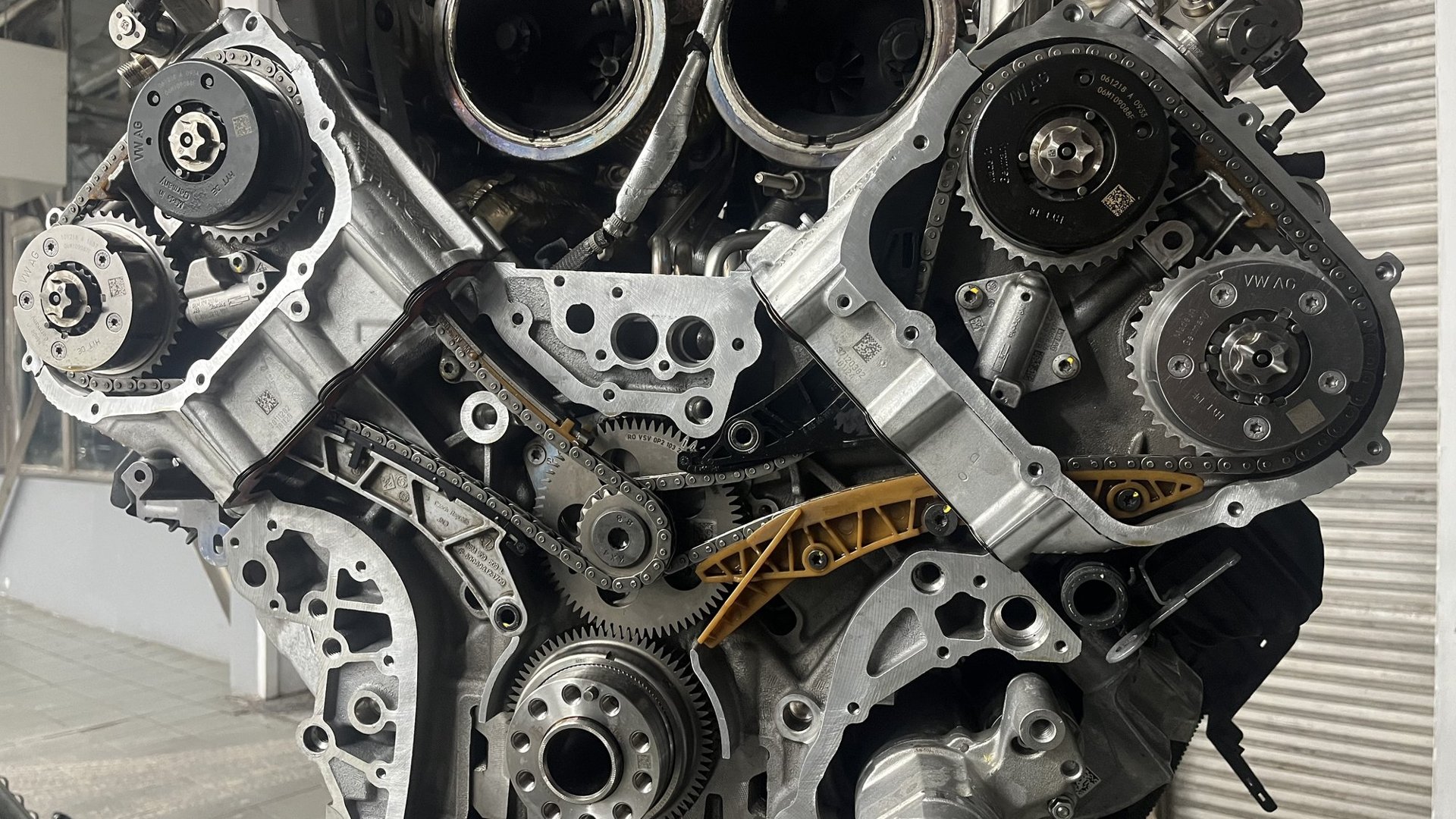
Why is replacing the timing chains such a big job?
Because most of the hard work happens before we even get to the chains themselves. Actually replacing them isn't the hardest part. What takes all the time is stripping everything down and then putting it all back together. And that's exactly why I don't want you replacing just one chain or one tensioner. Once we've opened up the engine, we do the complete kit. It's simple: take it apart once, replace everything properly and put it back together knowing the job has been done right for years to come.
How can you help your 3.0 TDI timing chains last longer?
- If you drive in Bulgaria, change the engine oil and oil filter every 10,000 km or once a year, whichever comes first, regardless of the oil you use. Always use oil that meets the correct specification for your engine. The tensioners rely on engine oil to work properly, so its condition really matters.
- Don't leave the engine idling for ages to warm up, and don't push it to high revs while it's still cold.
- As soon as you hear that first little rattle on start-up, come and let us check it. Don't wait until it starts rattling all the time.
A tip from Kris Mladenov: If you've found a car with a 3.0 TDI that you're thinking of buying, ask the seller to start it in front of you when the engine is completely cold. Listen carefully during those first few seconds. If the timing chains rattle, factor the repair into your calculations before buying the car. Everything else about it might be wonderful, but trust me, a timing chain replacement is not the surprise you want after bringing your new car home.
I hope you now have a better idea of why replacing the timing chains on a 3.0 TDI is such a big job. It's not simply a case of taking off the old chain and fitting a new one. If you've found this helpful, send the article to a friend who drives a 3.0 TDI. You might save them a lot of headaches.
Read more
- Complete engine rebuilds
- Diagnostics
- Audi A4 B8 3.0 TDI service schedule
- 3.0 TDI not warming up: thermostat or coolant pump?
- 2.0 TDI with balance shafts: the oil pump problem
- Audi A5 8T 3.0 TDI service schedule
- Audi A6 C7 3.0 TDI service schedule
Frequently asked questions
Where are the timing chains on a 3.0 TDI?
They're at the back of the engine, right next to the gearbox. That's why we have to remove the entire engine to replace them.
How do I know if my 3.0 TDI timing chains need replacing?
It usually starts with a faint knocking or rattling noise during the first few seconds of a cold start. We also check the camshaft timing deviations in the live diagnostic data to see what condition the chains are in.
Can I replace just the timing chains?
I wouldn't recommend it. Once we've opened up the engine, we replace the chains, tensioners, guides and any seals we've had to disturb. There's no point taking everything apart only to leave old parts inside.