"AdBlue system fault – engine start not possible in 1,000 km." Imagine you're driving your Audi A4 B9 or A6 C7 2.0 TDI and this message suddenly appears on the dashboard. The car drives perfectly well. The engine sounds normal, there's no smoke, no strange noises and no loss of power. But the computer is telling you that, after a certain distance, you won't be able to start the engine. And do you know the worst part? Plenty of people start replacing expensive parts without even finding out what's actually gone wrong. I want to explain how the system works, where Audi A4 B9 and A6 C7 AdBlue problems usually come from, and why you really shouldn't wait for that countdown to reach zero.
How does the AdBlue system in my Audi actually work?
I'll keep it simple. AdBlue is a fluid that your car injects into the exhaust system to reduce harmful nitrogen oxides in the exhaust gases. It doesn't go into the engine, and it has nothing to do with the diesel in your fuel tank. It does its job further down the exhaust, after the gases have left the engine. Sounds straightforward, doesn't it? But behind the scenes, there's a pump, a heater, an injector, sensors and a computer keeping an eye on everything.
Inside the AdBlue tank, there's a module containing a pump and a heater. The pump sends the fluid through a pipe to the dosing injector, which sprays it into the exhaust before the SCR catalytic converter. The heater makes sure the fluid can still be used when it's cold outside. And the SCR catalytic converter is where AdBlue helps reduce those harmful nitrogen oxides. So far, it all makes sense, right?
But there's another important part. There are NOx sensors before and after the SCR catalytic converter. NOx simply means nitrogen oxides. These sensors tell the computer what's in the exhaust gases before treatment and what's left afterwards. That's how the computer knows whether the system is actually doing its job. If the results aren't what it expects, it starts looking for a problem. And this is exactly where diagnosing these faults can get tricky.
What are the most common Audi A4 B9 and A6 C7 AdBlue problems?
When you bring your car to us and say, "Kris, the AdBlue warning light has come on and it's counting down the kilometres," the first thing I want to know is which part of the system isn't working properly. Because the same warning can have several different causes. And if we start replacing parts just because someone on a forum had a similar fault, we could easily spend your money without fixing anything. So here's where we usually look first.
- The module inside the AdBlue tank. This contains the pump and heater. If either one isn't working properly, the system can't supply AdBlue as it should.
- The NOx sensors. Think of these as the computer's eyes. If they're sending incorrect readings, the computer may think the system isn't reducing nitrogen oxides properly, even when the catalytic converter itself isn't the problem.
- The dosing injector. AdBlue passes through this injector, and over time crystals can build up. That can stop the system from injecting the right amount of fluid.
- Fault code P20EE. This means the SCR catalytic converter's efficiency is below the permitted threshold. But! It doesn't automatically mean the catalytic converter has failed. Very often, the real problem is somewhere else in the system.
I really want you to remember that last point. A fault code tells us what the computer has noticed, but it doesn't always tell us which part needs replacing. That's why proper diagnostics matter so much. If you'd like to understand the whole system better, have a read of AdBlue problems on the 2.0 TDI EA288. I've explained in more detail what's behind that engine no-start warning.
What do you check when the AdBlue warning comes on?
First of all, we don't start taking your car apart. At Das Auto Service, we begin with diagnostics because I want to see what's actually happening, not guess. Reading the fault codes is only the beginning. We need to check how the system is working and whether the information coming from its different parts makes sense. Here's how we go about it.
- We read the stored fault codes and check the countdown to "engine start not possible". This tells us what the car has detected and how many kilometres the warning says you have left.
- We check the NOx sensor live data. These are the readings the sensors send to the computer. We look at whether those readings make sense.
- We carry out an AdBlue dosing test. We check whether the system is delivering the fluid properly instead of immediately blaming the catalytic converter.
- We check the quality of the AdBlue in the tank. After all, we can't expect the system to work properly if the fluid doesn't meet the required standard.
See the difference? One approach is to read P20EE and decide the catalytic converter needs replacing. The other is to check the pump, dosing system, sensors and fluid before making that decision. I prefer the second approach, because it's your money paying for the repair. And I want you to pay for fixing the actual problem, not for a series of expensive guesses.
How can I prevent AdBlue problems?
You can't guarantee that the pump or a NOx sensor will never fail. But you can avoid some of the trouble and, more importantly, stop a small problem turning into a big one. You don't need to be a mechanic to do that. Just follow a few simple rules and don't ignore the first warning your car gives you.
- Use AdBlue that meets ISO 22241 and pour it from a sealed container. That way, you know exactly what fluid is going into the tank.
- Don't add water or experiment with "additives". The system is designed to work with fluid that meets a specific standard, not homemade mixtures.
- Get the car diagnosed as soon as the first fault appears. Don't assume that clearing the fault code with a diagnostic tool counts as a repair. If the cause is still there, the problem hasn't been fixed.
One more thing. Don't treat AdBlue as something you only think about when a warning appears. Make it part of your car's regular checks. For everything else, I've put together separate service schedules for the Audi A4 B9 2.0 TDI and Audi A6 C7 2.0 TDI. The idea is simple: look after your car before it has to ask you for help.
WARNING! The countdown to "engine start not possible" doesn't stop just because your car is still driving normally. If you let it reach zero, the engine won't start. Don't wait until you've only got a few kilometres left before looking for a solution.
Tip from Kris Mladenov: On the Audi A4 B9 and A6 C7, include an AdBlue system check with every service. Don't wait for that frightening dashboard message before giving the system a thought. The earlier you spot a problem, the better your chances of fixing it before it causes you serious trouble.
I hope you've found this article useful! If you have, I'd really appreciate you sharing it with a friend who drives an Audi with AdBlue. My mission has always been simple: when I know something useful, I want more people to know it too. Because the better you understand your car, the harder it is for someone to talk you into paying for repairs you don't need. And I'm telling you this as a friend: don't ignore those warnings. Because when things go wrong, it's your own pocket that pays the bill.
The solution in our shop
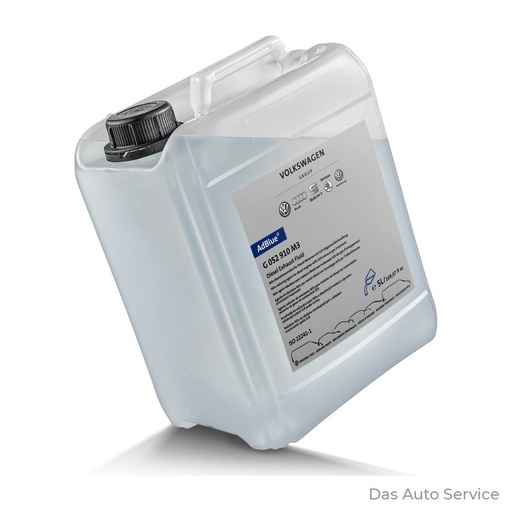
Genuine VAG AdBlue® fluid G052910M4 10l
Genuine AdBlue 10 l. The right choice when you need to top up with fluid that meets the system's requirements, without taking a chance on an unknown product.
View in shop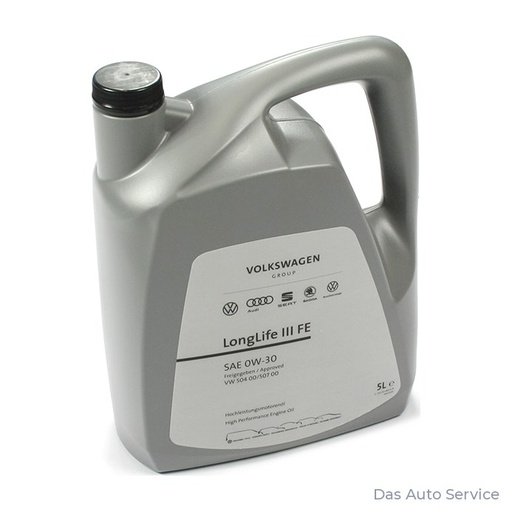
Genuine Longlife III FE 0W30 oil 5L
Genuine LongLife III engine oil. For regular engine servicing when your car requires the corresponding oil specification. Engine oil won't fix an AdBlue problem, but looking after your engine is just as important.
View in shopRead more
- Diagnostics
- AdBlue No Start in 1000 km: 2.0 TDI EA288
- Audi A4 B9 2.0 TDI Service Schedule
- Audi A6 C7 2.0 TDI Service Schedule
Frequently asked questions
What does "engine start not possible in 1,000 km" mean?
The computer has detected a problem with the AdBlue system and started a countdown. If that countdown reaches zero, the engine won't start. That's why you need to get the car diagnosed before it gets that far.
What are the most common AdBlue problems on the Audi A4 B9?
The first things we usually check are the pump and heater module inside the AdBlue tank, the NOx sensors and the dosing injector. The actual cause needs to be found through proper diagnostics, not guesswork.
What does fault code P20EE mean?
It means the SCR catalytic converter's efficiency is below the permitted threshold. It doesn't prove the catalytic converter itself has failed, because the cause could be somewhere else in the AdBlue system.
Can I just clear the AdBlue fault code?
Clearing the fault code doesn't fix the problem. You need to find and repair the cause before the countdown reaches zero.