The Audi A8 4.2 TDI gives you a V8 diesel with enormous torque. It pulls like a petrol V8 but uses fuel like a diesel. Sounds like a dream if you love big, powerful cars, doesn't it? But there's one thing people often forget when buying one: it's still a V8 when the servicing bills arrive. And when something needs repairing, you quickly understand why this engine isn't for everyone's budget. I want to walk you through the Audi A8 4.2 TDI common problems, what's actually under the bonnet and how to look after it. Because the 4.2 TDI is a fantastic engine, as long as you know what you're getting into.
Which cars came with the 4.2 TDI?
First, you need to know that this V8 diesel wasn't exclusive to the Audi A8. You'll also find it in the big Q7 and the VW Touareg. Power varies depending on the model and version, but the idea is always the same: a big diesel engine that can move a heavy car without breaking a sweat. Here's where you'll find it.
- Audi A8 D3 – 326 bhp. This is the one for someone who wants a big luxury saloon with a V8 diesel under the bonnet.
- Audi A8 D4 – 350 and 385 bhp. More powerful versions of the same idea, with loads of torque and effortless acceleration.
- Audi Q7 4L – 326 and 340 bhp. The big SUV also came with this engine.
- VW Touareg 7P – 340 bhp. Another large car where you'll find this V8 diesel.
Why am I listing all these models? Because when we're talking about the 4.2 TDI, we need to look beyond the badge on the bonnet. We need to know exactly which engine is underneath, how it's been maintained and what work might be coming up. The same type of engine can be an absolute pleasure to drive. But if it's been neglected, it can also give you some very expensive headaches.
How do I identify my exact 4.2 TDI engine code?
People often ask me whether knowing their car has a 4.2 TDI is enough. No, it isn't. The exact engine code matters when we're looking for parts, checking technical information or planning a repair. Otherwise, we could be talking about one version of the engine while you've actually got another under your bonnet.
Where can you find it? Check the vehicle information sticker in the boot or the details in your service book. We can also identify it through diagnostics. If you're buying one of these cars, ask for the exact engine code before drawing conclusions from the advert alone. It's a simple check, but it saves a lot of confusion.
What's actually under the bonnet of a 4.2 TDI?
Picture eight cylinders, two turbochargers and a diesel engine that delivers enormous pulling power the moment you put your foot down. That's why the big A8 feels so effortless when you accelerate. But that same design also means more components, more work during servicing and more complicated repairs. You can't have all that performance and expect the running costs of a small four-cylinder diesel.
- V8 engine with common rail injection – fuel is delivered to the injectors through a shared high-pressure system. Two turbochargers help the engine produce its impressive power.
- Timing chains at the rear of the engine – these keep the internal engine components working in sync. Their position makes replacing them a major job.
- Tiptronic – an automatic gearbox that transfers the engine's power to the wheels.
- quattro or 4MOTION – the four-wheel-drive systems used depending on the vehicle.
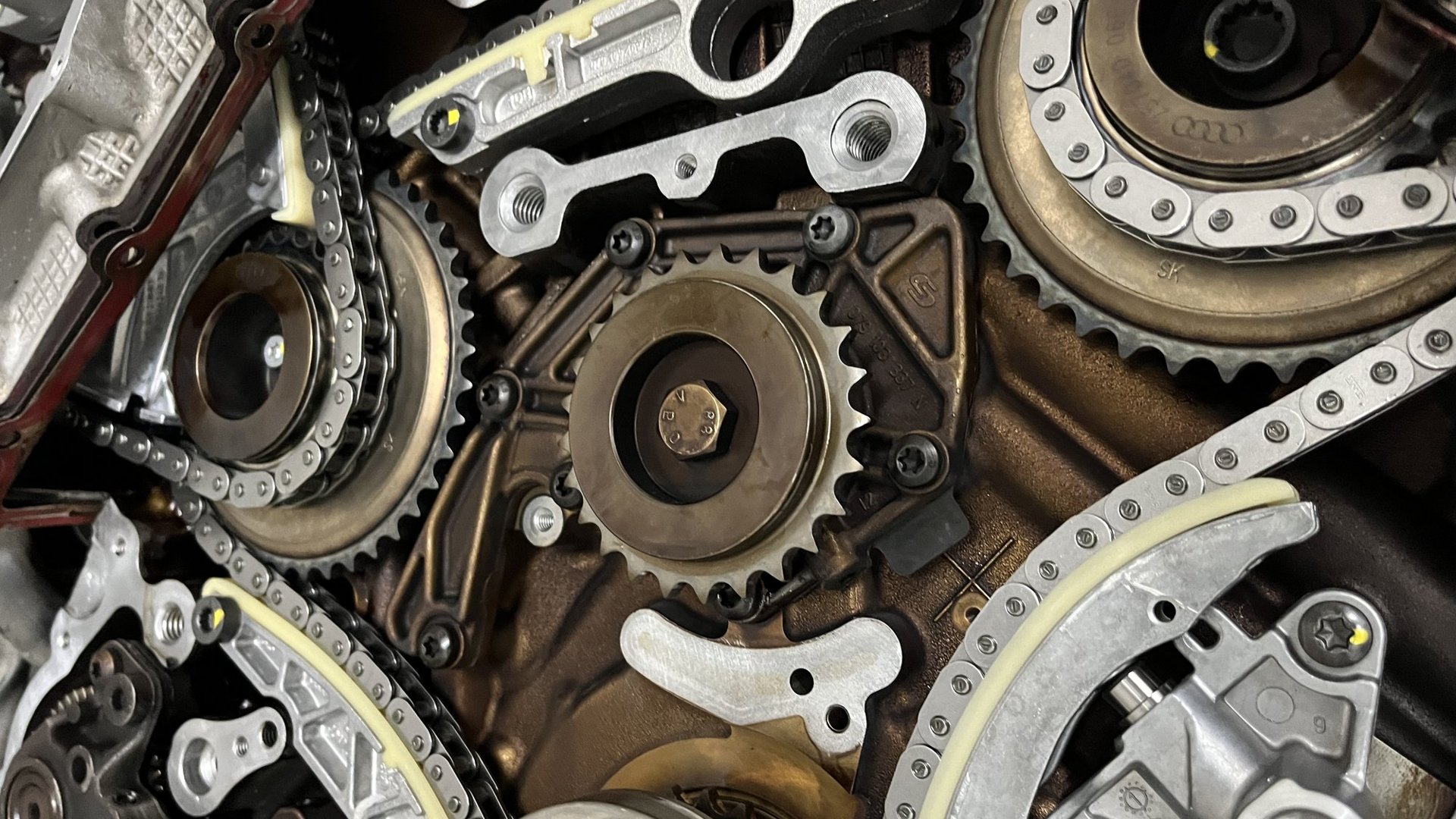
And here's the important bit. When an engine is this complicated, you can't maintain it with the attitude of "I'll keep driving until something breaks." Even repairing a seemingly small component can involve taking half the surrounding parts apart. That's why I never look only at how an engine runs today. I also check the condition of the parts that could cause trouble tomorrow.
What are the most common Audi A8 4.2 TDI problems?
Why does everyone talk about the timing chains?
If there's one thing I want you to remember about this engine, it's the timing chains. They're fitted at the rear, just like on the petrol 4.2 V8 FSI: timing chains at the rear and the 3.0 TDI. That makes them difficult to reach. Replacing them isn't a routine service where you undo a few bolts and call it a day. We're talking about a major repair.
When an owner tells me, "There's a rattling noise when I start the engine," I'm not going to reassure him before we've checked where that noise is coming from. Not every rattle means the timing chains are faulty, but on this engine we can't afford to ignore it. The worst thing you can do is turn up the music and hope the noise goes away. The car might carry on driving perfectly well, but that doesn't mean the problem has disappeared.
Why can the twin turbos and EGR cause trouble?
Two turbochargers are wonderful when you put your foot down. But as the car gets older, they also mean more components that can wear out. The 4.2 TDI also has two coolers connected to the EGR system, which sends some of the exhaust gases back into the engine. All these parts work together, but over time each one can need attention.
If your car isn't pulling as well as it used to, don't immediately blame the turbos. The same goes if the engine warning light comes on. First, we need to find out what's actually wrong instead of replacing parts based on guesswork. Because with a V8 diesel, throwing parts at a problem is a particularly expensive way to diagnose it.
Why don't the DPF and injectors like city driving?
I'll tell you straight: the 4.2 TDI isn't an engine I'd choose just for short trips around town. It has a DPF, the diesel particulate filter that traps soot from the exhaust gases, and a complicated fuel injection system. When you mainly drive in the city, the conditions aren't ideal for this kind of diesel. And problems can gradually start piling up.
Quite often, an owner sees the engine warning light come on or the glow plug warning light start flashing, and the first thought is to clear the fault codes. But deleting fault codes doesn't repair anything. The same goes for DPF regeneration. It isn't a magic fix for every problem. We need to check what's happening with the engine, injectors and exhaust system before deciding what to do next.
Why can the A8's air suspension sink?
In a big A8, comfort is a huge part of the appeal. The air suspension gives the car that lovely smooth ride, but its components get older too. If you notice the car sinking or sitting lower than it should, don't just accept it as normal behaviour for an ageing luxury saloon. We need to find the cause.
I've explained this in more detail in my article on why air suspension sinks. The important thing to understand is that when you're buying an A8, the engine and gearbox aren't the only things that matter. The suspension is part of the running costs too. And if you overlook it during a pre-purchase inspection, guess whose pocket the surprise repair bill comes out of? Yours.
How should I service my 4.2 TDI to avoid major repairs?
There's no magic trick here. A big diesel needs regular maintenance, the right oils and attention as soon as something starts to go wrong. I've never liked the idea of stretching service intervals as far as possible just because the service schedule says LongLife. For cars driven in Bulgaria, our recommendations are very clear.
- Engine oil and all filters – every 10,000 km or once a year, whichever comes first. We replace the oil filter, fuel filter, air filter and cabin filter together with the engine oil, regardless of whether it's LongLife oil.
- Tiptronic in the Audi A8 – change the gearbox oil every 120,000 km. After servicing, we always carry out a gearbox adaptation.
- Tiptronic in the Audi Q7 and VW Touareg – service every 90,000 km, together with the transfer case and differential oils. I've explained this in more detail in my article on the ZF 8HP Tiptronic.
- Transfer case and differentials – we service these together with the gearbox rather than leaving them until some unspecified date in the future.
- Crankcase ventilation filter – on diesel engines, we replace it every 80,000 km. It's an important part of looking after the engine, not something to forget about.
- Brake fluid – every 2 years. Antifreeze – every third heating season.
- Air conditioning – service every spring, including a system check and replacement of the receiver-drier and the oil in the system. These help protect the compressor. Simply topping up the refrigerant isn't a complete air conditioning service.
- Workshop inspection – every 6 months, so we can catch problems early before they become serious.
I want to pay particular attention to engine oil. Manufacturers' recommendations are often influenced by environmental requirements, but that doesn't mean the longest possible service interval is what's best for your engine. That's why our rule at Das Auto Service is every 10,000 km or once a year, with no exceptions for LongLife oil. The way to save money isn't to skip servicing. It's to prevent the major repair in the first place.
WARNING! If you hear a rattling noise from the timing chains on your 4.2 TDI, don't put off getting it checked. Replacing the chains is already a major job, but if you ignore the problem and it leads to more serious engine damage, the consequences can be much worse. Don't wait until the engine stops running to realise how important that rattling noise was.
Is the Audi A8 4.2 TDI worth buying?
Yes, absolutely. But only if you understand what you're buying. If you cover a lot of miles, love big engines and can afford to maintain the car properly, the 4.2 TDI can be a real pleasure to own. The power of that V8 diesel and the effortless way it moves the big A8 are exactly why people love this engine.
But if you're looking for a cheap big diesel that you can just fill up and drive, I'd advise you to think again. You've got eight cylinders, two turbochargers, a complicated fuel system, timing chains at the rear and an automatic gearbox. All of that needs looking after. And when the previous owner has been saving money by skipping maintenance, it's often the next owner who ends up paying for it.
So don't fall in love with the car just because it feels fantastic on a test drive. Check the engine, timing chains, gearbox and suspension. Look at its service history and make sure there's evidence of the repairs that have been carried out. Only then should you decide whether that particular car is right for you.
Tip from Kris Mladenov: Buying an Audi A8 4.2 TDI? Start with a thorough inspection of the timing chains and engine, then have the gearbox and suspension checked. Don't judge the car only by how well it drives. When you know its real condition, you can make a decision you won't regret.
I hope you've found this article useful! If you have, I'd love you to share it with a friend who owns a 4.2 TDI or is thinking about buying one. My mission is simple: when I know something useful, I want more people to know it too. Because the better you understand your car, the less likely you are to end up paying for someone else's mistakes and neglected maintenance.
The solution in our shop
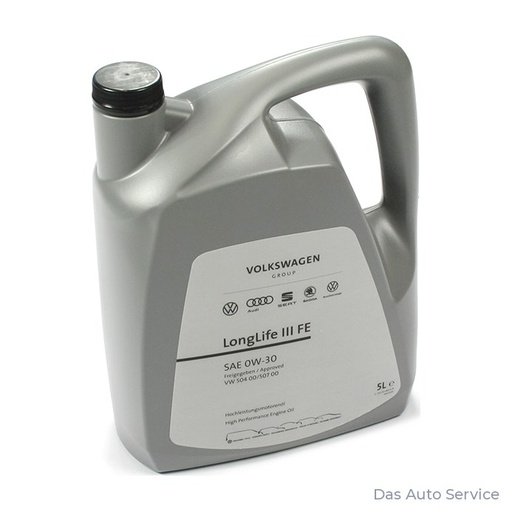
Genuine Longlife III FE 0W30 oil 5L
Genuine LongLife III engine oil meeting VW 507 00 is a suitable choice when this specification is prescribed for your particular engine. At Das Auto Service, we replace it together with all filters every 10,000 km or once a year, regardless of the LongLife label.
View in shopRead more
- Routine servicing
- Diagnostics
- Audi 4.2 FSI Timing Chain Replacement: What to Know
- 3.0 TDI Timing Chain Replacement: Why Remove the Engine?
- Audi Air Suspension Problems: Why Does It Sag?
- ZF 8HP Tiptronic Oil Change: Touareg, Q7 & Cayenne
Frequently asked questions
How long does a 4.2 TDI engine last?
There's no single mileage figure that applies to every car. It depends on how it's been driven, how well it's been maintained and whether problems have been fixed in time. Regular maintenance matters far more than promises of enormous mileage.
When should the timing chains on a 4.2 TDI be replaced?
I wouldn't give you a mileage figure without checking their condition first. If there's a suspicious noise, especially rattling when you start the engine, we need to find the cause rather than wait for the problem to become more serious.
4.2 TDI or 3.0 TDI – which should I choose?
If you really want the feel and power of a V8 and you're prepared for more complicated maintenance, the 4.2 TDI has a charm of its own. But if keeping maintenance costs reasonable is your main priority, don't choose the V8 just for its power.
How much fuel does the Audi A8 4.2 TDI use?
Fuel consumption depends on how you drive and the conditions you're driving in. The big advantage is that you get the feel of a petrol V8 with the fuel consumption of a diesel. Just don't confuse saving money on fuel with cheap maintenance.