What exactly is quattro? I hear this question all the time at the workshop. And the funny thing is, even people who've been driving Audis for years don't always know what's actually underneath their car. quattro is the name that helped make Audi what it is today. But here's the thing! It isn't just one system. There are several completely different ways of driving all four wheels. You've got Torsen, the crown gear differential, quattro ultra and Haldex. They all carry the quattro name, but they work differently, have different weak points and need different servicing. I'll explain how each one works without drowning you in technical jargon, so you know what you're driving and how to look after it.
What are the different generations of quattro?
The story starts in 1980, when Audi introduced the first quattro. The idea was simple: instead of the engine driving just two wheels, it would send power to all four. The system has changed several times since then, but the name has stayed the same. And that's where the confusion starts. When someone tells you, "It's got quattro", they haven't actually told you what's underneath the car.
- 1980 – the original quattro. It had a centre differential that the driver could lock manually. This is where the story began.
- From 1987 – Torsen. Audi introduced a mechanical self-locking centre differential. Sounds complicated, but all it means is that the mechanism automatically redistributes power between the front and rear axles.
- From 2010 – the crown gear differential. Audi introduced a new centre differential, first fitted to the RS5. You still had permanent four-wheel drive, but with a different mechanical design.
- From 2016 – quattro ultra. On four-cylinder models with a longitudinally mounted engine, the rear axle was no longer driven all the time. It engages when needed.
- Transversely mounted engines – Haldex. You'll find this on models such as the A3, TT and Q3. Here, a multi-plate clutch controls how much power reaches the rear wheels.
See how many different things are hiding behind one name? That's why I don't like it when someone tells me all quattro systems are the same. They're not. And if you service them all in the same way, sooner or later you could end up with a problem.
How do I know which quattro system my Audi has?
You can't tell for certain just by looking at the badge on the boot. The system depends on the model, engine and year of manufacture. Two cars with quattro badges can have completely different drivetrains. That's why, at Das Auto Service, we check the VIN and gearbox code. It tells us exactly which system we're dealing with, rather than guessing from photos and comments on internet forums.
This matters when you're buying a used Audi, too. It's not enough for the seller to tell you it's got "proper quattro". You need to know which system it has, because that determines which oils need changing and where. If your car has Torsen, have a read of Torsen quattro: servicing the differential and transfer case. I explain why you should never forget about these components when servicing your car.
How do the different quattro systems work?
Imagine the engine is someone pushing your car along, and the four wheels are four hands holding onto the road. Different quattro systems distribute that pushing force in different ways. Some drive all four wheels permanently, while others bring the rear wheels into action only when needed. I'll explain it just as I would if we were standing next to your car in the workshop.
How do Torsen and the crown gear differential work?
With Torsen and the crown gear differential, all four wheels are driven permanently. Between the front and rear axles, there's a mechanical centre differential that distributes torque. That's simply the twisting force the engine uses to turn the wheels. As driving conditions change, the mechanism adjusts how that force is shared. It doesn't wait for someone to engage the rear axle. The rear wheels are already helping to drive the car. That's the basic idea behind permanent quattro.
How does quattro ultra work?
This one works differently. With quattro ultra, the car normally drives through its front wheels, and clutches engage the rear axle when extra traction is needed. So we're not talking about permanent four-wheel drive like Torsen. The name is the same, but the mechanical design is different. That's particularly important when it comes to servicing, because the rear drive system has its own components and oil that you mustn't neglect.
How does Haldex work?
Haldex uses a multi-plate clutch positioned in front of the rear differential. This clutch controls how much power goes to the rear wheels. If you drive an A3, TT or Q3 with quattro, this is the system you need to understand. And don't confuse the Haldex clutch oil with the rear differential oil. They're two separate things, and both need servicing.
What does the sport differential do?
The sport differential has a different job. It distributes torque between the left and right rear wheels. Don't confuse it with the centre differential, which works between the front and rear axles. They're different mechanisms doing different jobs. If you want to understand what can go wrong with it, read my article about Audi sport differential problems.
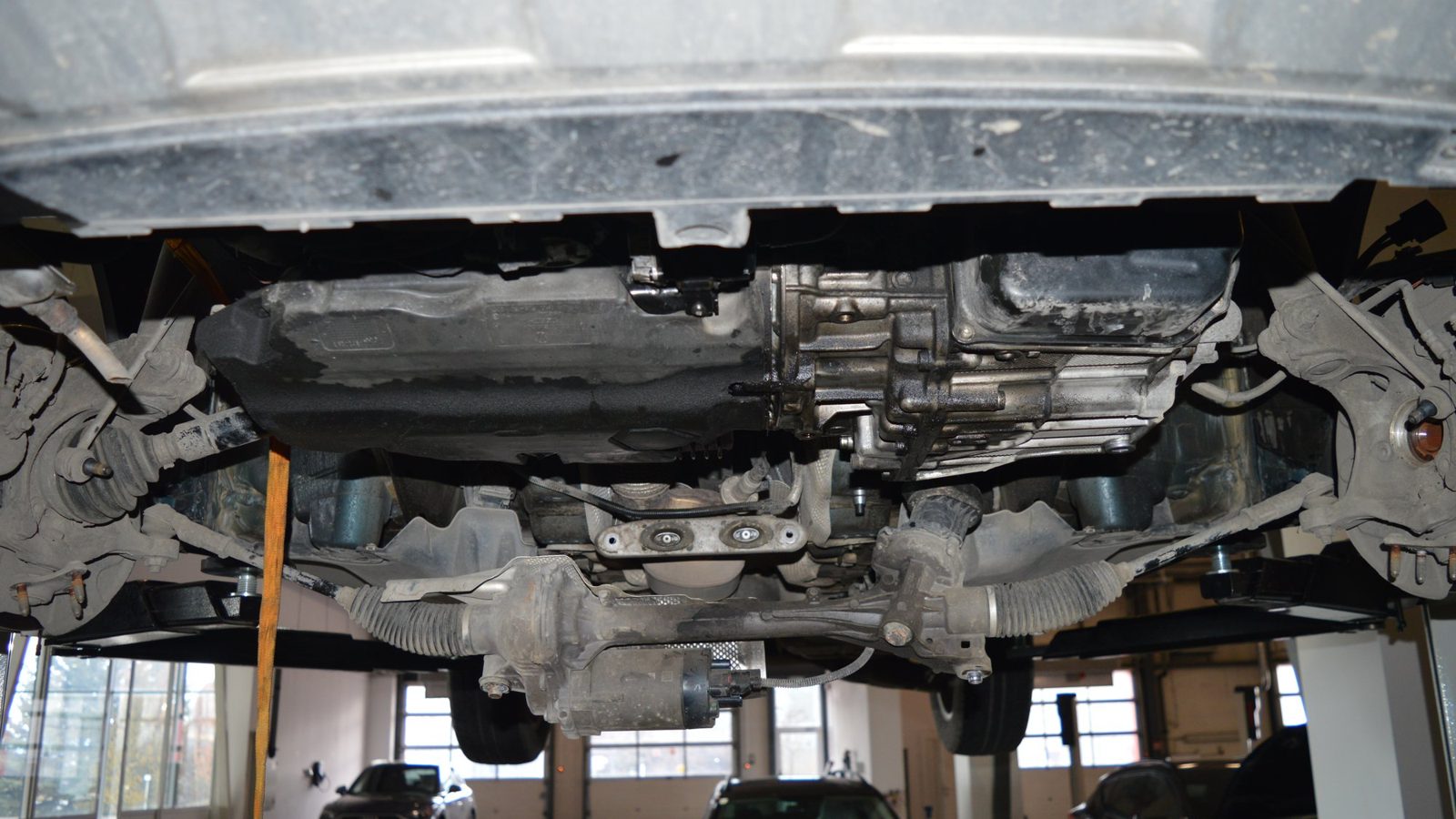
What are the common weak points of quattro?
I often hear people say that quattro is incredibly tough and doesn't need servicing. The first part might sound reassuring, but the second is dangerous advice. Any mechanism with gears, bearings or clutches needs the right oil. And if you neglect that oil, problems don't magically disappear just because there's a quattro badge on the boot.
What can go wrong with Torsen and the differentials?
With these systems, we look out for unusual noises, vibrations and oil leaks. Especially if the oil has been neglected. Sometimes an owner comes in saying, "There's a whining noise underneath", or "I can feel a vibration". But that alone doesn't prove the differential is faulty. We need to find out exactly where the problem is coming from. I don't like replacing parts based on guesswork, because in the end it's the customer who pays for someone else's guesses.
What can go wrong with quattro ultra?
With quattro ultra, we watch for faults related to engaging the rear axle. The system uses clutches that need to work properly so the rear wheels can be driven when required. If there's a problem, the first step is a proper diagnostic check. We don't just start replacing parts blindly. The better you understand the system, the less likely you are to pay for something that wasn't actually broken.
What problems can Haldex develop?
With Haldex, the most important thing is knowing which generation your car has and how it should be serviced. You can't treat every generation as though it's the same. There's separate oil for the clutch and separate oil for the rear differential. If you'd like more detail, I've explained it all in Haldex generations 1 to 5. Give it a read, especially if you don't know when those oils were last changed.
How should I service my Audi quattro system?
Now, this is the part I really want you to pay attention to. quattro isn't something you simply drive until it starts whining or shaking. There are oils that need changing and tyres that need to be right for the car. It's not complicated. But if you ignore these things, you'll be the one paying the repair bill, not the person who told you the oil was "filled for life".
- Differential and transfer case oils should be changed together with the gearbox oil, according to the particular transmission fitted to your car. Don't skip them just because everything seems to be working fine.
- With quattro ultra, the rear drive system oil needs changing every 30,000 km. This applies to the clutch-based system fitted to the A4, A5 and Q5 after 2016.
- With Haldex up to generation 4, both the clutch oil and rear differential oil need changing every 60,000 km.
- With Haldex generations 5 and 6, both oils need changing every 30,000 km. Don't just service the clutch and forget about the rear differential.
- All four tyres should be the same and evenly worn. That's part of looking after your drivetrain properly, not just a matter of how the car looks.
WARNING! Having different tyres at the front and rear puts extra strain on your quattro system with every kilometre you drive. Don't underestimate this. The drivetrain is constantly managing how power reaches the wheels, even when you can't feel what's happening underneath the car.
Is an Audi with quattro worth buying?
Yes, absolutely. Especially if you often drive in rain, snow or the mountains. quattro gives you extra traction and makes the car feel more secure in those conditions. But remember, no four-wheel-drive system can replace a good set of tyres. And if you want your car to last, you need to look after the oils in the drivetrain as well.
I like quattro. But what I like even more is an owner who understands what they're driving. Because that owner doesn't wait for a strange noise before remembering the differential needs attention. They don't wait for a fault code before asking what Haldex is. And they don't buy just two new tyres because the other two "have still got some life left". Small decisions today protect expensive mechanical parts tomorrow.
Tip from Kris Mladenov: Always replace your tyres as a set of four. With quattro, that's not a luxury. Keep all four tyres matching and evenly worn, and change the oils at the intervals required for your particular system. If you're not sure whether your car has Torsen, a crown gear differential, quattro ultra or Haldex, check the VIN and gearbox code first. That way, you're not servicing your car blindly.
I hope you've found this article useful! If you have, I'd really appreciate you sharing it with a friend who drives an Audi with quattro. My mission has always been simple: when I know something useful, I want more people to know it too. Because the better you understand your car, the harder it is for someone to convince you that it doesn't need servicing until something breaks.
The solution in our shop
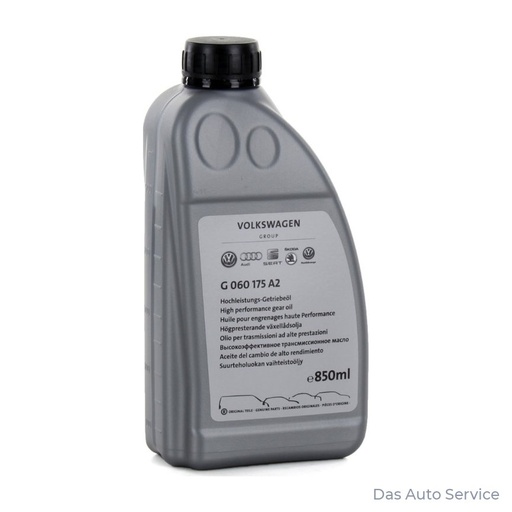
Genuine Haldex oil G060175A2 850ml
Genuine clutch oil for 5th-generation Haldex systems fitted to quattro models with a transversely mounted engine. Used when servicing the Haldex clutch. The rear differential oil is changed separately.
View in shopRead more
- Routine servicing
- Diagnostics
- Audi quattro Torsen differential oil change
- Haldex Service Intervals: Generations 1 to 5
- Audi Sport Differential Problems and Repair
Frequently asked questions
What is quattro?
quattro is Audi's name for its four-wheel-drive systems. There are several different designs, including Torsen, the crown gear differential, quattro ultra and Haldex.
What's the difference between quattro and Haldex?
quattro is the overall name, while Haldex is one of the systems that carries it. With Haldex, power reaches the rear wheels through a multi-plate clutch, whereas Torsen and the crown gear differential provide permanent four-wheel drive.
What is quattro ultra?
quattro ultra is a system where the car normally drives through its front wheels, with clutches engaging the rear axle when needed. You'll find it on the A4, A5 and Q5 after 2016.
Does quattro need servicing?
Yes. The differentials, transfer case and clutches contain oils that need changing according to the specific system. With quattro ultra, the interval is 30,000 km. With Haldex, it depends on the generation.