You park your car in the evening, lock it and everything seems fine. The next morning, you get in, turn the key or press the start button and... nothing. The battery is flat. You buy a new one, drive around for a week, and then one morning it happens all over again. I hear this at the workshop all the time: "Kris, I've fitted a brand-new battery and the car still won't start!" And do you know what's interesting? Quite often, there's absolutely nothing wrong with the battery. Something in the car is simply drawing power while it's locked and you think everything is switched off. Let me explain how we find the culprit, because the last thing I want is for you to spend money on yet another battery when the real problem is somewhere else.
Why is my car battery draining overnight when it's locked?
Imagine you're trying to sleep, but someone keeps switching the light on and waking you up. You wouldn't get much rest, would you? Modern cars are a bit like that. They're full of electronic control modules – little computers that look after different systems. When you lock the car, they don't all switch off straight away. Over the next few minutes, they gradually go into sleep mode. Once they're asleep, the car should be using very little power.
But here's the catch! If just one of those modules refuses to go to sleep, it can keep the car's entire electronic network awake. So instead of resting, the electronics carry on working and draining the battery. You can't see anything wrong. You can't hear anything unusual. Everything looks perfectly normal. Then you come back in the morning and the car won't start. That's why, whenever someone tells me their car is draining the battery, the first thing I want to know is whether the electronics are actually going to sleep.
What are the most common causes of battery drain?
There are several possibilities here, and I don't want you thinking it's always the same part causing trouble. Sometimes it's something really small. Other times, it's an electronic control module that isn't behaving as it should. The important thing is not to start replacing parts on a hunch. You could end up replacing half the car and still have exactly the same battery drain.
- An electronic control module that won't go to sleep. This happens particularly after repairs or when extra equipment has been fitted. One module carries on working when it should be asleep, keeping the rest of the electronics awake too.
- Aftermarket accessories. Chargers, dashcams and additional alarm systems can keep drawing power after you've locked the car. Especially if they're wired up to receive power all the time.
- A boot or glovebox light. You close the lid and assume the light has gone out. But if it's still on, it'll happily keep draining the battery without you having the slightest idea.
- A faulty alternator. There are diodes inside the alternator, and if one fails, it can cause an electrical drain. So the problem isn't necessarily the battery. It could be another part of the electrical system.
- An old battery. Yes, sometimes the battery really is the culprit. It simply can't hold enough charge any more. That's why we always test the battery itself before going looking for a more complicated fault.
How do you find exactly what's draining the battery?
This is where the real diagnostic work begins. There's something important I want you to understand: you don't find a battery drain by guessing. You find it by measuring. It's not enough for someone to plug in a diagnostic tool, read the fault codes, clear them and tell you everything's fine. The car might have no stored fault codes at all and still be draining its battery every night. That's why we follow a proper process at Das Auto Service.
- First, we measure how much current the car is drawing once it's locked and fully asleep. We wait for the electronic control modules to enter sleep mode, because it's perfectly normal for some of them to keep working immediately after you lock the car. This tells us whether there's actually an unusually high power draw.
- Next, we use a diagnostic tool to check which electronic network isn't going to sleep. We look for control modules that are still active when they shouldn't be. That points us in the right direction instead of having to take everything apart.
- Then we check the electrical circuits through the fuses. We remove them one at a time and watch for the current draw to drop. That helps us narrow the problem down to the circuit responsible for the drain.
- Finally, we check the condition of the battery and whether it's been correctly coded to the car. This matters on modern vehicles, especially if the battery has been replaced. I've explained it in more detail in my article on why a new car battery needs coding.
See the difference? Instead of telling you to replace the battery and see what happens, I want to find out exactly where that power is going. Because a new battery won't fix a control module that refuses to go to sleep. And it certainly won't switch off a light that's been left on. It might look as though the problem has gone away for a while, but sooner or later you'll be back with a car that won't start. And you'll be paying for it out of your own pocket again.
IMPORTANT! Aftermarket devices connected directly to the battery are the most common cause of this kind of drain. If you've had a dashcam, alarm or any other accessory fitted, don't rule it out just because it's been working perfectly until now.
What if I leave my car parked for a long time?
Then you also need to think about how long the car is sitting unused. Even when everything is working properly, a locked car still uses a small amount of electricity. But if there's an abnormal drain, the battery can go flat much more quickly. That's why it's important to tell the difference between normal power consumption and a genuine fault. If you're planning to leave your car unused for a while, have a read of my article on what to do when your car is parked for a long time.
Tip from Kris Mladenov: If your battery started going flat after you fitted a new dashcam, alarm or another accessory, that's where I'd start looking. Don't rush out and buy another battery before measuring the current draw. And if the problem keeps coming back, get a proper diagnosis rather than having someone clear the fault codes yet again.
I hope you've found this article useful! If you have, I'd really appreciate you sharing it with a friend who's wondering why their car has ended up with a flat battery yet again. My mission is simple: when I know something useful, I want more people to know it too. Because the better you understand your own car, the harder it is for someone to convince you to spend money on repairs you don't actually need.
The solution in our shop
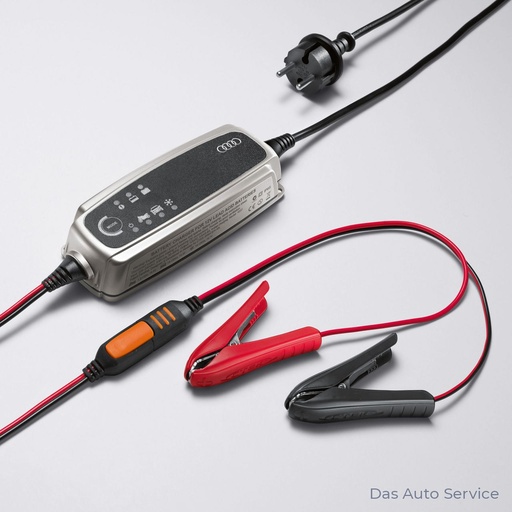
Genuine Audi battery charger. Handy for keeping your battery charged, especially when the car is parked for long periods. Just remember that a charger won't fix an electrical drain if there's one present.
View in shop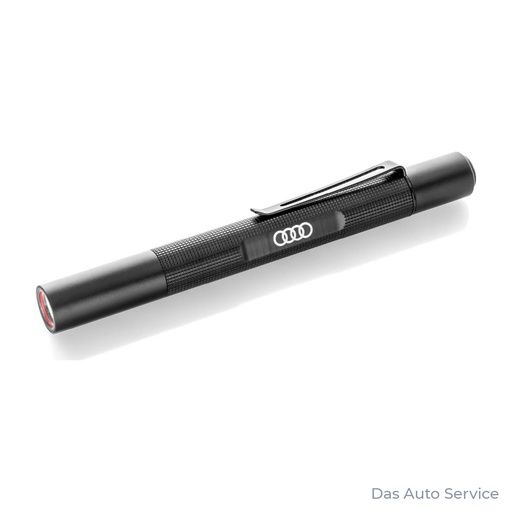
Compact LED torch. Handy when you want to check the boot, glovebox or another hard-to-reach area of your car in the dark.
View in shopRead more
- Electrical faults and control modules
- VW Battery Coding: Why Start/Stop Stops in Winter
- Car Storage Tips: Before and After Long-Term Storage
Frequently asked questions
Why does my car battery go flat overnight?
Most often, something is still drawing power after you've locked the car. It could be an electronic control module that won't go to sleep, an aftermarket accessory or even a light that's staying on.
How can I find out what's draining my car battery?
You need to measure the current draw once the car is locked and fully asleep, then check which electrical circuit is causing the drain. Simply reading and clearing fault codes isn't enough.
Can a dashcam drain my car battery?
Yes, especially if it's connected to a permanent power supply and keeps running after you've locked the car. If the problem started after the dashcam was fitted, that's one of the first things I'd check.