If you drive a petrol VW, Audi, Škoda or SEAT built from 2012 onwards, there's a good chance you've got an EA888 Gen 3 under the bonnet. This engine is fitted to a huge number of models across the VW Group, from the Octavia and Passat to the Golf GTI, Golf R and Audi S3. Over the years, I've heard all sorts of stories about the 1.8 and 2.0 TSI/TFSI, so I've put together this EA888 Gen 3 engine guide to help you understand what you're driving. I'll show you how to tell the generations apart, which engine codes to look for, where the common problems are and how to look after your engine so the pleasure of driving it doesn't turn into an expensive repair. Because the EA888 Gen 3 really is a good engine. But here's the thing! It won't forgive neglected maintenance either.
What are the different EA888 generations, and how do they compare?
Before we get into Gen 3, there's something I want to clear up because it catches a lot of people out. Not every 1.8 TSI or 2.0 TFSI is the same engine. EA888 is a whole family of engines that has gone through several generations, and the differences are pretty significant. So when someone tells you that all TSI engines burn oil or that they all have timing chain problems, ask them which generation they're talking about first. It matters.
- Gen 1 (2007–2008) – the first EA888. Known problems include the high-pressure fuel pump (HPFP) cam follower and the timing chain.
- Gen 2 (2008–2013) – the generation that earned a bad reputation for excessive oil consumption caused by the piston rings and a troublesome timing chain tensioner.
- Gen 3 (from 2012) – a heavily redesigned, lighter engine with a much better timing chain tensioner. The engine design is quite different by this point.
- Gen 3B (from 2015) – the next development, using the B-cycle to reduce fuel consumption. One example is the 190 hp Audi A4 B9 2.0 TFSI.
If you've got an older engine and it's burning oil, have a read of my article about oil consumption on the 1.8 and 2.0 TSI/TFSI. I've also explained how to tell if you've got a timing chain problem. The important thing is not to confuse Gen 2 problems with Gen 3 problems. Otherwise, you'll end up worrying about faults that might not even be common on your engine.
Which engine codes identify an EA888 Gen 3?
The most reliable way to find out exactly what's under your bonnet is to check the engine code. Don't just go by whether it says TSI or TFSI, or how much horsepower the seller has put in the advert. Two engines with the same capacity aren't necessarily the same version. Here are some of the typical EA888 Gen 3 engine codes.
- CJSA, CJSB – 1.8 TFSI, 180 hp. Found in the Audi A3 8V, Škoda Octavia 3 and VW Passat B8.
- CJEB – 1.8 TFSI, 170 hp. Used in the facelifted Audi A4 and A5.
- CHHB – 2.0 TSI, 220 hp. Best known from the VW Golf 7 GTI.
- CHHA – 2.0 TSI, 230 hp. The version fitted to the VW Golf 7 GTI Performance.
- CJXC – 2.0 TSI/TFSI, 300 hp. Found in the VW Golf 7 R and Audi S3 8V.
- DJHC – 2.0 TSI, 280 hp. Used in the VW Arteon.
Where can you find it? Check the sticker in the boot or your service book. You can also read the code with a diagnostic tool. This is especially important if you're buying a used car. I want you to know exactly which engine you're getting, rather than simply trusting what the seller has told you.
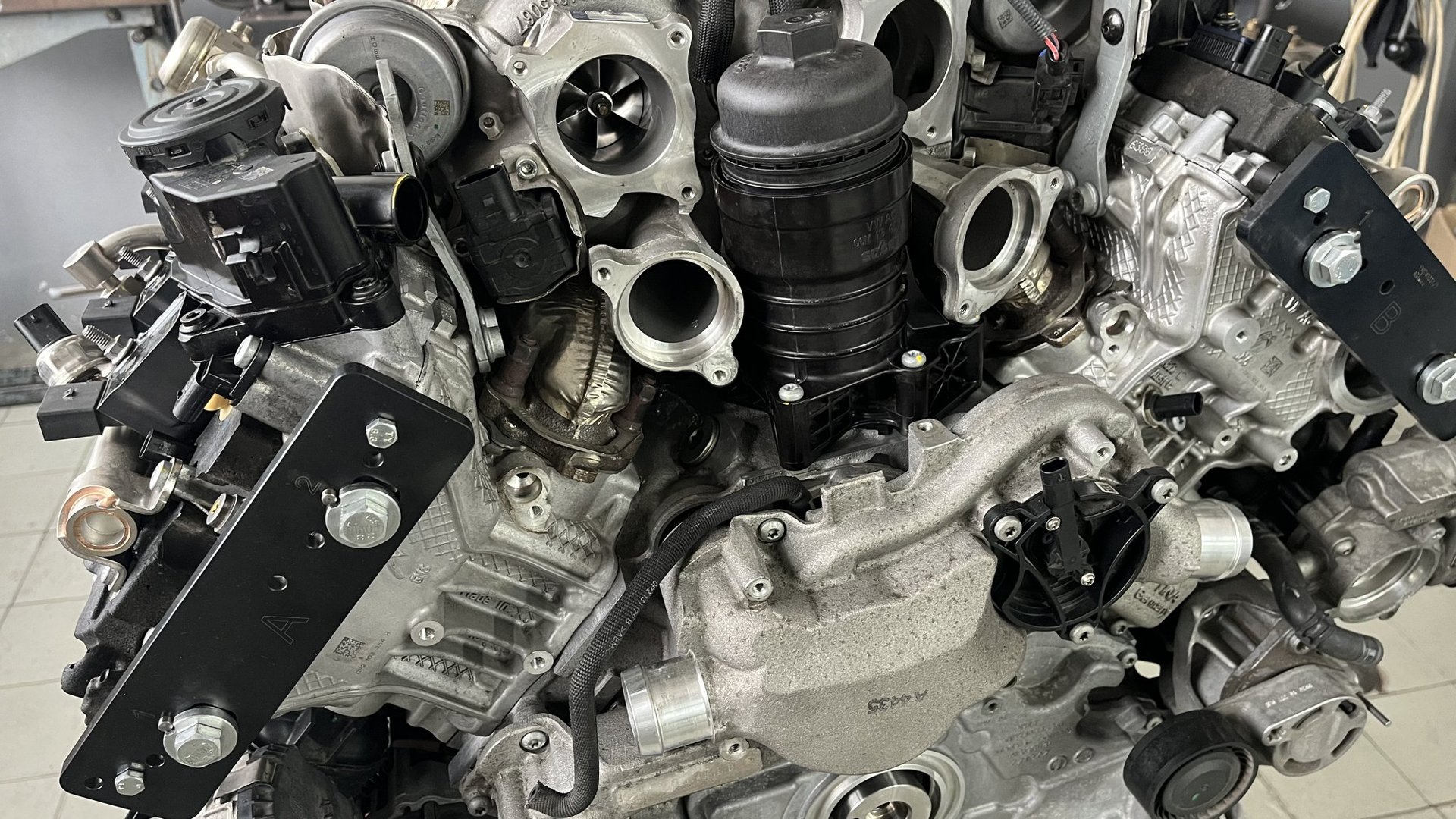
What's under the bonnet of an EA888 Gen 3?
The EA888 Gen 3 is a four-cylinder turbocharged petrol engine with a capacity of 1.8 or 2.0 litres. Fuel is injected directly into the cylinders, and many versions also have additional injection into the inlet manifold, known as MPI. What's interesting is that this engine combines features designed to improve efficiency with some pretty complicated control systems. And the more complicated an engine gets, the more important proper servicing becomes. The same goes for diagnostics. Guesswork has no place here.
- Four cylinders, a turbo and direct fuel injection. Many versions also have additional MPI injection.
- The exhaust manifold is integrated into the cylinder head to help the engine warm up more quickly.
- The camshafts are driven by a timing chain.
- The cooling system uses a module with rotary valves, housed together with the water pump in a shared plastic housing.
- The turbo's wastegate valve is electronically controlled.
What are the common problems with the EA888 Gen 3?
Now we're getting to the part you're probably most interested in. The EA888 Gen 3 is a much better engine than its predecessors, but that doesn't mean it's free from problems. Some start with a small symptom that's easy to overlook. Others develop gradually, which is exactly why I want you to know what to watch out for. I'll take you through them one by one so you don't end up paying for parts because someone says, "Let's try replacing this and see if it fixes it."
The water pump and thermostat
This is one of the first areas I pay close attention to. The plastic housing of the cooling module can warp from the heat and start leaking coolant. Usually, the level drops little by little. You might notice that familiar sweet smell, and sometimes the coolant warning light comes on. There's even a manufacturer's technical bulletin covering the repair of this problem. I've explained everything in detail in my article about water pump and thermostat leaks.
Crankcase ventilation
Another familiar weak point is the diaphragm in the crankcase ventilation oil separator, often called the PCV system. When it splits, the engine may start whistling, idling roughly and logging lean mixture fault codes. The trouble is that these symptoms can easily send you looking for a completely different problem. That's why I wouldn't start replacing parts blindly before checking the crankcase ventilation system.
The timing chain and tensioner
I've got some good news for you here. The Gen 3 tensioner is much better than the one fitted to Gen 2. But! That doesn't mean the timing chain lasts forever. On higher-mileage engines, especially those that haven't had regular oil changes, it's worth checking. We use a diagnostic tool to check the camshaft deviation and an endoscope to inspect the condition. That way, we can see what's actually happening rather than guessing based on mileage alone.
Carbon build-up on the inlet valves
On engines with direct injection only, carbon deposits build up on the inlet valves. It's a common characteristic of these engines, and it's not something you should ignore. Versions with dual injection are in a better position because the additional fuel injection significantly reduces that build-up. If you're curious about why it happens and how we clean it, have a read of my article about carbon build-up on the valves.
Ignition coils and spark plugs
You put your foot down, the engine starts misfiring and suddenly the engine management light begins flashing. Not pleasant, especially when the car was running perfectly just a moment ago. With symptoms like these, the ignition coils and spark plugs are among the first things I'd check. But don't automatically assume they're to blame just because the warning light is flashing. I've covered this in a separate article about ignition coils and spark plugs on the 1.8 and 2.0 TFSI.
Metallic rattling from the wastegate
On some versions, you might hear a metallic rattle coming from around the turbo, particularly at idle or when you lift off the accelerator. One possible cause is a worn wastegate linkage. I know that sort of noise can be worrying, and it's easy to imagine the worst straight away. But! Before we blame the turbo, we need to find out exactly where the rattle is coming from.
What's the right EA888 Gen 3 service schedule?
My advice here is simple: don't wait for the engine to start telling you something's wrong. Regular maintenance always makes more sense than dealing with a serious repair after the damage is done. For cars driven in Bulgaria, we follow clear service intervals, regardless of what the LongLife system says. Here's what I recommend.
- Engine oil and oil filter – change both every 10,000 km or once a year, whichever comes first, regardless of LongLife or the oil used. Only use oil that meets the correct VW specification listed in your service book, and replace the filters during servicing.
- Spark plugs – follow the service schedule. If your engine has been remapped, you'll need to service them more frequently.
- Coolant – check the level every month. Replace the coolant every third heating season.
- DSG gearbox – if your car has a DSG, change the gearbox oil every 60,000 km using genuine oil, regardless of the version. We always carry out an adaptation after servicing.
- Preventative workshop inspection – every 6 months, even if the car is running well and there are no obvious problems.
WARNING! If your coolant level keeps dropping, don't spend months driving around and simply topping it up. We need to find the leak and fix it because if your EA888 Gen 3 overheats, the cylinder head can warp. And that's a serious repair.
Is a car with an EA888 Gen 3 worth buying?
I'd say yes. For me, the EA888 Gen 3 is one of the best petrol engines the VW Group has made, provided it's been serviced properly and on time. It has its weaknesses, but now you know what they are and what to check. If you're looking for a used car, pay attention to its service history, not just the horsepower figure or how well it pulls on a test drive. Check whether it's losing coolant and whether the engine has been remapped. Trust me, a well-maintained car is a much better choice than one that looks fantastic on paper but has a completely unknown maintenance history.
Advice from Kris Mladenov: If you remember just one thing from me, make it this: change your engine oil and oil filter every 10,000 km or once a year, whichever comes first. It's the cheapest insurance you can give your timing chain and turbo. Don't wait for the dashboard to remind you. I'm telling you this because I want your engine to stay healthy, not because I want you paying for a repair you could have avoided.
I hope you've found this helpful! If you have, I'd really appreciate you sharing the article with a friend who drives a 1.8 or 2.0 TSI/TFSI. I've always believed in one simple thing: when I know something useful, I want more people to know it too. Because the better you understand your car, the easier it becomes to make the right decisions about looking after it.
The right products from our shop

Genuine LongLife III FE 0W30 5L engine oil
Genuine LongLife III engine oil is a good option for servicing if it meets the required specification for your particular engine. Pay attention to the correct oil specification, not just the LongLife label.
View in our shop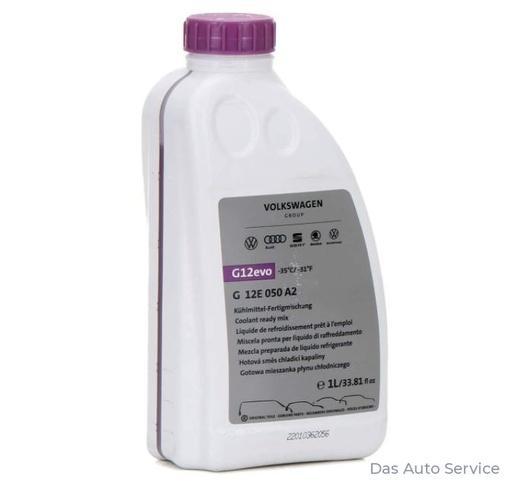
Genuine VAG G12Evo G12E050A2 1.0l coolant
Genuine G12evo coolant is suitable for the cooling system when it's specified for your car. You can use it for topping up or replacing the coolant according to the requirements for your particular vehicle.
View in our shop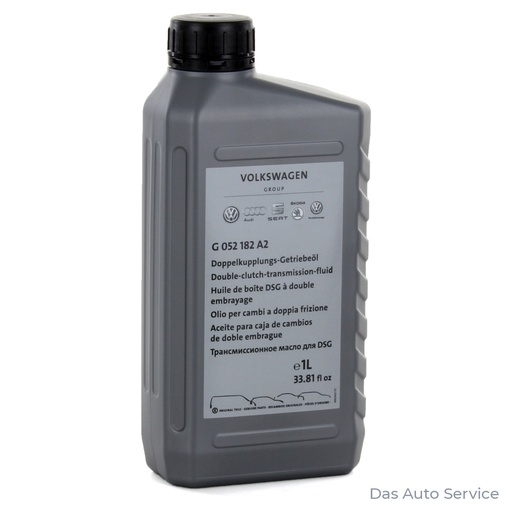
Genuine DSG gearbox oil is the right choice when servicing a compatible gearbox. The important thing is to use the exact specification required for your version.
View in our shopRead more
- Complete engine rebuilds
- Routine servicing
- 1.8 and 2.0 TSI (EA888 Gen3): Water pump and thermostat leaks
- Carbon build-up on TSI and TFSI valves: Why does it happen and how is it cleaned?
- 1.8 and 2.0 TFSI: Ignition coils and spark plugs
Frequently asked questions
What's the difference between EA888 Gen 2 and Gen 3?
Gen 3 is a heavily redesigned, lighter engine with a much better timing chain tensioner. The big problems with Gen 2 are excessive oil consumption caused by the piston rings and the troublesome timing chain tensioner.
Does the EA888 Gen 3 burn oil?
Gen 3 isn't known for the same piston ring problem that affected Gen 2. If your engine is burning oil, we need to find the actual cause rather than immediately assuming it's the same issue.
When should the timing chain be replaced on a 2.0 TSI Gen 3?
I wouldn't make that decision based on mileage alone. On higher-mileage engines, we check the camshaft deviation with a diagnostic tool and inspect the condition with an endoscope, especially if the oil hasn't been changed regularly.
How can I tell if my car has an EA888 Gen 3 engine?
Check the engine code on the sticker in the boot or in your service book. You can also read it with a diagnostic tool, then compare it with the engine codes for each generation.