"Should I buy a Golf 5 1.9 TDI?" I get asked this a lot by people who haven't got a huge budget but want an economical car for everyday driving. The Golf Mk5 is getting on a bit now, but the 1.9 TDI still has a reputation as one of VW's toughest diesel engines. And for good reason. But here's the catch! Not every 1.9 TDI is the same, and just because a car looks tidy on the outside doesn't mean it's worth your money. So I've put together this Golf 5 1.9 TDI buying guide to help you know exactly what to look for before you reach into your pocket.
Who is the Golf 5 1.9 TDI a good choice for?
A Golf 5 with the 1.9 TDI is a good choice if you want a relatively cheap, economical and straightforward everyday car. You won't get the comfort of something from a higher class, or the feeling of driving a new car. But that's not what this Golf is about. What you do get is practicality, a well-understood design and an engine that can serve you for a long time if you look after it properly.
There's something you need to understand before you buy, though. Most of these Golfs have already covered more than 250,000 km. At that age, the year on the registration document and the number on the clock aren't the most important things. I'm far more interested in who's maintained the car, what oil has gone into it and what condition it's actually in mechanically. That's where the truth lies.
Which engines and gearboxes came with the Golf 5 1.9 TDI?
With the Golf 5 1.9 TDI, you'll come across two main engine versions. Both use the pump-duse injection system, known as PD. There are differences between them, though, and they're worth knowing before you choose.
- 90 hp (66 kW) – engine codes BRU, BXF and BXJ.
- 105 hp (77 kW) – engine codes BKC and BXE. The BLS is the version with a DPF.
You've got two gearbox options: a 5-speed manual or the 6-speed DSG DQ250 with wet clutches. The DSG gives the car a different driving feel, but remember one important thing. It's an automatic gearbox that needs proper, regular servicing. It wasn't put there for you to forget about it.
What are the common problems with the Golf 5 1.9 TDI?
Now we're getting to the interesting bit. When a car has been around for this long and sold in such huge numbers, we get to know its weak points pretty well. The Golf 5 1.9 TDI isn't a bad car. Far from it. But there are a few things I always check before I'd tell a friend to go ahead and buy one.
Camshaft and hydraulic tappet wear on BXE and BKC engines
On a PD engine, the camshaft has more work to do than on an engine with a different injection system, because it also operates the injectors. That puts it under serious strain. On the BXE and BKC, we often see worn camshaft lobes and hydraulic tappets, especially when the engine has been run on the wrong oil.
How do you spot it? Usually, you'll hear a dull rattling or rumbling noise from the top of the engine. Sometimes the car will also lose power. The good news is that if you catch it early enough, you might get away with repairing the camshaft and tappets rather than having to replace the entire engine.
Injectors and wiring under the cover
On PD engines, we also pay close attention to the injectors and their wiring. You might find oil in the wiring loom, the car might struggle to start when hot, or the engine might run unevenly. If you notice anything like that, don't brush it off as just something old diesels do.
If you'd like to understand more, I've explained it in a separate article: 1.9 and 2.0 TDI PD engines: the legend and its weak points.
The turbo and EGR valve
If the car spends most of its life driving around town, the turbo's variable geometry can start sticking. That's when you get the familiar complaint: "No power, it bogs down and goes into limp mode." The EGR valve can also get clogged with carbon deposits. So don't assume everything's fine just because the engine sounds lovely at idle. You need to see how it behaves under load as well.
The dual-mass flywheel and DSG gearbox
If you hear rattling at idle or feel vibrations when pulling away, make sure the dual-mass flywheel gets checked. On the DSG DQ250, we also inspect the mechatronic unit – essentially the gearbox's brain – and the condition of the oil. And please don't assume the DSG is healthy just because it changes gear smoothly during a five-minute test drive.
I've covered this problem in more detail here: DSG DQ250: the mechatronic unit.
What should you check before buying the car?
Personally, I wouldn't buy a Golf 5 1.9 TDI after nothing more than a look around it in a car park and a quick spin around the neighbourhood. Before you hand over your money, the car needs a proper mechanical inspection. Here's what I'd check:
- Diagnostic scan – check stored fault codes, injector correction values and turbo boost pressure.
- Engine inspection – listen for rattling from the top of the engine, both at idle and once it's warmed up.
- Timing belt check – find out when it was last replaced and whether there's an invoice or other evidence that the work was actually done.
- Oil service history – find out what oil the engine has been running on. PD engines need VW 505 01, while the BLS with a DPF needs VW 507 00.
- Test drive – check that the engine pulls properly at 2,000 rpm, watch for smoke and see how the DSG changes gear if it's an automatic.
We check all of this during our pre-purchase inspection. That way, you'll know what you're actually buying instead of relying entirely on what the seller tells you.
Golf 5 1.9 TDI service schedule: how do you make it last?
There's no magic trick here. This engine doesn't need miracles, just proper maintenance. The most important thing is not to cut corners on the correct oil and not to put off servicing when it's due.
- Engine oil and filters – every 10,000 km or once a year, whichever comes first. If you drive in Bulgaria, this applies regardless of which oil you use or what the LongLife system says. The correct VW approval is essential: VW 505 01, or VW 507 00 for the BLS.
- Timing belt kit and water pump – replace them according to the manufacturer's interval. If you don't know when they were last done, I recommend replacing them straight after buying the car.
- DSG DQ250 – change the oil and filter every 60,000 km, always using genuine oil. The gearbox must be adapted after every automatic gearbox service.
- Brake fluid – every 2 years.
- Coolant – every third heating season.
- Preventative workshop inspection – every 6 months, so we can catch any problems early if they appear.
WARNING! Putting the wrong oil into a PD engine is one of the quickest ways to ruin the camshaft. Don't just look at the viscosity, and don't be fooled by the word LongLife on the bottle. What matters is the correct VW oil approval.
Would I buy a Golf 5 1.9 TDI myself?
Yes, I would. But only if the engine has been run on the correct oil, there's no rattling from the top of it and the whole car is mechanically sound. If the service history is a mystery, the engine is already rattling and the seller keeps telling you that "all old diesels sound like that", I'd be very careful. Because no, that's not normal. If there's wear, you need to understand what repairs are waiting for you and take that into account before deciding whether to buy.
Advice from Kris Mladenov: When buying a 1.9 TDI, don't buy the mileage. Buy the service history. Ask what oil the engine has been running on and demand proof. A well-maintained Golf with more miles on the clock can be a much better buy than one showing fewer miles but with no clear history.
I hope this has helped! If you know someone who's currently looking for a Golf 5 1.9 TDI, send them this article. I want the things I've learnt about cars to reach more people. Because when you know what to look for and what you're buying, you can save yourself a lot of unnecessary repairs.
The solution in our shop
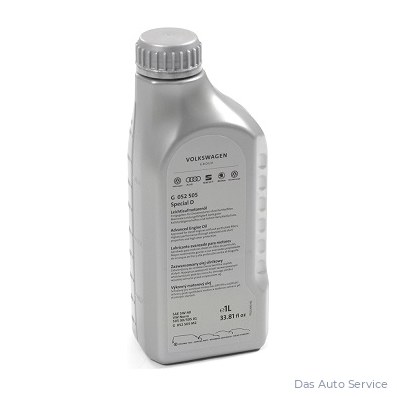
Genuine Volkswagen SpecialD 5W40 1L diesel engine oil
This oil is designed for PD engines and meets VW 505 01. That exact approval matters because it helps protect the camshaft and hydraulic tappets against wear.
View in our shop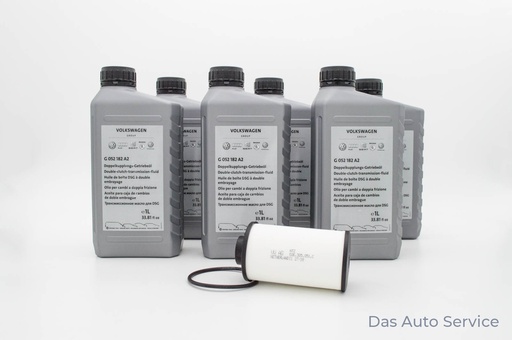
6-speed DSG gearbox service kit
This kit contains everything needed to service the 6-speed DSG. If you want the gearbox to work as it should, don't skip the regular oil and filter changes.
View in our shop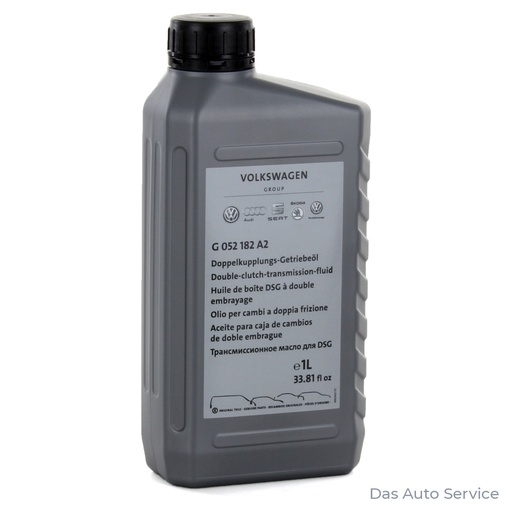
Always choose genuine oil when servicing the DSG. And don't forget – the gearbox must be adapted after the oil change.
View in our shopRead more
- Pre-purchase inspection
- Routine servicing
- 1.9 and 2.0 TDI PD engines: the legend and its weak points
- DSG DQ250: when does the mechatronic unit fail and what should you do?
- 2.0 TDI: when does the dual-mass flywheel start rattling?
Frequently asked questions
Which engine is better – 90 or 105 hp?
Both engines can be a good choice. I wouldn't judge them on horsepower alone. I'd look at the particular engine, its code, how it's been maintained and what condition it's actually in. That's what matters more.
What engine oil does a Golf 5 1.9 TDI need?
The PD engines need oil that meets VW 505 01. The BLS with a DPF needs VW 507 00. If you drive in Bulgaria, change the engine oil and filters every 10,000 km or once a year, whichever comes first.
How long does a 1.9 TDI engine last?
There's no magic mileage at which every 1.9 TDI gives up. It all depends on its condition and how well it's been looked after. Above all, whether it's had the correct oil and whether wear on the camshaft and hydraulic tappets has been caught early enough.