You're buying antifreeze concentrate because it looks like better value, right? But there's a catch that a lot of people don't think about. You can't just pour concentrate straight into your car, and you can't mix it with just any water either. Get it wrong, and instead of protecting your engine, you could end up with problems in the radiator, heater matrix or water pump. I'll explain how to do it properly, because the last thing I want is for you to end up paying for repairs over something so simple.
What's the difference between ready-mixed antifreeze and concentrate?
Imagine we're standing next to your car, holding two bottles of antifreeze. One says it's ready to use, and the other says concentrate. Both are made for the cooling system, but you don't use them in the same way. The difference is really simple once you know what you're buying.
- Ready-mixed antifreeze – it's already been diluted to the correct ratio. Open the bottle and pour it straight in. No need to add water.
- Antifreeze concentrate – you need to mix it with the right type of water before pouring it into the cooling system.
I often hear people say that concentrate is stronger, so surely it must protect the engine better. I understand the thinking, but that's not quite how it works. Antifreeze needs the right balance of concentrate and water to give your engine the protection it needs. More concentrate doesn't always mean better protection. Quite the opposite, actually.
How to dilute antifreeze concentrate correctly?
This is where you need to pay attention to the proportions. Don't guess, and don't just pour in a bit of concentrate, then a bit of water, until it looks about right. The ratio of concentrate to water determines how cold it can get before your cooling system is at risk of freezing. There are a few approximate figures I want you to remember.
- 40% concentrate and 60% water – freeze protection down to around −25°C.
- 50% concentrate and 50% water – freeze protection down to around −36°C.
- 60% concentrate and 40% water – freeze protection down to around −52°C. Adding more concentrate doesn't mean better protection.
See what I mean? You can't just fill the system with pure concentrate and assume you're covered for every winter. Getting the mixture right matters more than how much concentrate you use. And one more thing – those temperatures are only a guide. The exact figures for your particular antifreeze are printed on the bottle. Read them before you start mixing.
I'd much rather you spend a few extra minutes getting the mixture right than end up wondering why something has gone wrong later. If you're unsure about the proportions, don't guess. Check the instructions on the packaging. It's that simple, and it could save you a lot of trouble.
Why shouldn't you dilute antifreeze with tap water?
Now, this is the mistake I really want to help you avoid. You grab the concentrate, turn on the tap, add some water and think you're done. Sounds perfectly reasonable. Water is water, right? Well, not when it comes to your engine's cooling system.
Tap water contains minerals that gradually form limescale. It's the same stuff you see building up on appliances at home, except inside your car it collects in the radiator, heater matrix and water pump. Those deposits stop the cooling system working as it should. The minerals also reduce the corrosion protection that the antifreeze is supposed to provide. And suddenly, the problem isn't just about the coolant anymore.
That's why you should always use distilled or demineralised water to dilute antifreeze concentrate. There's no need to make it complicated. Just use the right water. I'm telling you this because I want your cooling system to keep working properly, not for us to be scratching our heads later, wondering where all those deposits came from. One small mistake today could turn into an expensive repair tomorrow.
What are the most common antifreeze mistakes?
Most problems start with something that seems completely harmless. One person tops up with whatever they've got lying around, another decides to add extra concentrate, and someone else doesn't even check what's already in the cooling system. I don't blame car owners. These things are rarely explained clearly enough. And they really should be.
- Mixing different types of antifreeze – don't assume all coolants are compatible. If you're wondering whether different antifreeze types can be mixed, have a proper read before topping up.
- Pouring in pure concentrate "just to be safe" – that's not how you get maximum freeze protection. Stick to the ratio printed on the bottle.
- Topping up with water alone during winter – this changes the mixture in the cooling system and can reduce its freeze protection.
All three mistakes have something in common. Someone is trying to do the right thing for their car but misses one important detail. That's why I always say it's not enough just to have some liquid in the expansion tank. What matters is which coolant you've got and the ratio it's mixed at. Otherwise, you could be driving around thinking everything is fine when it really isn't.
How often should I check and change my antifreeze?
Check your coolant level every month, and always when the engine is cold. Don't wait until the temperature gauge starts climbing before you think about your cooling system. I recommend changing the coolant every third heating season. You should also check its freeze protection every autumn, before the cold weather arrives.
This is one of those checks that doesn't seem particularly exciting when everything is working properly. But that's exactly why we do it before something goes wrong. I'd much rather check your antifreeze and see that everything is fine than wait for your engine to tell me there's a problem. Believe me, it's a lot less stressful for both you and your car.
WARNING! Never open the coolant expansion tank when the engine is hot. The hot coolant can cause serious burns. Have a read of what you should never do when your engine overheatstoo, because getting this wrong can be dangerous.
Which antifreeze should I choose for my car?
If you'd rather avoid mixing anything yourself, ready-mixed antifreeze is a convenient choice. If you prefer concentrate, that's absolutely fine too, as long as you mix it properly with the right water. The important thing is choosing a coolant that's suitable for your car. Don't make your decision based only on which bottle looks like the better deal.
Tip from Kris Mladenov: If you don't want the hassle of measuring and mixing, buy ready-mixed antifreeze that's suitable for your car. It's the easiest option when you need to top up. And if you're using concentrate, follow the proportions on the bottle exactly. Never dilute it with tap water.
I hope you've found this article useful! If you have, I'd really appreciate you sharing it with a friend who looks after their own car or isn't sure which antifreeze to buy. My mission is simple – when I know something useful, I want more people to know it too. Because having the right information today could save you a repair tomorrow. And when that repair bill arrives, remember who's paying for it. You are, out of your own pocket.
The solution in our shop
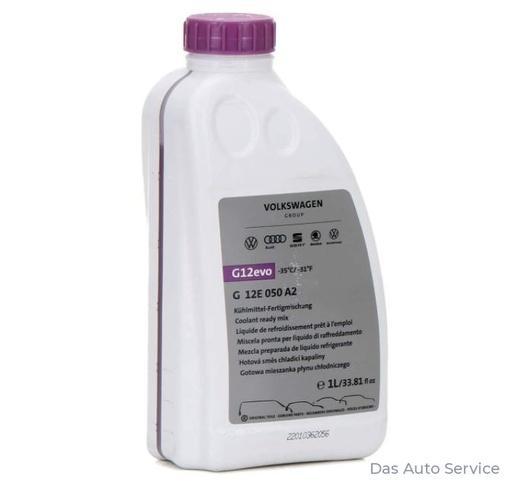
Genuine VAG G12Evo antifreeze G12E050A2 1.0l
Genuine G12evo antifreeze, ready to use. A convenient choice when you don't want to measure and mix concentrate with water yourself.
View in shop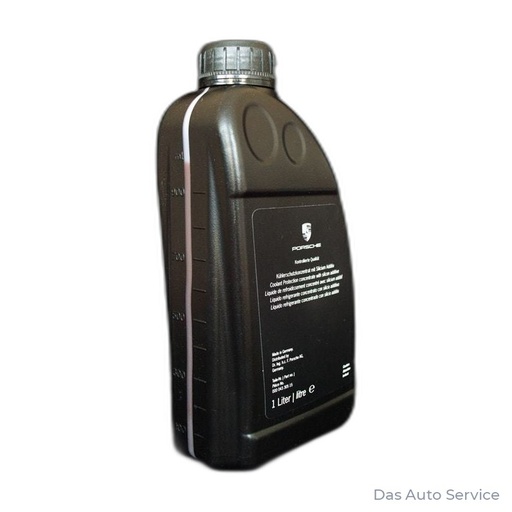
Genuine Porsche antifreeze with silicate additive 00040330515 1l
Genuine Porsche antifreeze concentrate. Suitable for preparing a coolant mixture at the correct ratio using distilled or demineralised water.
View in shopRead more
- Routine servicing
- Genuine VAG parts and accessories
- G12 G13 G12evo Coolant Compatibility Guide
- Engine Overheating: What to Do and What to Avoid
Frequently asked questions
How do you dilute antifreeze concentrate?
Mix the concentrate with distilled or demineralised water. A mixture of 50% concentrate and 50% water gives freeze protection down to around −36°C, but always check the exact figures on the bottle.
Can you top up antifreeze with water?
You can use distilled or demineralised water, but you need to maintain the correct mixture ratio. Topping up with water alone, especially in winter, reduces the coolant's freeze protection.
What temperature can antifreeze withstand?
It depends on the mixture ratio and the particular product. As a rough guide, 40% concentrate protects down to −25°C, 50% down to −36°C, and 60% down to −52°C.