You're in a rush to get to work. You get into your car, turn the key or press the start button and... nothing. The battery's flat. Your neighbour comes straight over with a set of jump leads and says, "Don't worry, I'll give you a jump-start!" Great. Except this is where things can go wrong, because plenty of people don't know how to jump-start a car safely. And on modern Audis, Volkswagens, Škodas and other VW Group cars, one mistake can cost you a lot more than a new battery. So I want to show you how to do it properly, without putting your car's electronics at risk.
Is it better to use jump leads or a jump starter?
Picture this. You're stuck in a car park, your car won't start, and you've got two options. Find someone with another car or get a portable jump starter out of your boot. Both can get you going, but there's one important difference. With jump leads, you need another car and you need to know how to connect everything properly. With a jump starter, you can manage on your own, as long as you've kept it charged.
- Jump leads are the traditional solution. You need another car with a healthy battery and a suitable set of leads. The problem is that connecting them incorrectly, or causing a voltage spike, can damage your car's electronics. And suddenly, a little inconvenience on your way to work turns into an expensive repair.
- A portable jump starter is a compact battery pack that gives your car the power it needs to start, without needing another vehicle. Really handy, especially when you're on your own. But it needs to be good quality, suitable for your car and properly charged. If you've left it flat in the boot, it's not going to be much help!
I like the idea of being independent and not having to stop strangers to ask for help. But I'm not going to tell you that jump leads are a bad idea. They're not! You just need to know how to use them. A modern car isn't like an old one where you could clip on a couple of leads and not give it another thought.
How to jump-start a car safely with jump leads
I really want you to pay attention to this bit. Not because it's complicated, but because the order matters. Before you do anything, check the instructions for your particular car and make sure jump-starting this way is actually permitted. Some models have dedicated jump-start terminals under the bonnet, even when the battery is somewhere else. If your car has them, use them.
- First, switch off the engine of the donor car and turn off all electrical equipment in both vehicles. Headlights, air conditioning, heated seats, music... anything that uses electricity needs to be switched off.
- Take the red jump lead and connect it to the positive terminal of the flat battery, or to the dedicated positive jump-start terminal in the engine bay. Then connect the other end to the positive terminal of the donor car's battery. Make sure both clamps are firmly attached.
- Now for the black lead. Connect one end to the negative terminal of the donor battery, or to its designated connection point. Attach the other end to the marked earth point on the car with the flat battery. If the manufacturer allows it, you can use a suitable metal part of the engine. Don't connect it directly to the negative terminal of the flat battery.
- Once everything is connected correctly, start the donor car's engine if the instructions for both vehicles allow it, and wait a little. Then try starting the car with the flat battery. Take your time, and don't move the clamps while someone is turning the engine over.
- Once your car starts and the procedure allows you to disconnect the leads, remove them in reverse order. First, remove the black lead from the earth point on the car you've just started. Then remove the black lead from the donor car. Next, remove the red lead from the donor car and, finally, the red lead from your own car. Be careful not to let the clamps touch each other or any metal parts they shouldn't.
And that's it. No magic, no special trick your neighbour learnt years ago. Just the correct order and a little care. If you're not sure exactly where the leads should connect on your model, check first rather than taking a chance.
Why shouldn't I connect the negative lead directly to the battery?
This is something people ask me all the time. "Kris, negative is negative, isn't it? What's the difference?" Well, on many VW Group cars, there's a sensor on the negative battery terminal. It monitors the battery's condition and the current flowing in and out of it. Your car uses that information to manage battery charging.
When you connect the lead to the designated earth point, the current follows the correct path and the system can measure it properly. You also reduce the risk of sparks right next to the battery. That's why the manufacturer has provided a specific connection point. It's not there for decoration!
What should I do after the car starts?
I bet your first thought is, "Brilliant, we've fixed it!" Well, not quite. The engine's running, but you still don't know why the battery went flat in the first place. You can drive for at least half an hour to give the battery a chance to recharge, but that doesn't mean it'll be fully charged afterwards. A more reliable option is to use a suitable battery charger.
If it happens again, don't make jump leads part of your morning routine. Get the battery checked and make sure the car's charging system is working properly. On modern cars, the way the battery monitoring system works matters too. I've explained this in more detail in my article on why a new car battery needs coding.
WARNING! Never disconnect jump leads while the starter motor is turning. You could cause a voltage spike and damage electronic control modules. And never let the clamps touch each other. If something doesn't seem right, stop and check the connections.
What if my car sits unused for ages and the battery goes flat?
In that case, jump leads aren't really solving your problem. They're just helping you get the engine started that one time. If you know your car is going to be sitting unused for a while, it makes much more sense to look after the battery beforehand. That way, you won't be standing there one morning wondering who you can ask for a jump-start.
Tip from Kris Mladenov: If you know your car will be sitting unused for a long time, use a suitable battery charger rather than relying on jump leads the next time you want to start it. It's also worth finding out exactly where the jump-start terminals are on your particular model before you actually need them. Have a read of my article on what to do when your car is left unused for a long time. It'll help you avoid a nasty surprise.
I hope you've found this article useful! If you have, I'd love you to share it with a friend, because sooner or later, almost every driver ends up in this situation. My mission has always been simple: if I know something useful, I want more people to know it too. I'm telling you all this because I care about you and your car. And remember, if you make a mistake with those jump leads, it's your own pocket that ends up paying for it.
The solution in our shop
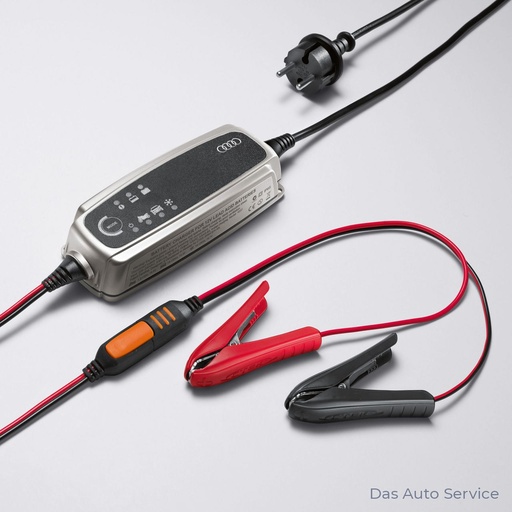
The genuine Audi battery charger is a good choice if you want to look after your battery while the car is parked up. Instead of waiting for the battery to go flat and then hunting around for jump leads, you can keep it charged.
View in shop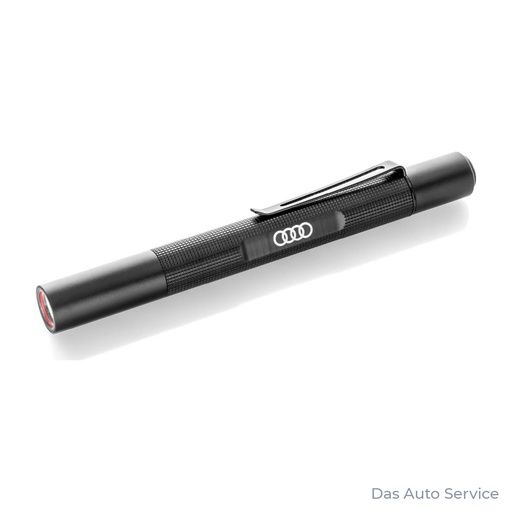
A compact LED torch comes in handy when you need to find the jump-start connection points under the bonnet in the dark. It's a small thing, but it can save you a lot of hassle.
View in shopRead more
- Electrical faults and control modules
- VW Battery Coding: Why Start/Stop Stops in Winter
- Car Storage Tips: Before and After Long-Term Storage
Frequently asked questions
What's the correct order for connecting jump leads?
First, connect the red lead to the positive terminal of the car with the flat battery, then to the positive terminal of the donor car. Next, connect the black lead to the donor car's negative terminal and then to the designated earth point on the car with the flat battery. Always check your car's instructions and disconnect the leads in reverse order.
Which is better, a portable jump starter or jump leads?
A portable jump starter is more convenient because you don't need another car. Jump leads work just as well, but you need to connect them correctly. Whichever you use, always follow the instructions for your particular vehicle.
Why shouldn't I connect the negative lead directly to the battery?
On many VW Group cars, there's a sensor on the negative battery terminal that monitors the battery. Using the designated earth point helps the system measure the current correctly and reduces the risk of sparks near the battery.