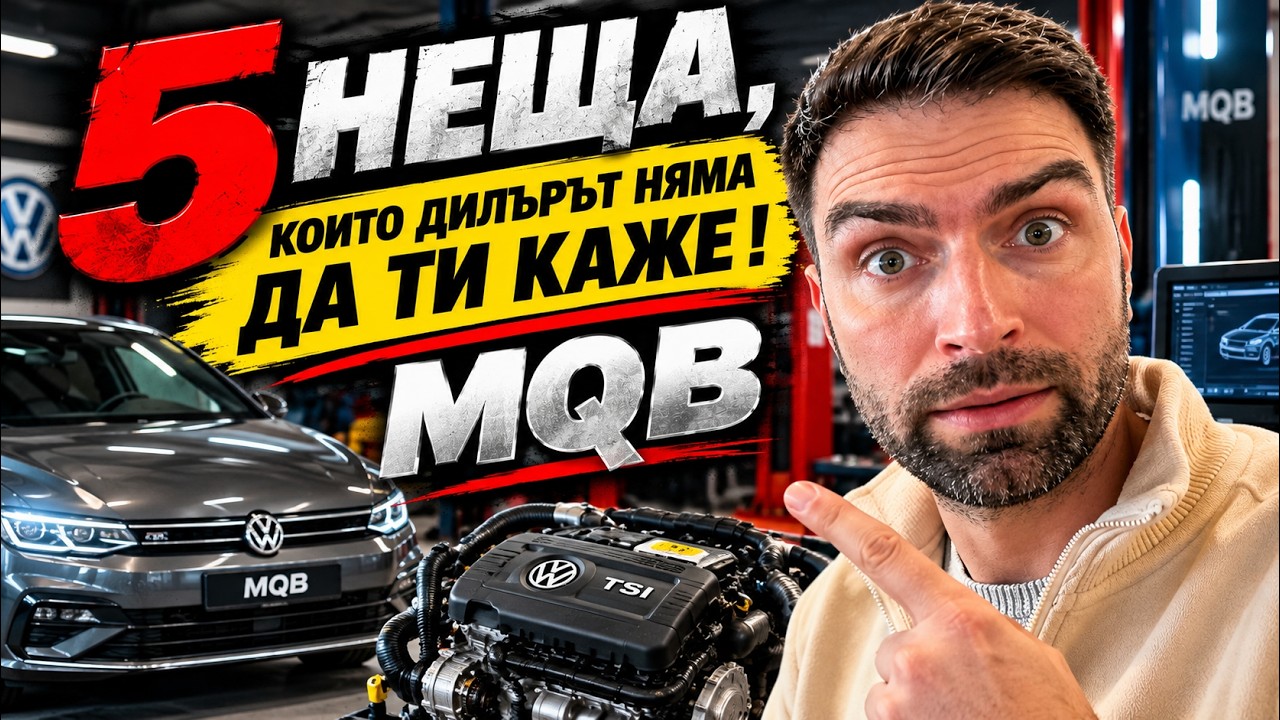
Your car is still under warranty, or it's only just come out of it. You've kept up with the servicing, the service book is full of stamps, and you're confident everything is in order. Not so fast! There are five things that often get overlooked in the MQB maintenance schedule, and you're unlikely to hear much about them from the dealer or your workshop. Yet these are exactly the things that could end up costing you the most. I'm talking about the Golf 8, Audi A3, Tiguan, Škoda Kodiaq and their relatives across the VW Group. In the video, I take you through all five problems one by one. Here, I've brought everything together with the exact service intervals so you know what to check.
▶ 5 things dealers won't tell you about MQB maintenance
What is MQB, and why should I care?
MQB is the shared platform that VW, Audi, Škoda and SEAT use for a large proportion of their cars. The engines, gearboxes and four-wheel-drive systems are either identical or very similar. The good news is that parts are readily available and there's plenty of repair information. The bad news is that the same servicing oversights keep cropping up across different brands. So, if you drive a Golf 8, A3, Tiguan or Kodiaq, pay close attention to what follows.
Why does nobody tell me to replace the crankcase ventilation filter?
Picture this. Your car starts using oil, so you take it to a workshop. They tell you the problem is with the rocker cover and that it's not something you replace as a preventative measure. But there's a filter inside that gradually becomes blocked. And that filter is a service item! On petrol engines, we replace it every 60,000 km, and on diesels, every 80,000 km. Skip it, and you could find yourself topping up the oil once the car reaches around 80,000 km.
The crankcase ventilation system removes gases from the engine and separates the oil from them to prevent it from entering the combustion process. When the filter becomes clogged, oil starts finding its way into the intake. The engine starts burning oil, and you're left wondering whether the turbocharger or piston rings are on their way out. Before you know it, you're chasing expensive faults when the real cause could be that one overlooked filter. I've explained it in detail in 2.0 TFSI Burning Oil and Whistling: Crankcase Ventilation.
Why should I replace the water pump with the timing belt?
You have the timing belt replaced, collect your car and assume that's one job you won't have to worry about again for a while. Except someone's left the old water pump in place or reused some of the pulleys. Eventually, the pump starts leaking coolant, which gets onto the new belt. And you can't leave a coolant-soaked timing belt on an engine. The result? Another timing belt replacement long before it's due. You end up paying twice for a job that should have been done properly the first time.
That's why we always replace the complete timing belt kit: belt, tensioner, all idler pulleys and water pump. All genuine parts. Don't accept the explanation that the pump looked fine and could be left in place. I've explained why I insist on replacing it together with the belt in When Should the Water Pump Be Replaced, and Why with the Timing Belt?.
What's this oil pump belt, and why is it so important?
Here's the next trap. On some engines, the oil pump is driven by a separate belt that you can't see when you open the bonnet. That makes it very easy to overlook during a timing belt replacement. But this belt drives the pump that supplies oil to the engine. If it snaps, the engine loses the lubrication it needs. And then we're not talking about replacing one small component. We're talking about a complete engine rebuild or even a replacement engine.
IMPORTANT! When you have the timing belt replaced, ask whether your engine has a separate oil pump belt and whether it's been replaced. If the answer is "What belt?", I'd seriously question my choice of workshop.
How often should I really service my DSG gearbox?
Now this is where things get interesting. For the very same gearbox, such as the DQ381, you can come across service intervals of 60,000, 90,000 and even 120,000 km, depending on the brand. So how does exactly the same design suddenly last for different distances? I'm certainly not going to advise you to wait for the longest interval. At Das Auto Service, we service all DSG gearboxes every 60,000 km using genuine oil. That's our rule.
There's another detail about the DQ381 that often goes unmentioned. The gearbox has a filter, but it's difficult to access, so some workshops change only the oil. The old filter stays where it is. When servicing is neglected, the auxiliary pressure pump may be the first thing to fail, followed by problems with the mechatronics and clutches. That's when you start hearing the familiar complaints: "The gearbox jerks", "It judders when pulling away" or "It bangs into gear". And repairing it is a completely different story.
After every service, we carry out a gearbox adaptation. Every time, not just when someone decides it might be necessary. If you'd like to know more, read DSG DQ381 and DQ500 – Complete Guide to Wet-Clutch Gearboxes. And if your gearbox oil change is coming up, take a look at Gearbox Servicing.
Why isn't servicing the Haldex alone enough?
If you drive an MQB car with a 5th- or 6th-generation Haldex system, remember one number: 30,000 km. That's how often we service the four-wheel-drive system, but we don't stop at the Haldex coupling. We also change the oil in the rear differential. These are two separate components, each with its own oil. Yet all too often, only the Haldex oil gets changed, and not until 60,000 km. So one component ends up going twice as long as our recommended service interval, while the other receives no servicing at all.
The problem is that when the differential itself fails, you can't simply replace one gear and carry on driving. You end up having to replace the entire assembly. That's why I always ask whether both oils have been changed. If you're not sure which generation of Haldex your car has, read Haldex Gen 4, 5 and 6 – How to Tell Which One You Have.
What is the correct MQB maintenance schedule?
I've brought the most important points together in one place. These are the service intervals we follow at our workshop because, as far as I'm concerned, keeping your car running reliably for years matters more than simply meeting the manufacturer's minimum requirements.
- Engine oil and service consumables – every 10,000 km or once a year, whichever comes first, regardless of LongLife.
- Crankcase ventilation filter – every 60,000 km on petrol engines and every 80,000 km on diesel engines.
- DSG – oil change every 60,000 km, using genuine oil, replacing the filter where fitted, and always carrying out a gearbox adaptation.
- Haldex Gen 5 and Gen 6 – every 30,000 km, changing the oil in both the coupling and the rear differential.
- Timing belt – always a complete kit: belt, tensioner, idler pulleys and water pump. The oil pump belt is also checked if the engine has one.
These are also things we check during Routine Servicing. To me, servicing isn't simply about draining the old oil, pouring in fresh oil and stamping the service book. What matters is knowing exactly what's been done to your car.
The solution in our online shop
Advice from Kris Mladenov: Don't just look at the stamps in the service book. Ask exactly what was replaced, which parts were used, and ask to see the old ones. A good workshop has no reason to hide any of this from you. I'm telling you because the money saved on servicing today could end up costing you far more tomorrow.
I hope you've found this article useful! If you have, I'd really appreciate you sharing it with friends and anyone you know who drives an MQB-platform car. Because my mission has always been simple: when I know something, I want more people to know it too. Especially when that knowledge could save them an expensive repair.
The solution in our online shop
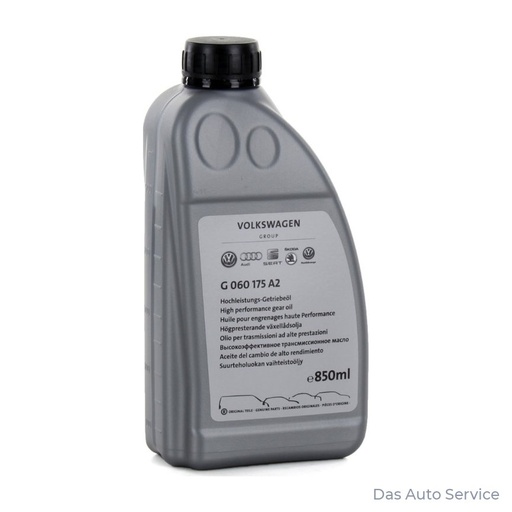
Genuine Haldex oil G060175A2 850 ml
Genuine oil for the Haldex coupling. We check your car's VIN to make sure it's the correct oil for your vehicle.
View in Shop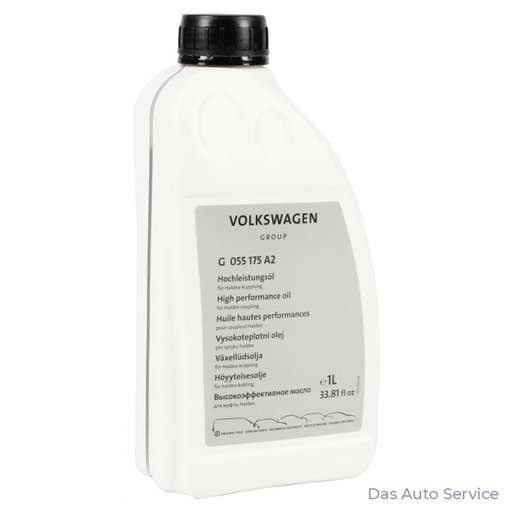
Genuine Haldex oil G055175A2 1 L
Genuine Haldex oil in a 1-litre bottle. The correct oil is selected according to the system generation and your car's VIN.
View in Shop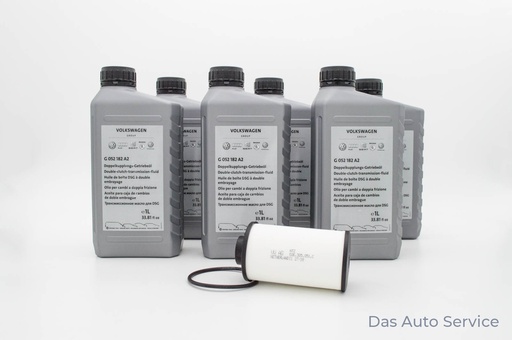
Service kit for a 6-speed DSG gearbox, including genuine oil and a filter. So the filter doesn't get overlooked during the oil change.
View in ShopRead More
- Gearbox Servicing
- Routine Servicing
- 2.0 TFSI Burning Oil and Whistling: Crankcase Ventilation
- When Should the Water Pump Be Replaced, and Why with the Timing Belt?
- DSG DQ381 and DQ500 – Complete Guide to Wet-Clutch Gearboxes
- Haldex Gen 4, 5 and 6 – How to Tell Which One You Have
Frequently Asked Questions
Does the crankcase ventilation filter need replacing on MQB cars?
Yes, it's a service item. We replace it every 60,000 km on petrol engines and every 80,000 km on diesel engines. If you overlook it, the engine may start using oil.
How often should the DSG DQ381 be serviced?
At our workshop, we service it every 60,000 km, using genuine oil and replacing the filter. We always carry out a gearbox adaptation after servicing.
How often should Haldex Gen 5 and Gen 6 be serviced?
Every 30,000 km. We change the oil in both the Haldex coupling and the rear differential because they are two separate components.
Should the water pump be replaced with the timing belt?
Yes. At our workshop, we always replace the timing belt together with the water pump, tensioner and idler pulleys. That way, you don't risk the old pump leaking coolant onto the new belt.