quattro, 4MOTION, Haldex, 4x4 – you've heard all these names, but do you actually know what's underneath your car? I hear it all the time at the workshop: "Mine's quattro, so all four wheels are always driven." Not necessarily! These names cover different systems that work in different ways and need different maintenance. One constantly sends power to both axles, another brings in the rear axle when needed, and a third uses a clutch to control how much power goes to the back. And if you don't know which system your car has, you could be missing a service you didn't even know was needed.
What is quattro and how does it work on an Audi?
quattro is Audi's name for its four-wheel-drive system. But here's where it gets interesting – not every quattro works the same way. Audi models with longitudinal engines, such as the A4, A5, A6, Q5 and Q7, use different systems depending on the model. Classic quattro has permanent four-wheel drive with a mechanical centre differential. Newer cars can also have quattro ultra, which can disconnect the rear axle.
With classic quattro, the centre differential distributes torque between the front and rear axles. It can be a Torsen differential or a crown-gear differential. This means both axles are permanently involved in driving the car, while the system adjusts how much power each receives depending on the conditions. There's no need to wait for a separate clutch to engage the rear wheels.
quattro ultra works differently. When four-wheel drive isn't needed, the system can disconnect the rear axle and reconnect it when necessary. Both systems carry the quattro name, but the mechanical parts underneath are different. If you want to understand the classic system better, read my article on servicing Torsen quattro, the differential and transfer case.
What is 4MOTION and how is it different from quattro?
4MOTION is VW's name for four-wheel drive. But again, the name doesn't tell you exactly what's underneath the car. The Golf, Passat, Tiguan and Arteon use Haldex, while the Touareg has a separate transfer case. In other words, two cars with a 4MOTION badge can have completely different drivetrains. That's why you can't work out what maintenance is needed just by looking at the badge on the boot.
The transfer case is the part that helps send drive to both axles. With Haldex, this is controlled differently – through a clutch positioned in front of the rear differential. On the road, both setups give you four-wheel drive, but in the workshop the difference is huge. Different parts, different oils and different servicing requirements. That's exactly why I always start by finding out which system the particular car has.
What is Haldex and when does the rear drive engage?
Haldex is a clutch positioned in front of the rear differential that controls how much torque reaches the rear wheels. Put simply, it decides when and how much power goes to the back. When the system decides rear-wheel drive is needed, the clutch engages and starts transferring torque. You don't need to press a button or select a driving mode. It all happens automatically.
Haldex isn't exclusive to VW. It's also used in four-wheel-drive Škoda and SEAT models, as well as Audi models with transverse engines, such as the A3, Q3 and TT quattro. Yes, you read that correctly – some Audi quattro models have Haldex! That's why I keep explaining that quattro doesn't automatically mean Torsen. If you want to understand the differences between the generations, I've written a separate article on Haldex generations 1 to 5 and how to service them.
How do you service quattro, 4MOTION and Haldex?
Now we get to the important part, because understanding how a system works is one thing, but looking after it properly is another. Having four-wheel drive doesn't mean there's one gearbox full of oil that takes care of everything. There are clutches, differentials and transfer cases, and each system has its own requirements. At Das Auto Service, we follow specific oil change intervals based on how each system is built. We don't wait for something to stop working before thinking about the oil.
- Haldex up to generation 4 – change the Haldex clutch oil and rear differential oil every 60,000 km.
- Haldex generations 5 and 6 – change the Haldex clutch oil and rear differential oil every 30,000 km.
- quattro with a longitudinal engine – change the differential and transfer case oils together with the gearbox oil.
- quattro ultra – change the oil in the clutch-operated rear-drive system every 30,000 km.
Pay attention to the fact that Haldex uses two separate oils. One is for the clutch, and the other is for the rear differential. They're not the same oil, and you mustn't mix them up. I see plenty of confusion here because someone hears that "the Haldex oil has been changed" and assumes everything at the rear has been serviced. But were both oils actually changed?
IMPORTANT! Missing a Haldex oil change is one of the most common reasons the rear-wheel drive stops working properly. The worst part is that you might not notice for a long time. Then the first snow arrives, and you discover that the car you thought was 4x4 isn't sending any power to the rear wheels.
Which oil should I use for Haldex and the differential?
You need the correct oil for the specific system and generation. Don't choose oil based only on a 4x4 or quattro badge, because you've already seen how many different systems those names can cover. Haldex systems up to generation 4 use a different oil from generation 5. The rear differential also has its own separate oil. I recommend using genuine oil designed for the particular system.
Tip from Kris Mladenov: Before servicing your four-wheel-drive system, find out exactly which setup your car has by checking the model and its codes. Don't rely on the quattro or 4MOTION badge alone. Servicing Haldex and Torsen is completely different, and using the correct oil at the correct interval is just as important as changing it in the first place.
I hope you've found this article useful! If you have, I'd appreciate it if you shared it with a friend who drives a four-wheel-drive Audi, VW, Škoda or SEAT. My thinking is simple – when I know something useful, I want more people to know it too. The better you understand your car, the easier it is to look after it properly.
The solution in our shop
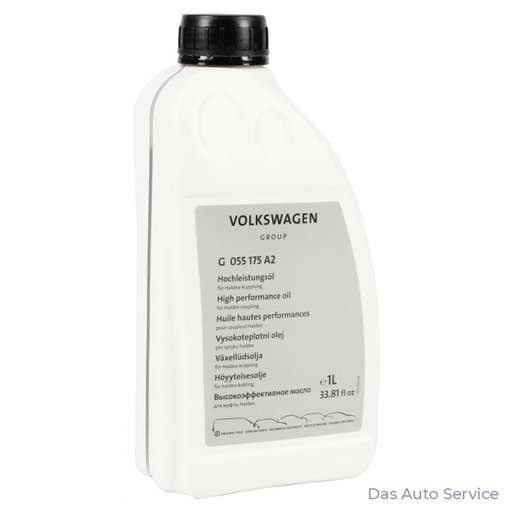
Genuine Haldex oil G055175A2 1L
Genuine Haldex oil for systems up to generation 4. Used when servicing the clutch in these systems.
View in shop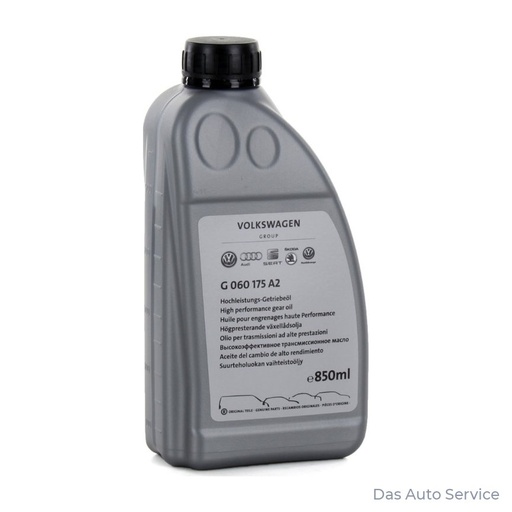
Genuine Haldex oil G060175A2 850ml
Genuine Haldex oil for generation 5. The correct choice for servicing the clutch in this generation.
View in shop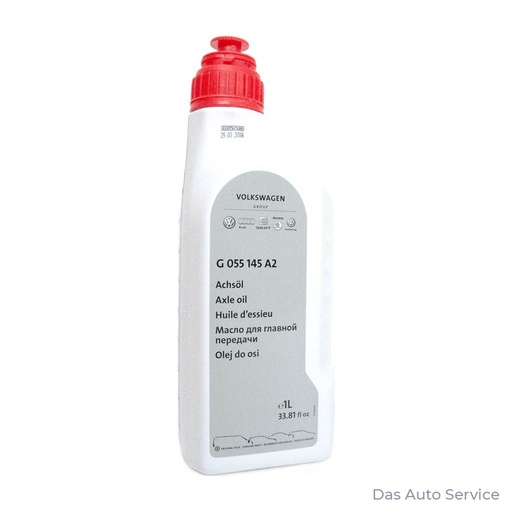
Genuine differential oil G055145A2 1l
Genuine differential oil. This is separate from the Haldex clutch oil and must not be confused with it.
View in shopRead more
- Gearbox servicing
- Diagnostics
- Haldex Service Intervals: Generations 1 to 5
- Audi quattro Torsen differential oil change
- Haldex Gen 5 Problems: Causes and Solutions
Frequently asked questions
What's the difference between quattro and 4MOTION?
quattro is Audi's name for four-wheel drive, while 4MOTION is VW's. Both names cover different types of four-wheel-drive systems, so you need to know which setup your particular car has.
Are there Audi quattro models with Haldex?
Yes! The quattro versions of the Audi A3, Q3 and TT with transverse engines use Haldex. Not every quattro has a Torsen centre differential.
When should Haldex oil be changed?
Every 60,000 km for Haldex systems up to generation 4, and every 30,000 km for generations 5 and 6. The rear differential oil should be changed at the same time as the Haldex clutch oil.
Can my 4x4 stop working without me noticing?
Yes. If there's a problem with Haldex, the rear-wheel drive might not work properly without you noticing straight away. Often, you only find out when you actually need traction from all four wheels.