"The turbo vanes are sticking." Ever heard a mechanic say that? Your car feels sluggish, suddenly loses power when you're overtaking, and then seems perfectly fine again after you switch the engine off and restart it. Until the next time you accelerate. It's one of the problems we often see on diesels that spend most of their lives driving around town. And because I know how easily you can end up paying for a new turbo you didn't need, I want to explain what sticking turbo vanes actually means, why it happens and how we find out what's really wrong.
What is variable turbo geometry?
Picture your turbo as a little turbine that uses the engine's exhaust gases to push more air into the engine. Around the turbine wheel are movable vanes that direct those gases. Those vanes are what we call variable geometry. They change position depending on engine speed and load, helping the turbo work properly in different driving conditions.
When you're driving at low revs, the vanes close up, leaving a narrower passage for the exhaust gases. This makes the gases flow faster and spins the turbine more quickly. As the revs rise, the vanes open to let more exhaust gas through. The result is simple: your engine pulls well at both low and high revs. You don't have to wait for the turbo to wake up when you're already halfway through accelerating.
Which cars have variable geometry turbos?
You'll find a variable geometry turbo on almost every TDI engine in the VW Group. Whether you drive a VW, Audi, Škoda or SEAT, the principle is the same. The vanes constantly adjust their position to deliver the boost pressure the engine needs. And that's exactly where trouble starts when the mechanism can no longer move freely.
Variable geometry isn't some fancy feature you switch on with a button. It's working all the time the engine is running. So when it starts sticking, you'll notice the problem as soon as the engine reaches a certain load. The turbo can no longer control boost pressure the way the engine needs it to.
Why do turbo vanes stick during city driving?
The most common culprit is soot. When you only drive your diesel on short journeys, especially around town, deposits gradually build up around the turbo's variable geometry mechanism. The vanes need to move freely, but the soot starts getting in their way. At first, they become harder to move. Eventually, the whole mechanism can stick. And that's when the turbo stops doing what it's told.
- Soot from city driving – short journeys and constantly driving at low revs create the perfect conditions for deposits to build up around the vanes.
- Limited vane movement – when the engine rarely works under higher loads, the vanes don't often move through their full range. That gives the accumulated soot a chance to gradually restrict their movement.
- A control problem – the variable geometry is controlled by a valve, a vacuum system or an electric actuator. The actuator is the part that moves the vanes. If the control system isn't working properly, the symptoms can look just like sticking turbo vanes.
I really want you to pay attention to that last point. Just because your car has lost power and shows a turbo boost pressure fault doesn't mean the vanes are stuck. Sometimes the mechanism itself is perfectly fine, but it's not receiving the correct command. Skip that check and you could replace a completely healthy turbo. And still have exactly the same problem afterwards.
How can I tell if my turbo vanes are sticking?
Usually, someone comes into our workshop and says, "The car drives normally, but when I put my foot down, it suddenly loses power." Someone else tells me they've cleared the fault codes with a diagnostic tool, but the problem keeps coming back. These are useful clues, but they don't prove the turbo vanes are to blame. We need to see what's happening to the boost pressure when the engine is under load.
- Limp mode during acceleration – the car suddenly loses power because the engine management system has detected a problem.
- Overboost or underboost fault – the turbo either fails to reach the boost pressure the engine expects or produces more pressure than it should.
- Poor acceleration – you press the accelerator, but the car simply doesn't pick up speed the way you're used to.
These symptoms can have several different causes, which is why I'm not a fan of diagnosing cars over the phone. If you'd like to understand more about turbo whistling, smoke and power loss, have a read of my article about the 2.0 TDI turbo. I go into the problem in more detail there.
How do we diagnose and fix sticking turbo vanes?
The first thing we do isn't take the turbo apart. We start with diagnostics because we need to find out whether the problem is with the vanes themselves or the system controlling them. There's a big difference between the two. That's why we follow a proper process instead of throwing parts at the car and hoping for the best.
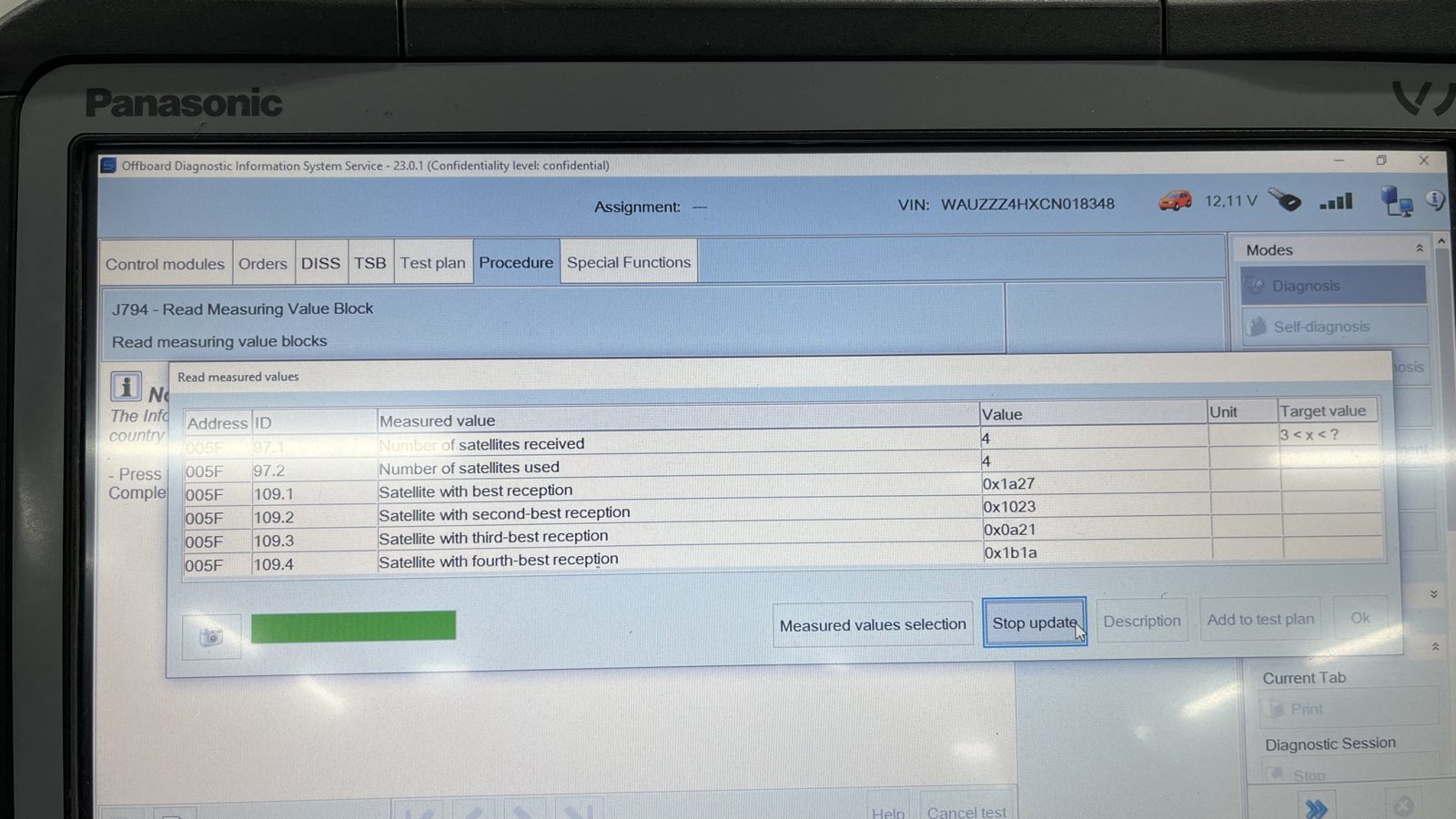
- We check requested and actual boost pressure. Using a diagnostic tool, we can see how much pressure the engine is asking for and how much it's actually getting. If there's a difference, it helps point us towards the problem. I've explained this in more detail in my article about diagnostic measuring blocks.
- We check the variable geometry control system. Depending on the turbo, we inspect the control valve, vacuum system or electric actuator. We need to make sure the mechanism is receiving the correct command and can actually carry it out.
- We decide whether cleaning or repair is needed. If soot deposits are causing the problem and the mechanism is still in suitable condition, the vanes can be cleaned. If something is damaged, we choose the appropriate repair based on what we actually find.
IMPORTANT! Don't replace the turbo before checking the variable geometry control system. Quite often, that's where the real problem is, not inside the turbo itself. Replacing parts without a proper diagnosis can cost you money you didn't need to spend and might not fix anything at all.
Tip from Kris Mladenov: A diesel likes a good motorway run, not just sitting in traffic. I recommend getting out of town for around 20 minutes at least once a week instead of constantly doing short journeys. It helps both the turbo and the DPF, but it won't repair vanes that are already stuck. Have a read of my guide on looking after your DPF during city driving.
I hope you've found this article useful! If you have, I'd really appreciate you sharing it with a friend who drives a diesel. My mission is simple: when I know something useful, I want more people to know it too. Because the right information can save you from paying for a repair you never needed. And remember, that money comes straight out of your own pocket.
Read more
- Diagnostics
- Routine servicing
- 2.0 TDI Turbo Problems: Whistling, Smoke and Power Loss
- DPF Problems in City Driving: How to Prevent Blockages
- VAG Live Data Diagnostics: What the Readings Reveal
Frequently asked questions
What is a variable geometry turbo?
It's a turbo with movable vanes that change the direction and speed of the exhaust gases. This helps the engine pull strongly at both low and high revs.
Why do turbo vanes get stuck?
Most often, it's because soot builds up during city driving and short journeys. The vanes gradually become harder to move, although a fault in the control system can cause very similar symptoms.
Can a variable geometry turbo be cleaned?
Yes, provided the mechanism is in suitable condition. But first, we need to check the control system and boost pressure to make sure cleaning is actually necessary.