You've just had your tyres changed. You drive away happy, and a few kilometres later, that yellow warning light with an exclamation mark inside a tyre appears on your dashboard. You go back to the tyre fitter, and he tells you, "Don't worry, it'll go off." Sometimes it does. Other times, it stays on all winter. And most of the time, the reason is really simple – your car doesn't yet know you've changed the tyres. It needs a TPMS reset.
How does your car know when a tyre is losing pressure?
Since November 2014, all new cars in Europe have been required to have a tyre pressure monitoring system. VAG cars use two different types, and I want you to understand which one your car has. That way, you'll know what's going on when the warning light comes on.
- Indirect TPMS. There are no pressure sensors inside the tyres. Instead, your car uses the ABS sensors to monitor how quickly each wheel turns. When a tyre loses pressure, its diameter gets smaller, so it starts rotating slightly faster. That's how the car spots the difference. You'll find this system on most VW, Škoda and SEAT models, as well as smaller Audi models.
- Direct TPMS. This system has a sensor with its own battery inside each wheel. It measures tyre pressure and temperature, then sends the readings wirelessly to the car. You'll find this type on larger Audi models, such as the A6, A8 and Q7, as well as some other models.
Why is the TPMS light on after a tyre change?
With indirect TPMS, your car remembers how the old tyres rotated when their pressures were correct. Fit a different set, and the car notices a difference. That's why you need to recalibrate the TPMS after every tyre change or pressure adjustment. Some models have a button for this, while others let you do it through the car's menu. Easy enough. But! Check that your tyre pressures are correct first. Otherwise, you're teaching the car that the wrong pressures are perfectly normal.
With direct TPMS, it's a different story. The warning light might be on because the car can't recognise one of the sensors, a sensor battery has gone flat, or your winter wheels simply don't have sensors fitted. In that case, the sensors may need to be programmed using a diagnostic tool or replaced. Pressing a button won't be enough this time.
Please, don't recalibrate your TPMS before checking your tyre pressures with a pressure gauge. If one tyre is underinflated and you save those readings, your car will think everything is fine. And later, it might fail to warn you when you really need it.
How do you reset your TPMS properly?
- First, measure your tyre pressures when the tyres are cold. You'll find the correct values on the sticker inside the door or on the fuel filler flap.
- Next, save the tyre pressures using the TPMS button or the car's menu. It depends on which model you drive.
- Then drive normally for a few dozen kilometres. The system needs some driving time to learn how your tyres behave with their new settings.
- If the warning light comes back on, check whether one of your tyres has a puncture. Don't be too quick to blame the system.
How long do tyre pressure sensors last?
With direct TPMS, every sensor has its own battery. These batteries usually last for many years, but nothing lasts forever. When the sensors start disappearing from the system one by one and your car can no longer recognise them, it's time to replace them. And if you're buying a second set of wheels for winter, make sure they have sensors fitted. Otherwise, you could spend the entire winter looking at that warning light on your dashboard.
Advice from Kris Mladenov: Every time you change your tyres, check the pressures and recalibrate the TPMS. It takes just two minutes, and your car will be able to warn you again if a tyre starts losing pressure. That's especially important on the motorway, my friend.
I hope you now understand why the tyre pressure warning light comes on after changing tyres and what to do about it. You don't need to rush straight back to the tyre fitter every time. Check your tyre pressures first, then recalibrate the system. If the light stays on, that's when we need to investigate what's causing it. And if this article has helped you, send it to a friend. You might save them a completely unnecessary trip to the workshop.
The solution in our shop
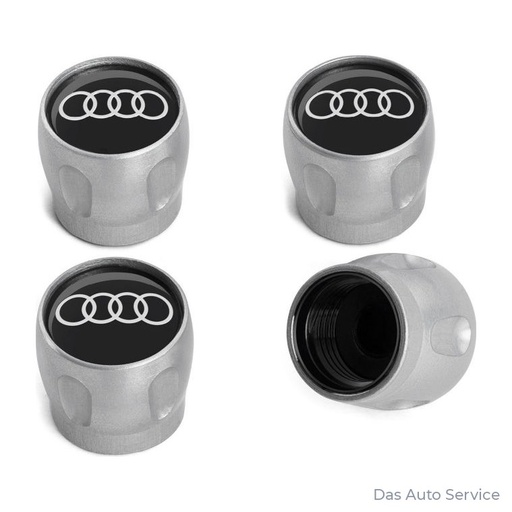
Audi tyre valve caps. They protect the valves from dust and moisture, which can cause slow air leaks.
View in our shop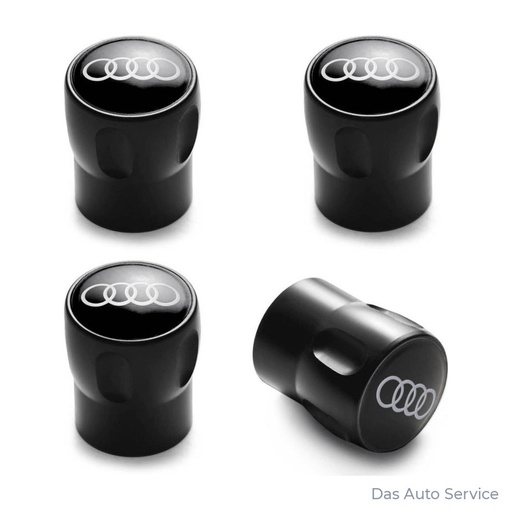
Black Audi tyre valve caps. They look great on dark-coloured wheels.
View in our shopRead more
- Routine servicing at Das Auto Service
- Tyres in our shop
- When should I fit winter tyres, and how should I store my summer tyres?
- How were your winter wheels tightened?
- What should I check before my annual vehicle inspection?
- Spring tyres: when to switch to summer tyres
Frequently asked questions
Why is the tyre pressure warning light on after changing tyres?
Most often, your car simply hasn't learnt the new tyre settings yet. With a direct TPMS system, it might also be struggling to recognise one of the sensors. Check your tyre pressures first, then save them using the button or the car's menu.
Do all VW, Audi, Škoda and SEAT cars have tyre pressure sensors inside the wheels?
No, my friend. Most VW, Škoda and SEAT models use an indirect system that works with the ABS sensors. These cars don't have separate tyre pressure sensors inside the wheels at all.
How long do tyre pressure sensors last?
Their batteries usually last for many years. But they don't last forever. Eventually, the batteries run flat, and when a sensor stops working, you'll need to replace it.