If you've been searching for "VW Golf 5 1.6 FSI problems", chances are you've found a Golf 5 you like and you're wondering whether to buy it. Or perhaps you already own one and something's worrying you. It's a 115 hp petrol engine with direct injection, no turbo and a timing chain. On paper, that sounds great. It uses less fuel than the regular 1.6 MPI, and there's no turbo to worry about. But! This engine is fussier than it looks. Let me explain the problems we see with it and how to avoid buying a car that ends up costing you a fortune.
Who is the Golf 5 1.6 FSI right for?
If you're a relaxed driver, you're not chasing acceleration records and you want a petrol engine without a turbo, the 1.6 FSI could suit you nicely. The Golf 5 (1K) was produced from 2003 to 2008, and this engine was one of the options for people who preferred petrol. With 115 hp, it's perfectly adequate for normal everyday driving. There's just one catch: direct injection makes the engine more sensitive to fuel quality and maintenance. If the previous owner cut corners on either, you'll be the one paying for it.
What gearboxes does the Golf 5 1.6 FSI come with?
You'll find both manual and automatic gearboxes with this engine. Which one you choose depends on how you like to drive, but I always look at the condition of the actual car, not just the gearbox listed in the advert. Even the nicest automatic won't be much fun if it's jerking and jolting every time you drive.
- 5- and 6-speed manual gearbox – for drivers who prefer changing gears themselves.
- 6-speed Tiptronic automatic – for a more relaxed drive without a clutch pedal or constant gear changes.
What VW Golf 5 1.6 FSI problems do we see at the workshop?
Now for the interesting part. Not every Golf 5 1.6 FSI suffers from all these problems, but there are a few areas I pay particular attention to. And here's the important bit: don't assume everything is fine just because the car runs smoothly once it's warmed up. Some problems are much easier to spot when the engine is cold.
Why does the engine run roughly when cold?
You start the car in the morning and the engine begins to shake. The revs are all over the place, and sometimes it even stalls. A few minutes later, it warms up and runs as if nothing happened. Sound familiar? This is one of the symptoms to watch out for with the 1.6 FSI. Don't be too quick to accept someone telling you, "That's just how these engines run." A healthy engine should start and run properly even when it's cold.
Why does carbon build up on the valves?
Direct injection has its advantages, but it also has an annoying downside: carbon deposits can build up on the intake valves. Think of them as hard deposits that gradually stop the engine from running as smoothly as it should. The result can be rough running, especially when cold. And there's no point guessing or replacing parts at random. I've explained exactly why this happens and how to clean it in my article about carbon build-up on the valves.
Why does the timing chain rattle on start-up?
If you hear a metallic rattling noise coming from the engine when you first start it, don't ignore it. On the 1.6 FSI, the timing chain and its tensioner deserve a closer look. The tensioner is the part that keeps the chain at the correct tension so the engine's timing stays right. When something isn't working properly there, that rattle can be your first warning. I've covered similar issues in my article about the EA111 timing chain and tensioner. I'm not saying every rattle means you need a new timing chain. I'm saying you shouldn't ignore it.
What happens when the Check Engine warning light comes on?
On the 1.6 FSI, you also need to pay attention to the catalytic converter and lambda sensors. A lambda sensor monitors the exhaust gases and helps the engine maintain the correct fuel mixture. The catalytic converter deals with harmful substances in those gases. But when the Check Engine warning light comes on, it doesn't automatically mean the catalytic converter needs replacing. First, we read the fault codes with a diagnostic tool and find out what's actually causing the problem. I've explained this in more detail in my article about lambda sensors and catalytic converters.
Where can engine oil leak from?
Another area I never overlook during an inspection is the rocker cover. Over time, oil can start seeping or leaking around it. You don't need to wait until the whole engine is covered in oil before doing something about it. Have a proper look and find out exactly where the leak is coming from. If you'd like to know more, read my article about oil leaks from the rocker cover and sump.
What should I check before buying a Golf 5 1.6 FSI?
The biggest mistake you can make is turning up to inspect a car after the seller has already started it and warmed it up. That way, you miss the very moment when this engine can tell you the most about its condition. I want to hear it start from cold, see how easily it fires up and watch how it idles. Then comes the diagnostic check. Not the other way round.
- Cold start and idle – listen to the engine and check that it runs smoothly without shaking or stalling.
- Engine fault codes – read them with a diagnostic tool instead of relying on whether the Check Engine warning light is on.
- Timing chain noise – listen carefully for metallic rattling when the engine is first started.
If you're not sure what you're looking at, don't take the risk. A proper pre-purchase inspection can save you some very unpleasant surprises. Buy a car based on its actual condition, not how good it looks in the photos.
How should I maintain my Golf 5 1.6 FSI?
This engine doesn't take kindly to neglected maintenance. And I'm going to be very clear about this: I don't care whether the oil bottle says LongLife or how long the manufacturer's service interval allows you to go between changes. For a car driven in Bulgaria, my recommendation is simple. Change the engine oil and every filter regularly, without putting it off. It's a lot more sensible than wondering later why your engine isn't running properly.
- Engine oil and all filters – oil, fuel, air and cabin filters – every 10,000 km or once a year, whichever comes first.
- Automatic gearbox – as prescribed by the manufacturer and, at our workshop, based on inspection. We always carry out an adaptation after servicing.
- Brake fluid – every 2 years.
- Antifreeze – every third heating season.
- Workshop inspection – every 6 months, so we can catch problems early.
IMPORTANT! The 1.6 FSI doesn't like cheap fuel or missed oil changes. Carbon deposits can build up faster, and the problems won't simply disappear on their own. Don't cut corners on the things that protect your engine.
Is the Golf 5 1.6 FSI worth buying, or should I choose another engine?
My verdict is simple: yes, it's worth buying if the car has been properly maintained, starts cleanly from cold and runs smoothly. I wouldn't turn down a good Golf 5 just because it has the 1.6 FSI engine. But if you want the simplest petrol engine possible and don't fancy dealing with the quirks of direct injection, have a look at the 1.6 MPI. It's the simpler option. And I'd much rather tell you that before you buy than have this conversation after you've already handed over your money.
Tip from Kris Mladenov: Go and see the car in the morning, before anyone has started it. Insist on hearing that first cold start, and don't let anyone convince you that rattling or rough running is normal. With the 1.6 FSI, a cold engine can tell you an awful lot about its condition.
I hope you've found this article useful! If you have, I'd really appreciate you sharing it with a friend who drives a Golf 5 or is thinking about buying one. My mission is simple: when I know something useful, I want more people to know it too. Because getting the right information at the right time can save you a lot of money and headaches.
The solution in our shop
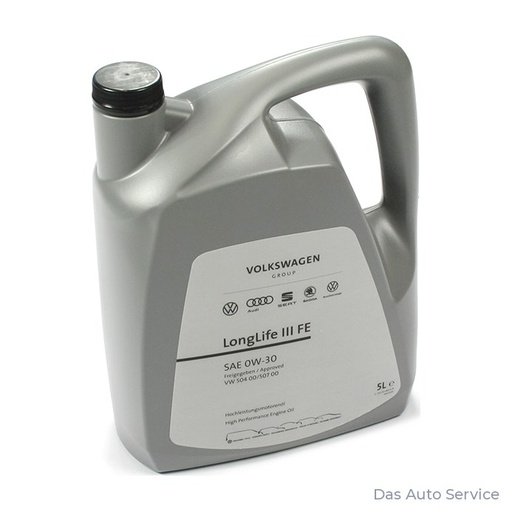
Genuine Longlife III FE 0W30 oil 5L
Genuine LongLife III engine oil meeting VW 504 00 is a suitable choice when that specification is prescribed for your engine. But even with LongLife oil, don't put off the oil change beyond 10,000 km or one year.
View in shop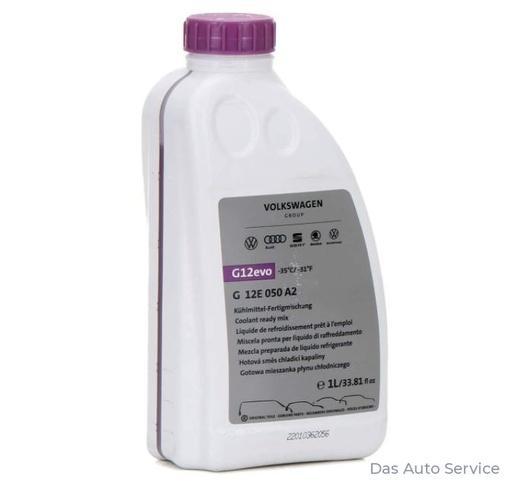
Genuine VAG G12Evo antifreeze G12E050A2 1.0l
Genuine G12evo antifreeze is designed to help you look after your cooling system properly. The important thing is to service the system on time, rather than waiting until the engine starts overheating.
View in shopRead more
- Pre-purchase inspection
- Routine servicing
- TFSI Carbon Build-Up on Intake Valves: Causes & Fix
- 1.4 TSI Timing Chain Problems: Rattle and Turbo
- Lambda Sensor Fault: Sensor or Catalytic Converter?
- Valve Cover Oil Leak: Causes and Repairs
Frequently asked questions
What are the most common Golf 5 1.6 FSI problems?
Rough running when cold, carbon build-up on the valves, timing chain rattle, lambda sensor and catalytic converter problems, and oil leaks. Not every car will have these issues, which is why checking its actual condition is so important.
Which engine is better, the 1.6 FSI or 1.6 MPI?
If you want a simpler petrol engine, go for the 1.6 MPI. The 1.6 FSI uses less fuel, but its direct injection system makes it more sensitive to fuel quality and maintenance.
Does the Golf 5 1.6 FSI have a timing chain or timing belt?
The 1.6 FSI engine has a timing chain. If you hear metallic rattling during a cold start, the chain and tensioner need to be checked.
How often should I change the oil in a Golf 5 1.6 FSI?
I recommend changing it every 10,000 km or once a year, whichever comes first. Change the oil, fuel, air and cabin filters at the same time, regardless of whether you use LongLife oil.