A small petrol engine in a big SUV. Is that a good idea, or are you buying yourself a load of trouble? I get asked this all the time, and if you search for VW Tiguan 1.4 TSI problems or owner reviews, you'll find all sorts of stories. Some owners are happy, while others have had problems with timing chains, water pumps and expensive repairs. The thing is, not every Tiguan 1.4 TSI is the same. The Tiguan 1 has the older EA111 engine, including versions with both a supercharger and a turbocharger. The Tiguan 2 comes with the newer EA211. And that difference matters far more than you might think.
Who is the Tiguan 1.4 TSI right for?
If you mostly drive around town, don't cover many miles and want a family SUV with a petrol engine, the Tiguan 1.4 TSI makes sense. Not everyone needs a diesel, especially when the car is mainly used for everyday family life. But you need to know what you're buying. The Tiguan isn't a small car, and that 1.4 TSI has to move all its weight, including passengers and luggage. That's why I always ask how you're planning to use the car before telling you whether this engine is a good fit.
For relaxed everyday driving, I'd certainly consider it. But if you're constantly travelling with the whole family and a boot full of luggage, I'd think twice. The small petrol engine can do the job, but it has to work harder when the car is heavily loaded. And that matters when it comes to looking after it.
Which Tiguan 1.4 TSI generation is the safer choice?
Here's the big difference that a lot of people miss. Both cars are advertised as having a 1.4 TSI, but under the bonnet you'll find engines from two completely different families. I wouldn't treat them as the same engine just because they have the same capacity.
- VW Tiguan 1 – the 1.4 TSI EA111 belongs to the older engine family and uses a timing chain. Some versions have both a supercharger and a turbocharger. The timing chain is one of the main things I'd check very carefully on this engine.
- VW Tiguan 2 – the 1.4 TSI EA211 belongs to the newer engine family and uses a timing belt instead. That means you no longer have the characteristic EA111 timing chain problem, although there are other areas that still need attention.
If you ask me which one I'd buy, my answer is the Tiguan 2. Not because it's completely trouble-free. There's no such thing as a car without problems. It simply avoids one of the older engine's biggest headaches. But! Even the better engine can turn into a bad purchase if the previous owner has been cutting corners on maintenance.
What VW Tiguan 1.4 TSI problems do we see at the workshop?
Why does the timing chain rattle on the Tiguan 1?
Picture this. You go out in the morning, start your car and hear a brief metallic rattle. You tell yourself the engine is cold, so it's probably normal. But on the EA111, that's a warning I wouldn't ignore. The timing chain keeps the moving parts inside the engine working in perfect sync, while the tensioner keeps the chain properly tightened. When something starts going wrong with this system, a rattle on start-up is a good reason to investigate.
I'm not trying to scare you, but I'm certainly not going to tell you to keep driving until the noise becomes constant. That's exactly how a small warning can turn into a major repair. I've explained everything in more detail in 1.2 and 1.4 TSI EA111: Timing Chain, Tensioner and Turbo Problems. Give it a read if you're considering a Tiguan 1 with this engine.
Why does the Tiguan 2 lose coolant?
On the Tiguan 2 with the EA211 engine, two of the things we check are the water pump and thermostat. The water pump circulates coolant through the engine, while the thermostat helps keep it at the right temperature. If there's a leak, simply topping up the coolant and carrying on isn't enough. You need to find out where it's going. Otherwise, you're topping it up today, topping it up again tomorrow, and the problem is still there.
If you're looking at one of these cars, pay close attention to the cooling system. Don't accept coolant loss as something normal. I've written a separate article about this engine: 1.4 TSI EA211: Water Pump and Thermostat Problems. It'll help you understand why this check is so important.
Why do the turbo and engine load matter?
The Tiguan is a fairly big car, and the 1.4 TSI is a small turbocharged engine. When the car is heavily loaded, the engine has to work harder to keep everything moving. That's why the condition of the engine oil and spark plugs matters so much. The oil protects the moving parts and the turbocharger, while the spark plugs are essential for the petrol engine to run properly. Neither is something I'd try to save money on.
What should I check before buying a Tiguan 1.4 TSI?
The first thing I'd tell you is not to buy a car just because it looks good and has plenty of equipment. It might look fantastic, but there could be a nasty surprise waiting under the bonnet. With this engine, there are a few checks I'd never skip.
- Start the engine when it's completely cold. On the Tiguan 1, listen carefully for timing chain rattle. Don't accept the excuse that "they all sound like that".
- Check for coolant leaks. On the Tiguan 2, pay particular attention to the water pump, thermostat and the rest of the cooling system.
- Have a diagnostic check carried out and go through the service history. I want to see how the car has actually been maintained, not just hear what the seller has to say. On the Tiguan 1, paperwork showing the timing chain work is particularly important.
If you're not sure what to look for, I'd recommend a pre-purchase inspection. It'll give you a much clearer picture of the car's condition before you hand over your money. Trust me, finding a problem before you buy is a lot nicer than discovering it afterwards.
How should I maintain my Tiguan 1.4 TSI?
There's nothing complicated here, but you do need to be consistent. I'm not a fan of long service intervals, especially for cars driven in Bulgaria. Manufacturer recommendations often focus on meeting environmental standards, while my priority is keeping your engine healthy. That's why we have some clear rules at Das Auto Service.
- Change the engine oil and all filters – oil, fuel, air and cabin – together every 10,000 km or once a year, whichever comes first. This applies regardless of whether you're using LongLife oil.
- Replace the spark plugs according to the prescribed service schedule. Don't neglect them, because they're important for keeping the engine running properly.
- Replace the coolant every third heating season. The cooling system needs to be in good working order, not just have some coolant sitting in the expansion tank.
I also recommend having the car inspected at the workshop every six months. You don't need to wait until it starts rattling, shaking or overheating before we check its condition. Maintenance is much easier when you don't let problems pile up.
IMPORTANT! On the Tiguan 1 with the 1.4 TSI EA111 engine, a rattle during a cold start could be coming from the timing chain. Don't dismiss it as "just how the engine sounds", and don't put off getting it checked.
What's my verdict on the VW Tiguan 1.4 TSI?
If you're choosing between the two generations, I'd go for the Tiguan 2 with the 1.4 TSI EA211. For me, it's the safer bet, provided the car has been properly maintained. I wouldn't completely rule out a Tiguan 1 with the EA111, but I'd only buy one with a clear service history and paperwork confirming the timing chain has been serviced. Whichever engine you choose, I'd have its condition checked before making a decision. Because you're not just buying a model and an engine. You're also buying the results of how someone else has looked after them.
Tip from Kris Mladenov: If you cover a lot of miles and often travel with a fully loaded car, it's worth considering the 2.0 TDI as well. The small petrol engine isn't the best choice for constantly carrying heavy loads. But if you mostly drive around town and don't cover many miles, the Tiguan 2 1.4 TSI is definitely worth a look. Just don't skip the inspection or regular servicing.
I hope you've found this article useful! If you have, I'd really appreciate you sharing it with a friend who's thinking about buying a Tiguan 1.4 TSI or already owns one. My mission is simple: when I know something useful, I want more people to know it too. Because getting the right information at the right time can save you a lot of headaches and a lot of money out of your own pocket.
The solution in our shop

Genuine Longlife III FE 0W30 oil 5L
Genuine LongLife III engine oil is a suitable choice for servicing when it meets your engine's requirements. At our workshop, we change it every 10,000 km or once a year, regardless of the LongLife service interval.
View in shop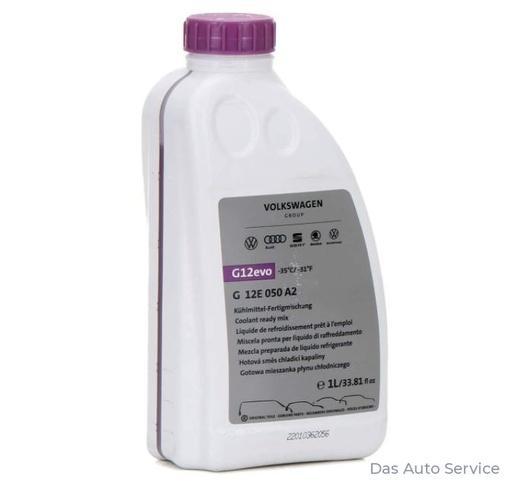
Genuine VAG G12Evo antifreeze G12E050A2 1.0l
Genuine G12evo coolant is designed for the cooling system when specified for your particular vehicle. What's important isn't just having coolant in the system, but making sure the whole system is working properly.
View in shopRead more
- Pre-purchase inspection
- Routine servicing
- 1.4 TSI Timing Chain Problems: Rattle and Turbo
- 1.4 TSI EA211: Water Pump and Thermostat Problems
Frequently asked questions
What are the common problems with the Tiguan 1.4 TSI?
On the Tiguan 1 with the EA111 engine, the main things I check are the timing chain and any rattling during start-up. On the Tiguan 2 with the EA211, I focus on the water pump, thermostat and coolant leaks.
Should I buy a Tiguan 1.4 TSI or 2.0 TDI?
If you mostly drive around town and cover fewer miles, the 1.4 TSI makes sense. If you do a lot of travelling and often have a fully loaded car, I'd also consider the 2.0 TDI.
Does the Tiguan 1.4 TSI have a timing chain?
It depends on the generation. The Tiguan 1 with the EA111 engine has a timing chain, while the Tiguan 2 with the EA211 has a timing belt.
Which Tiguan 1.4 TSI would I recommend buying?
I'd choose a Tiguan 2 with the EA211 engine and a good service history. I'd only consider a Tiguan 1 with the EA111 if there's paperwork confirming the timing chain has been serviced and the car passes a pre-purchase inspection.