Your 2.0 TDI is struggling to start, shaking at idle and smoking more than usual. The engine management light is on, and a diagnostic scan shows a fault relating to one of the cylinders. Quite often, the culprit is an injector. On a common rail TDI, the injectors deliver fuel at enormous pressure, and they wear out as the miles add up. Nothing lasts forever. So how do you know when your 2.0 TDI common rail injectors need replacing?
How do common rail injectors work?
Imagine a shared fuel rail holding diesel at enormous pressure, with the injectors spraying it into the cylinders several times during each combustion cycle. All timed down to the millisecond! That's how a diesel engine runs more quietly and uses less fuel. But here's the thing. That precision really matters. Even a little wear in one injector can make the whole engine run badly.
How can you tell if your 2.0 TDI common rail injectors are worn?
- The engine struggles to start, especially when it's warm.
- It runs unevenly and shakes at idle.
- Black smoke comes out when you accelerate.
- Fuel consumption starts creeping up.
- The engine management light comes on and the car goes into limp mode.
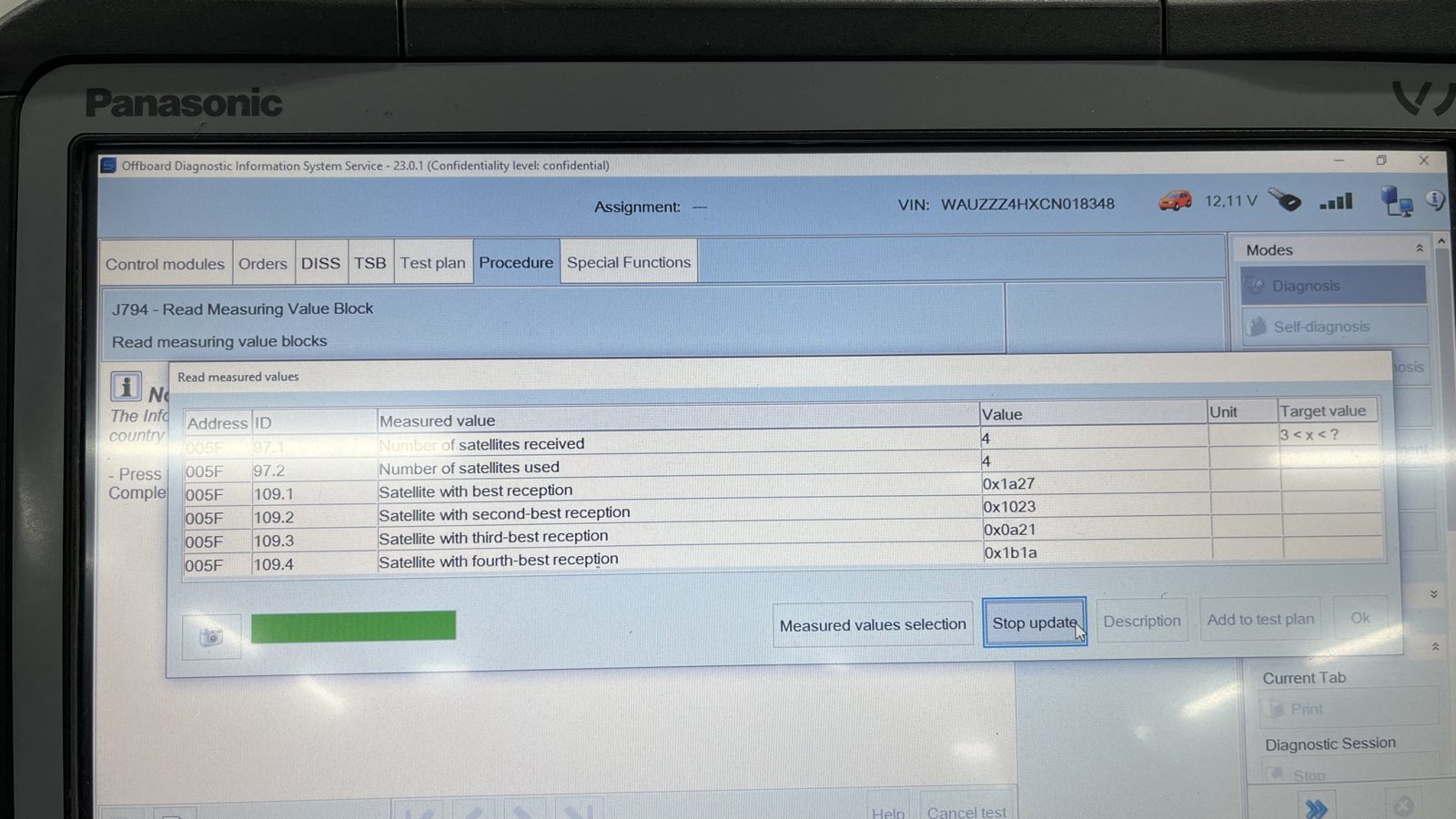
How do we test the injectors at the workshop?
- First, we read the fault codes and check the live data. We look at how much fuel the ECU is adding or reducing for each cylinder.
- Next, we measure how much fuel each injector sends back through the return line.
- We also check the other possible culprits – the glow plugs, the fuel filter and whether air is getting into the fuel system.
Only after those checks will I tell you which injector actually needs replacing. We don't replace injectors just because the car is smoking. Because if the problem is somewhere else, you could replace all four and your TDI would still be playing up exactly as before. And do you know the worst part? You're the one paying for that mistake out of your own pocket. Not the workshop.
Why do I sometimes recommend replacing all four injectors?
If one injector has worn out through mileage, the other three have covered exactly the same distance. And chances are, they're not in much better shape. You replace one, drive for a few months, and then the next one starts playing up. Back to the workshop, another repair, another labour bill. All of which you could have avoided.
That's why, if the measurements show the other injectors are on their last legs too, I'll recommend replacing the full set. But if the remaining three are within spec, why touch them? We replace the faulty one and leave the others alone. Simple as that.
Every new injector has its own correction code. After fitting it, we must enter that code into the engine ECU. Without this coding, the injector won't deliver the fuel accurately enough and could damage the engine. That's why we never skip this step. Ever.
What else do we replace along with the injectors?
- The copper washers and seals underneath the injectors.
- The bolts and retaining clamps, if they're single-use parts.
- The fuel filter, to keep dirt out of the new injectors.
Advice from Kris Mladenov: Don't put off changing your fuel filter, and always fill up at petrol stations you trust. Believe me, clean fuel is your injectors' best friend.
If your 2.0 TDI is struggling to start, shaking at idle or smoking, bring it to Das Auto Service and let us take a look. We'll check the injector correction values, measure how much fuel they're returning and I'll tell you whether any injector actually needs replacing. And if one does, we'll find out whether it's just that one or the others are starting to wear out too. No replacing parts on a guess. That's how it should be done.
The solution in our shop

Genuine LongLife III FE 0W30 engine oil, 5L
Genuine LongLife III engine oil for the 2.0 TDI common rail. After working on the injectors, we also check the engine oil. Wondering why? Because if an injector is leaking fuel, some of that diesel can get into the oil and dilute it. And that's really not good for your engine.
View in our shopRead more
- Diagnostics at Das Auto Service
- Complete engine rebuilds
- TDI hard starting in cold weather: glow plugs and checks
- Diesel at -15°C: fuel, filters and preheating
- Inside the TDI cylinder head: camshafts and hydraulic tappets
- 1.9 and 2.0 TDI PD injectors: the legend and its weak points
- The 2.0 TDI turbo: whistling, smoke and loss of power
Frequently asked questions
Can you replace just one injector on a 2.0 TDI?
Of course! If the other three are within spec, we only replace the faulty one. But if the tests show they're worn too, I'll recommend replacing the full set. There's no point paying twice.
Does a new injector need coding after replacement?
Yes, absolutely! Every new injector has its own correction code, which we enter into the engine ECU. Without it, the injector won't deliver the fuel accurately enough.
Can common rail injectors be repaired?
Some injectors can be repaired. But with common rail systems, I recommend new genuine injectors. Fuel injection here needs to be incredibly precise, and I don't want you taking chances with your engine.