You're sitting in your car with the engine idling when you hear a faint, high-pitched whistle. Almost like someone whistling through their teeth. The check engine light is on, and you're topping up more and more oil between services. If you've got a 1.8 or 2.0 TFSI from the EA888 family, don't jump straight to thinking you need new piston rings and pistons. Check the PCV valve (crankcase ventilation) first. That might be where your problem is coming from.
What does the PCV valve actually do?
While your engine is running, some combustion gases slip past the pistons and end up in the crankcase. They carry oil vapour with them. The crankcase ventilation system separates out the oil and returns it to the engine, while sending the gases back into the intake to be burnt. A valve with a rubber diaphragm keeps the pressure under control. I've also talked about crankcase ventilation on diesels in my Passat B7 service schedule. Petrol engines work on the same principle. And just like any other part, the PCV valve wears out. It won't last forever.
What happens when the PCV diaphragm tears?
- You hear a high-pitched whistle at idle. The engine is sucking air through the torn diaphragm.
- The engine runs unevenly at idle, and the car starts to shake.
- The check engine light comes on. The most common fault code is P0171 – system too lean.
- The engine starts burning oil because oil vapour is being drawn straight into the intake.
- The oil filler cap is difficult to remove with the engine running. You can feel the vacuum pulling it down.
There's something else I want you to know. When oil gets into the intake, it bakes onto the valves and gradually builds up into carbon deposits. I've explained this in detail in my article about carbon build-up on the valves.
If your EA888 is burning a lot of oil, the PCV valve could be the culprit. But it could also be the piston rings and pistons. And there's a massive difference between those two repairs. So here's my advice: don't rush into replacing the pistons before you've checked the crankcase ventilation system.
How do we check if the PCV valve is the problem?
- First, we listen to the engine to pinpoint exactly where the whistling is coming from.
- We read the fault codes and check the live data to see how the engine ECU is adjusting the fuel mixture.
- We measure the vacuum in the crankcase.
- We check whether oil is getting into the intake through the crankcase ventilation system.
If we find that the PCV system is causing the problem, we replace the valve or the complete oil separator, depending on which generation of engine you've got. Then we keep an eye on the oil consumption to see whether it's improved. If the engine is still burning oil, that's when we start looking at the piston rings and pistons. I've explained all of this in detail in my article about oil consumption in the 1.8 and 2.0 TSI/TFSI engines.
Advice from Kris Mladenov: If your TFSI starts whistling at idle, don't put off getting it checked. Bring it to Das Auto Service and we'll find out where the noise is coming from. I'm telling you this because a relatively small repair now can sometimes save you from a much bigger one later.
I really hope your TFSI just needs its PCV valve sorting out and will soon be running quietly again. And if I've helped you understand where that whistling might be coming from, share this article with a friend who drives a TFSI.
What you'll find in our shop
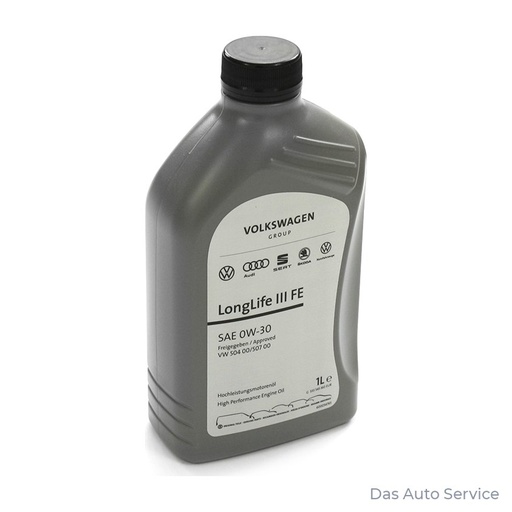
Genuine Longlife III FE 0W30 engine oil
Genuine Longlife III FE 0W30 engine oil, 1 litre, if you need to top up between oil changes.
View in our shop
Genuine Longlife III FE 0W30 engine oil 5L
Genuine Longlife III FE 0W30 engine oil, 5 litres.
View in our shopRead more
- Diagnostics at Das Auto Service
- Complete engine rebuilds
- 1.8 and 2.0 TSI/TFSI engines – excessive oil consumption
- Carbon build-up on TSI and TFSI valves: why it happens and how to clean it
- 1.8 and 2.0 TSI (EA888 Gen3): water pump and thermostat leaks
- Audi A4 B8 2.0 TFSI service schedule
- Oil in the intercooler: turbo or PCV valve?
Frequently asked questions about 2.0 TFSI PCV valve symptoms
Why does my 2.0 TFSI whistle at idle?
The most common cause is a torn diaphragm inside the PCV valve. The engine sucks air through the tear, making that distinctive, high-pitched whistling noise.
Can a faulty PCV valve cause my engine to burn oil?
Yes. When the PCV valve isn't working properly, oil vapour goes straight into the intake. The oil then gets drawn into the engine and burns. And you find yourself topping up more and more often.
What fault code does a faulty PCV valve cause?
Most commonly P0171 – system too lean. You'll usually notice the engine running unevenly at idle, too.