Audi TT 8J or the older TT 8N? The Audi TT 8J and 8N common problems are worth knowing about before you fall in love with one. This is one of those cars you buy with your heart, then find out what you've bought with your wallet. Low, beautiful and sporty – one look and you're already imagining yourself behind the wheel. But I want to tell you about the other side of the story, because underneath that lovely shape are an engine, gearbox and drivetrain that need looking after. I'm not telling you to forget about buying a TT. I'm telling you how to find a good one, rather than end up wondering what you've got yourself into.
Audi TT 8N or 8J – which generation should I choose?
First, you need to know exactly what you're looking at, because there are two quite different generations behind the Audi TT name. Both have their charm, but their engines, gearboxes and common problems aren't the same. Don't choose a car just because it looks good in the advert. Have a proper look under the bonnet.
- Audi TT 8N (1998–2006) – the first generation, with the petrol 1.8T producing between 150 and 225 hp, plus the 3.2 VR6. Some versions have quattro, where Haldex brings in the rear wheels when needed.
- Audi TT 8J (2006–2014) – the second generation, with 1.8 and 2.0 TFSI petrol engines, the 2.0 TDI, 3.2 VR6, the sporty TTS and the TT RS with its five-cylinder 2.5 TFSI. This is where you'll also find S tronic and quattro with Haldex.
Which would I choose? I wouldn't start with the generation. I'd start with the condition. A well-maintained TT 8N can be a much smarter buy than a neglected TT 8J. And the other way round, of course. A newer registration year won't fix what the previous owner neglected.
What are the Audi TT 8J and 8N common problems?
Now we're getting to the interesting bit. When you're looking at a used TT, you need to know its weak points and how to spot them before handing over your money. Not every car will have all these problems. But if you know what to look for, you won't have to rely on luck.
Audi TT 8N – what should I check on the 1.8T and dashboard?
The older 1.8T is an engine that needs regular oil changes. It doesn't appreciate being neglected, and you can't expect it to thank you afterwards. When inspecting one, pay attention to how the engine runs, how it sounds and how well it's been serviced. Another common issue is the dashboard display, which starts losing pixels as it gets older. It might seem like a small thing, but it's still something you need to take into account.
Audi TT 8J 2.0 TFSI – what's the catch?
There's one small part on the 2.0 TFSI that you really shouldn't overlook – the high-pressure fuel pump cam follower. It wears out, and ignoring it won't make the problem go away. I've explained exactly what happens in my article about the worn high-pressure fuel pump cam follower. On the newer engines, you also need to keep an eye on the timing chain. If you want to know what noises to listen for and what to check, read how to recognise a timing chain problem. Don't buy a car just because its engine happens to sound quiet today.
Audi TT RS – what does the five-cylinder 2.5 TFSI need?
The TT RS is a different story altogether. That five-cylinder 2.5 TFSI is a big part of why people fall in love with this car. Its sound and character are hard to mistake for anything else. But a performance engine deserves proper servicing and a thorough inspection before you buy. I've written a separate article about it – what the five-cylinder 2.5 TFSI needs. Give it a read before you get carried away by the first lovely example you see.
S tronic and Haldex – why should I check them?
The S tronic DQ250 is a dual-clutch automatic gearbox, and the mechatronic unit is its brain – it controls when and how the gearbox changes gear. When something goes wrong, owners usually describe the gearbox as jerking, jolting or banging into gear. I've explained the DQ250 mechatronic problemsin a separate article. On quattro models, you also need to check the Haldex system, which brings the rear wheels into action. I've covered how to service Haldex from Generation 1 to 5in detail.
What should I check before buying an Audi TT?
I'm not satisfied just because the seller tells me the car is perfect. I want to see it with a cold engine, listen to it, take it for a drive and run a proper diagnostic scan. Here's what we check before deciding whether a car is worth buying.
- Engine – cold start, unusual noises, how it runs and the condition of the oil. We're looking for signs of trouble, not simply checking whether it starts.
- S tronic – how the car pulls away, how the gearbox changes gear and whether it jerks or jolts. You need to test the gearbox on the road.
- quattro – whether the rear wheels actually engage. A quattro badge on the boot doesn't prove the system works.
- Dashboard and electronics – displays, instrument readings and stored fault codes. Simply clearing the faults and saying everything is fine isn't good enough.
If you've found a particular car you like, the smartest thing you can do is book a pre-purchase inspection. That way, you'll know what you're buying before the ownership paperwork is signed. Lovely photos won't tell you anything about the condition of the mechatronic unit.
How should I service my Audi TT to avoid problems?
At Das Auto Service, our rule for engine oil is simple – for cars driven in Bulgaria, we change the engine oil every 10,000 km or once a year, whichever comes first. We replace the oil filter, air filter, fuel filter and cabin filter at the same time. It doesn't matter whether you're using LongLife oil or any other type. The longer factory service intervals are partly linked to environmental requirements, but I'd rather protect your engine.
- Engine oil and all filters – every 10,000 km or once a year, whichever comes first.
- S tronic DQ250 – genuine gearbox oil every 60,000 km, followed by an adaptation after every service.
- Haldex up to Gen 4 – change both the Haldex coupling oil and rear differential oil every 60,000 km. For Gen 5 and Gen 6, change them every 30,000 km.
I also recommend having the car inspected every 6 months. We change the brake fluid every 2 years and the coolant every third heating season. That way, you're not waiting for something to break before giving it any attention.
WARNING! Plenty of Audi TTs have been driven enthusiastically, and some have had both engine remaps and track days. That kind of use can leave its mark on the gearbox and clutch. Don't assume that because the bodywork looks well looked after, everything underneath is in equally good condition.
Is an Audi TT 8J or 8N worth buying?
Yes, absolutely! The Audi TT is a wonderful car with character, history and a shape that still turns heads. But I want you to buy more than a beautiful body. I want the mechanical parts underneath to be in good condition too. If the engine, gearbox and quattro system have been properly checked and the car has been serviced as it should, you've got every reason to enjoy it. If they haven't, that beautiful bodywork won't pay your repair bills.
Tip from Kris Mladenov: Inspect the TT with a cold engine, take it for a proper test drive and have a full computer diagnostic scan carried out. Check the gearbox and rear-wheel drive system, not just the engine. You don't need me to convince you how good it looks. I just want the mechanical condition to give you a reason to be happy with your purchase long after you've brought it home.
I hope you've found this article useful! If you have, I'd love you to share it with a friend who's thinking about buying an Audi TT. My mission is simple – when I know something useful, I want more people to know it too. Because having the right information at the right time can save you a lot of headaches and a lot of money out of your own pocket.
The solution in our shop

Genuine Longlife III FE 0W30 oil 5L
Genuine LongLife III engine oil is a good choice when it meets the requirements of your particular engine. The important thing is not to extend the oil change interval.
View in shop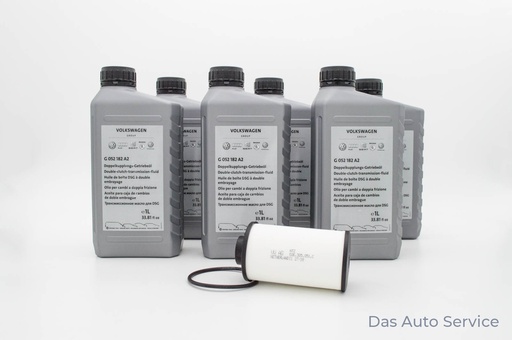
The genuine service kit for the 6-speed S tronic DQ250 provides what you need for a proper gearbox oil change. We always carry out an adaptation after servicing.
View in shopRead more
- Pre-purchase inspection
- Diagnostics
- Haldex Service Intervals: Generations 1 to 5
- 2.0 TFSI Fuel Pump Cam Follower Wear
- Audi RS3 2.5 TFSI service schedule
- 1.8 and 2.0 TFSI Timing Chain Problems: Warning Signs
Frequently asked questions
What are the common problems with the Audi TT 8J?
On the 2.0 TFSI, check the high-pressure fuel pump cam follower and the timing chain on newer engines. With S tronic, watch out for jerking and jolting, and on quattro models, make sure the Haldex system works properly.
Should I choose an Audi TT 8N or 8J?
I'd choose the better-maintained car, not necessarily the newer one. The TT 8N has its own charm with the 1.8T, while the TT 8J offers a different range of engines and versions.
Is the Audi TT 2.0 TFSI worth buying?
Yes, provided it's been properly inspected and serviced. Pay particular attention to the high-pressure fuel pump cam follower and the timing chain on newer engines.
How often should S tronic and Haldex be serviced?
We service S tronic every 60,000 km using genuine gearbox oil, followed by an adaptation. For Haldex up to Gen 4, we change both the Haldex coupling oil and rear differential oil every 60,000 km. On Gen 5 and Gen 6, we change both every 30,000 km.