You've found a car you really like, or perhaps your own engine has started using oil and you're wondering how serious it is. Is everything healthy inside, or are you looking at a complete engine rebuild? We can tell quite a lot from how an engine sounds and looks, but not everything. That's why, at Das Auto Service, we use three checks to investigate what's happening inside the cylinders without stripping down the engine. The idea is simple: find out what's wrong first, then decide what to do about it.
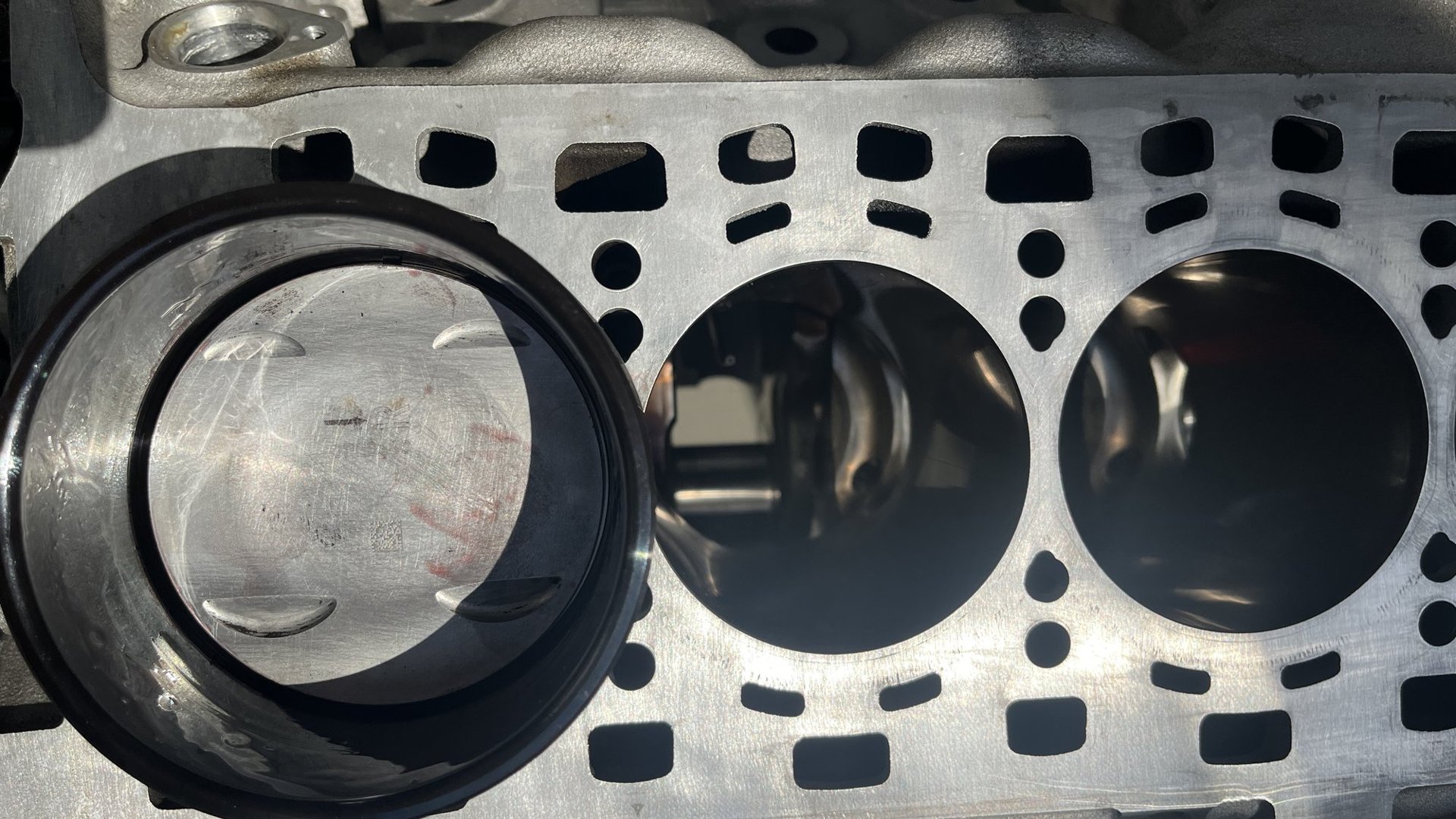
What does an engine compression test tell us?
We remove the spark plugs or glow plugs and fit a compression gauge in their place. Then we turn the engine over with the starter motor and measure how much pressure each cylinder builds up. The actual reading matters, but what I pay most attention to is the difference between cylinders. If one cylinder produces noticeably less pressure than the others, we've got a problem. It could be the piston rings, a valve or the head gasket. But here's the catch! A compression test alone can't tell us exactly which one is responsible.
How do we find out where a cylinder is leaking?
This is where the leak-down test comes in. The compression test tells us something isn't right, while the leak-down test helps us find where the pressure is escaping. We position the piston at top dead centre, feed compressed air into the cylinder and measure how much escapes. Then we listen carefully to find out where the air is going:
- Can you hear air coming through the intake? The intake valve isn't sealing properly.
- Can you hear it coming from the exhaust? That means the exhaust valve is leaking.
- Is air escaping through the oil filler opening? It's getting past the piston rings.
- Can we see bubbles in the coolant expansion tank? We're looking for a problem with the head gasket or cylinder head.
What can we see with a borescope?
A borescope is a small camera that we insert through the spark plug opening. It lets us inspect the cylinder walls, the tops of the pistons and the valves. We can spot scoring, traces of oil and carbon deposits. On direct-injection petrol engines, we also check for carbon build-up on the valves. I've explained that problem in more detail in my article about carbon build-up on the valves. There's a big difference between guessing what's going on inside an engine and actually seeing it with your own eyes.
There's something really important to remember when measuring compression. The engine needs to be warm, the battery fully charged and the throttle open. If someone does a quick compression test on a cold engine, the readings can be misleading. And when you start with the wrong numbers, you end up drawing the wrong conclusions.
When are these tests worth doing?
- You've found a high-mileage car or one with a questionable service history, and you want to know whether the engine is healthy.
- Your engine is using oil, but there's no visible leak anywhere. I've also covered this problem in my article about oil consumption in 1.8 and 2.0 TFSI engines.
- Your engine keeps misfiring on one cylinder. You've already replaced the spark plugs and ignition coils, but the problem is still there.
- You're facing an expensive repair and want to be sure it's actually worth repairing this particular engine before spending the money.
Advice from Kris Mladenov: If you've found a high-mileage car you like, ask for a compression test and a borescope inspection of the cylinders. Half an hour's work could save you from buying a car with an engine that's already heading for a complete rebuild. I'm telling you this because I don't want you paying for someone else's engine problems out of your own pocket.
These three tests can tell us a great deal about an engine without having to open it up. I always prefer to take the measurements, have a proper look inside and only then decide what needs repairing. That way, we're not guessing at your expense. If this article has helped you, share it with a friend who's looking to buy a car.
Read more
- Diagnostics at Das Auto Service
- Pre-Purchase Car Inspection
- Complete Engine Rebuilds
- 1.8 and 2.0 TSI/TFSI Engines – Excessive Oil Consumption
- Main Bearings and Engine Block: What a Proper Engine Rebuild Looks Like
- Carbon Build-Up on TSI and TFSI Valves: Why It Happens and How to Remove It
- Buying a Car from Germany: What Should I Check Before Paying?
- How Can I Check the Genuine Service History of a VAG Car?
Frequently Asked Questions
What does an engine compression test tell us?
It shows how much pressure each cylinder builds up. But the most important thing is comparing the readings. If one cylinder has noticeably lower compression than the others, something isn't right.
What's the difference between a compression test and a leak-down test?
A compression test tells us whether a cylinder has a problem. A leak-down test helps us find exactly where the pressure is escaping – past the valves, piston rings or head gasket.
When should I ask for a borescope inspection?
If you're buying a high-mileage car, your engine is using oil without any visible leaks, or you're facing an expensive repair. It's better to see what's happening inside before we start taking things apart blindly.