Your handbrake warning light is on, even though you released the handbrake ages ago. Or worse, it starts flashing while you're driving, and you have no idea whether it's something minor or your brakes are trying to tell you there's a problem. I hear this all the time at the workshop: "Kris, the handbrake is off, so why is the light still on?" The thing is, that red warning light isn't just for the handbrake. It could mean your brake fluid is low or there's a problem with the braking system itself. And when it comes to brakes, we don't take chances.
What does the red brake warning light mean?
First, I want to clear up something that a lot of people get wrong. The red brake warning light doesn't automatically mean your handbrake is on. On Audi, VW, Škoda, SEAT and other cars from the group, the same red symbol can warn you about several different things. So when it comes on, you need to work out exactly what your car is trying to tell you.
- The handbrake is on. This is perfectly normal. The light is simply reminding you that you've applied the handbrake. But if you've released it and the light stays on, the sensor could be sending the wrong signal.
- The brake fluid level is low. Now this is something you really need to pay attention to. Brake fluid transfers the pressure from your foot on the pedal to the brakes. If something isn't right with it, you shouldn't ignore the warning.
- There's a problem with the electric parking brake. On cars with an electric parking brake, the system can detect a fault, often accompanied by a yellow warning symbol.
There's another warning light I want you to recognise. A yellow circle with broken lines on either side usually means your brake pads are worn. That's not the same as the red brake system warning light. One tells you the pads need checking. The other could mean there's a problem affecting your ability to stop the car. That's an important difference.
Can you drive with the handbrake warning light on?
It depends on how the brake pedal feels, but I want to be absolutely clear about this. If the handbrake is released, the red light is still on, and the brake pedal feels soft or sinks further than usual, don't keep driving. Pull over somewhere safe and get help. Don't drive another few kilometres hoping it'll sort itself out. Your brakes are not something you want to put to the test at the last possible moment.
If the pedal feels normal, that's a better sign, but it doesn't mean everything is fine. If you've confirmed that the brake fluid is low or you suspect a leak, don't drive the car. If it's been established that the warning is only coming from the handbrake sensor and the braking system is working properly, you can carefully drive to a workshop. Just remember that a normal-feeling brake pedal is no guarantee that the car is safe.
Why is the handbrake warning light still on after release?
There are several possible causes, and they don't all mean an expensive repair. The trouble is, you can't tell which one it is just by looking at a warning light. Read a few online groups and you'll find every suggestion imaginable, from "top up the fluid" to "replace the motors". I'd rather check what's actually happening before throwing new parts at a problem based on guesswork.
- Worn brake pads. As the pads wear down, the pistons inside the brake callipers move further out, and the fluid level in the reservoir gradually drops. That doesn't necessarily mean there's a leak. I've also explained in detail when to replace brake discs and pads.
- A leak in the braking system. Brake fluid can leak from a hose, brake pipe or calliper. This is not something you can put off dealing with. We're talking about the system that determines whether you can stop your car.
- Handbrake sensor. Sometimes the mechanical handbrake is fully released, but the sensor keeps telling the car it's still applied. The warning light stays on even though there's nothing wrong with the brakes themselves.
- Electric parking brake. This system uses small electric motors on the rear brake callipers, controlled electronically. If it detects a problem, a warning can appear. Have a look at why service mode matters when replacing brake pads.
What do we check at the workshop when the light is on?
When you bring your car to us with this problem, we don't start by clearing fault codes and crossing our fingers that the light won't come back. First, we need to make sure the braking system is working properly. Then we find out what's causing the warning. There's a sensible order to follow.
- We check the brake fluid level and the condition of the brake pads. This helps us work out whether the drop in fluid level could be caused by pad wear.
- We inspect the brake hoses, callipers and pipes for leaks. Just looking at the fluid reservoir isn't enough.
- We read the fault codes stored in the car. This is particularly useful with electric parking brakes because it tells us what the control system is detecting.
- We check when the brake fluid was last changed. At Das Auto Service, I recommend changing it every 2 years. If you'd like to know why, read my article on when to change brake fluid.
I want to say a little more about that last check. Brake fluid isn't something you should only change when a warning light comes on. It has a set replacement interval, and I recommend sticking to it whether your car is showing a warning or not. Because the aim isn't simply to turn off a warning light. It's to know that your brakes are working exactly as they should.
WARNING! Don't just top up the brake fluid to the maximum without checking the pads and looking for leaks first. The level often drops because the brake pads are worn, not because fluid is leaking out. If you simply top it up, you could end up hiding the cause of the warning instead of fixing it.
Tip from Kris Mladenov: Take a look at your brake fluid reservoir every time you fill up with fuel. If you notice the level dropping, don't wait for the red warning light to appear. Find out why. And change the brake fluid every 2 years, even if everything seems fine. A few simple checks at the right time can save you a lot of trouble later.
I hope you've found this article useful! If you have, I'd really appreciate you sharing it with a friend who also drives an Audi, VW, Škoda or another car from the group. My mission is simple: when I know something useful, I want more people to know it too. Especially when that knowledge could save you trouble or keep you out of a dangerous situation. Look after yourself, look after your car, and never ignore those red warning lights on your dashboard.
The solution in our shop
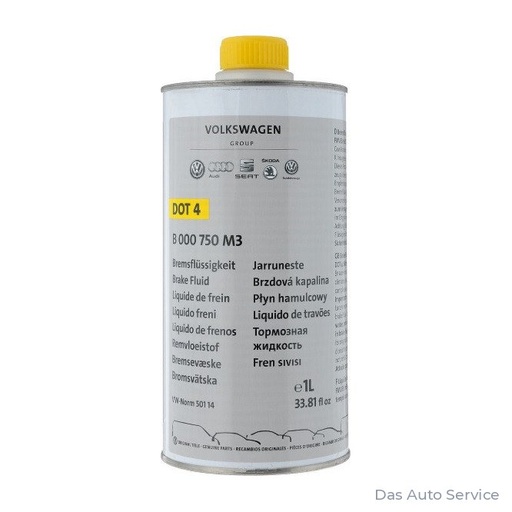
Genuine Audi/Volkswagen DOT 4 brake fluid B000750M3 1l
Genuine DOT 4 brake fluid is used for routine braking system maintenance. I recommend changing it every 2 years, rather than waiting until a warning appears.
View in shopRead more
- Diagnostics
- Routine servicing
- VAG Brake Fluid Change: When and Why?
- Audi Electronic Parking Brake Service Mode Guide
- Brake Discs and Pads Replacement: When to Change Both
Frequently asked questions
Why is the handbrake warning light on when the handbrake is off?
It could be caused by low brake fluid, a faulty handbrake sensor or a problem with the electric parking brake. The system needs checking to find out which one is actually causing the warning.
Can I drive with the brake warning light on?
If the brake pedal feels soft or sinks further than usual, stop and don't continue driving. Even if the pedal feels normal, don't drive if you suspect a leak or the brake fluid level is low. You need to find the cause first.
Why is my handbrake warning light flashing?
A flashing light can indicate a problem with the system, particularly on cars with an electric parking brake. Don't try to guess the cause from the symbol alone. The fault codes need to be read and the system checked.
Why does the brake fluid level drop if there's no leak?
As the brake pads wear down, the pistons in the brake callipers move further out, reducing the fluid level in the reservoir. That's why we check the pads and look for leaks first, rather than simply topping up the fluid.