Your car feels sluggish, blows black smoke when you accelerate, and sometimes even goes into limp mode. You take it to a garage, they read the fault codes, and straight away you hear: "Your MAF sensor is faulty. It needs replacing." I hear this all the time, and here's the thing: sometimes the sensor really is the problem, but quite often the fault is somewhere else entirely. Meanwhile, you've already paid for a new MAF sensor, and your car still won't pull properly. So I want to explain what this little part actually does, what MAF sensor symptoms to look out for, and most importantly, how we can find out whether it's really to blame before you spend your money.
What is a MAF sensor and what does it do?
Imagine your engine needs to know how much air is coming in so it can work out how much fuel to inject. That's exactly what the MAF sensor, or mass air flow sensor, does. It measures the amount of air entering the engine and sends that information to the engine's computer. The computer then uses those readings to control how much fuel goes in. If the information is wrong, the engine starts making decisions based on the wrong numbers. Simple as that.
On diesel engines, the MAF sensor has another important job. It also helps control the EGR system, which sends some of the exhaust gases back into the engine. The computer monitors how much fresh air is coming in and uses that information to work out what the EGR is doing. That's why, when a MAF sensor shows strange readings, I don't immediately blame the sensor itself. The problem could just as easily be related to the EGR.
Where is the MAF sensor located?
You'll find it in the air intake system, between the air filter and the turbocharger. It sits in the pipe that carries air into the engine. It's not a particularly big or complicated-looking part, but the information it provides is incredibly important. Open the bonnet and follow the pipe from the air filter towards the turbo, and you'll see where to look. Just don't rush to take it apart because someone in a Facebook group told you the MAF sensor causes every problem under the sun.
What are the symptoms of a faulty MAF sensor?
The complaints I hear most often at our workshop are: "The car doesn't pull like it used to" or "When I put my foot down, it blows black smoke." And yes, these really can be symptoms of a faulty MAF sensor. But! Not one of them, on its own, proves the sensor is bad. Here's what you might notice.
- Loss of power and limp mode. You press the accelerator, but the car doesn't pick up speed like it used to. Sometimes it goes into limp mode, where the engine's power is limited.
- Black smoke under acceleration. When the amount of fuel being injected doesn't match the amount of air available, you can get black smoke from the exhaust. A faulty MAF sensor is one possible cause, but it's certainly not the only one.
- Rough idle or stalling. The engine might run unevenly, shake or even stall completely. Again, that's a reason to investigate, not a reason to replace the sensor straight away.
- Increased fuel consumption. If the engine's computer is getting incorrect information about the airflow, fuel consumption can suffer too. But you can't diagnose a faulty MAF sensor just because the car is using more fuel.
When is the MAF sensor NOT the problem?
Now here's where things get interesting. A lot of people immediately blame the MAF sensor when their car loses power or starts blowing black smoke. But at the workshop, we need to check the whole system, because several different faults can produce almost identical symptoms. If we replace the MAF sensor without finding the real cause, all we've done is change a part. And the car still won't pull properly.
- An air leak after the MAF sensor. The sensor measures the incoming air, but if there's a leak further along the intake system, the actual conditions inside the engine won't match what's expected. That can make the readings misleading.
- A turbocharger problem. If the turbo isn't working properly, the car can also lose power and produce smoke. I've explained this in more detail in my article about 2.0 TDI turbo problems.
- An EGR valve that won't close. If the EGR stays open when it shouldn't, the amount of fresh air entering the engine changes. The MAF sensor might then show readings that look suspicious, even though the sensor itself is working perfectly well.
- A blocked air filter. If the filter is clogged, the engine can't get enough air. There's no point blaming the sensor before checking whether air can actually flow through the filter properly.
How do we check if the MAF sensor is faulty?
The first thing I want to know isn't whether there's a fault code stored for the MAF sensor. I want to know what the sensor is actually measuring. Because proper diagnostics isn't just about plugging in a scanner, reading the fault codes and ordering parts. You need to understand why the engine's computer is seeing certain values. And whether those readings are caused by the sensor itself or something else.
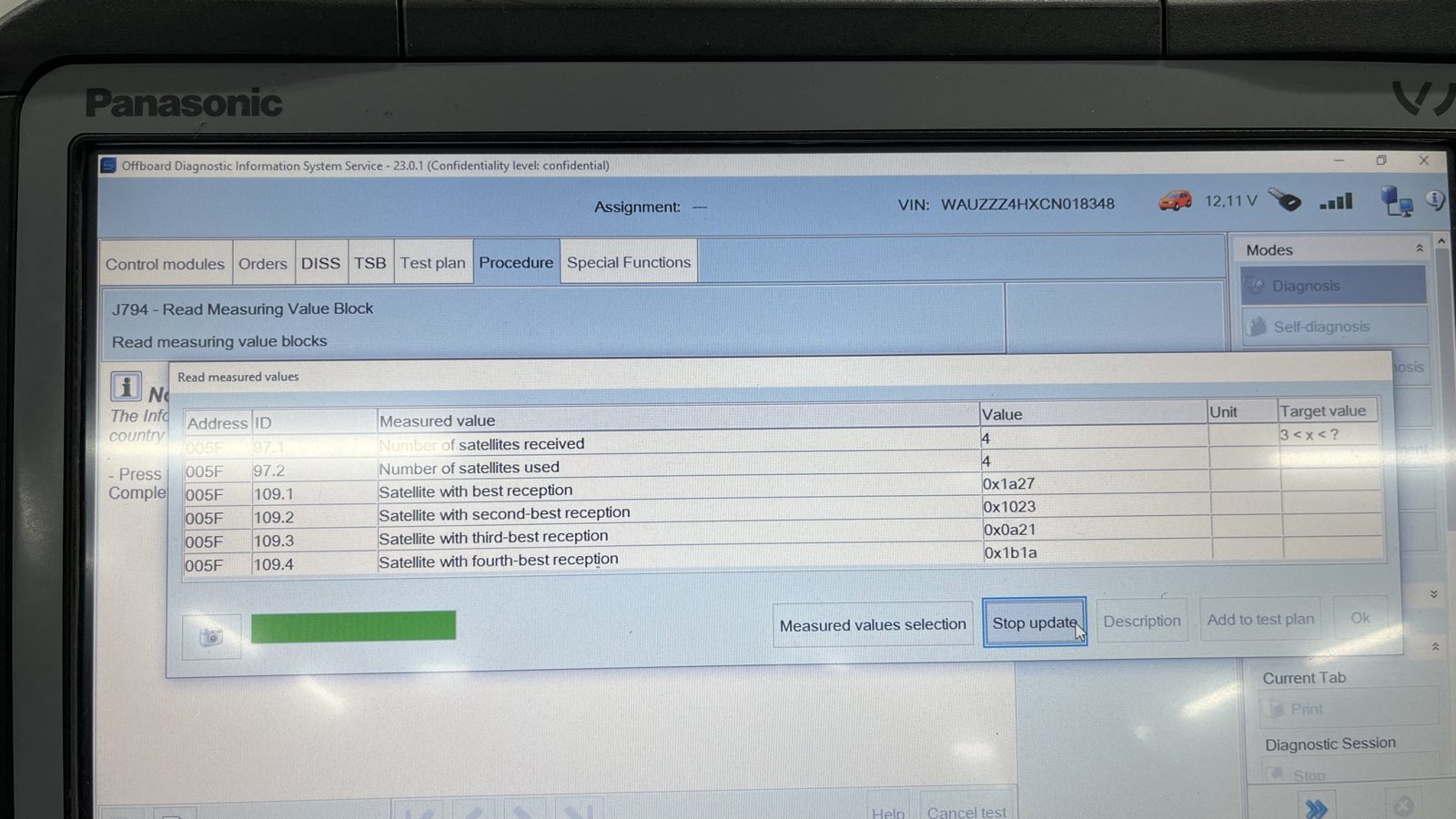
- We compare requested and actual airflow. In the live measuring blocks , we can see how much air the computer expects and how much the MAF sensor is actually reporting. The difference helps us work out where to look, but it doesn't automatically mean the sensor is faulty.
- We take the car for a test drive and log the readings. I want to see how the engine behaves on the road, especially when the problem actually happens. It's one thing to watch the engine running while the car is parked. It's quite another to put it under load and see what's happening to the airflow.
- We check for air leaks. If the intake system isn't airtight where it needs to be, we can't interpret the readings properly. That's why we look for leaks before deciding the MAF sensor needs replacing.
WARNING! Buying a new MAF sensor without checking the real cause of the problem is often money down the drain. You could replace a perfectly good part and end up with exactly the same fault. Don't buy a MAF sensor just because your car feels sluggish or blows black smoke.
Tip from Kris Mladenov: Change your air filter together with the engine oil, oil filter, fuel filter and cabin filter every 10,000 km or once a year, whichever comes first. A dirty air filter is one of the MAF sensor's biggest enemies. Don't wait until your engine is struggling to breathe before you remember to change it.
I hope you've found this article useful! If you have, I'd really appreciate you sharing it with a friend who's wondering why their car has lost power, or who's already been told they need a new MAF sensor. My mission has always been simple: when I know something useful, I want more people to know it too. Because getting the diagnosis right can save you a lot of unnecessary repairs and a lot of money coming straight out of your own pocket.
Read more
- Diagnostics
- Routine servicing
- VAG Live Data Diagnostics: What the Readings Reveal
- 2.0 TDI Turbo Problems: Whistling, Smoke and Power Loss
- Lambda Sensor Fault: Sensor or Catalytic Converter?
Frequently asked questions
What are the symptoms of a faulty MAF sensor?
The most common signs are loss of power, limp mode, black smoke under acceleration, rough running and increased fuel consumption. But other faults can cause exactly the same symptoms, so the MAF sensor needs to be properly checked before you replace it.
Can you drive with a faulty MAF sensor?
The car might still be driveable, but it could have very little power, run poorly or go into limp mode. Don't put off getting it checked, because the first thing we need to do is find out what's actually causing the problem.
Can a MAF sensor be cleaned?
Cleaning a MAF sensor doesn't guarantee that a faulty one will start working properly again. First, we need to check the live readings and establish whether the sensor is actually the problem in the first place.