Suspension noise: knocking, humming and squeaking
“There’s a noise coming from underneath, but I can’t work out what it is.” I hear that almost every day at the workshop. One owner brings in an Audi that knocks over potholes, another has a Passat that hums like an aeroplane, and someone else can’t understand why their Škoda squeaks every time they drive over a speed bump. The truth is, suspension noise can mean all sorts of things, and some of them shouldn’t be taken lightly. In this guide to suspension noise diagnosis, I’ll explain how to tell the different sounds apart, what they might mean and when it’s safe to keep driving.
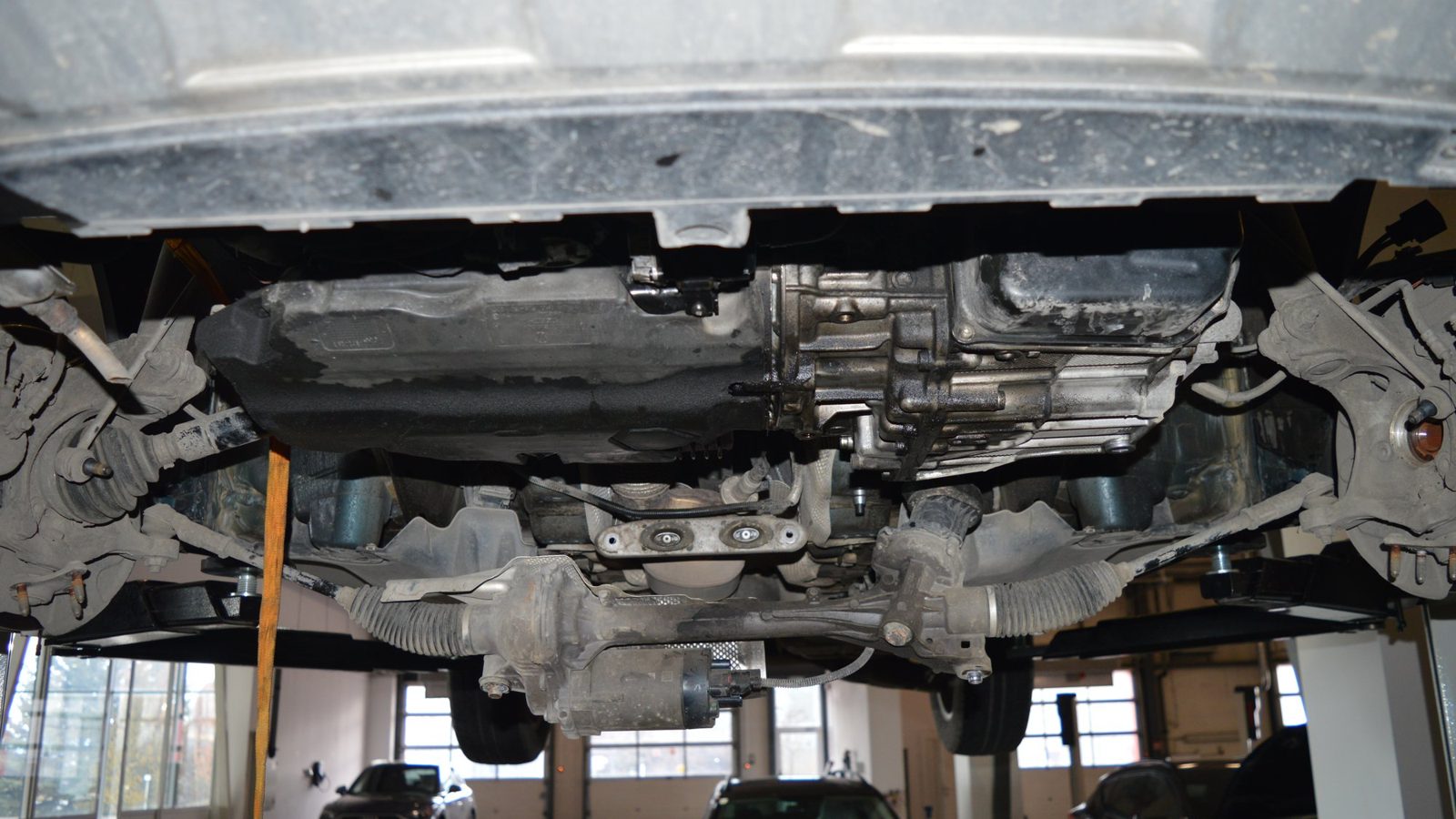
Why does my car knock when I drive over potholes?
You’ll usually hear knocking when you drive over a pothole, manhole cover or tram tracks. Sometimes it’s a sharp, metallic rattle; other times it’s a dull thud, as though something is hitting the underside of the car. On VW, Audi, Škoda and SEAT models, the causes are often similar, but the sound can be misleading. So don’t rush out and buy new shock absorbers just because someone has told you they’re “probably worn out”.
- Anti-roll bar drop links – among the most commonly replaced and relatively inexpensive suspension components. When they wear out, they produce a sharp, metallic knocking sound, particularly when driving slowly over uneven surfaces. You’ll find them on both the front and rear axles.
- Suspension arm bushes – the rubber bushes that absorb impacts and prevent vibrations from travelling directly into the body. As they wear out, you’ll start hearing a dull knocking sound, which you may sometimes feel through the steering wheel.
- Suspension arm ball joint – the ball-and-socket joint that allows the wheel to move with the suspension. When there’s play in the joint, the knocking becomes sharper, especially when you’re turning and driving over a pothole at the same time.
There’s also an interesting case documented by Volkswagen Group in technical bulletin TPI 2048266/6. A worn hydraulic bush in the lower transverse suspension arm transmits knocking through the subframe, making it sound as though the noise is coming from somewhere else. That’s how you end up replacing shock absorbers and anti-roll bar drop links for no good reason. Meanwhile, the real culprit is still sitting there, untouched.
Why does the humming noise get louder as I drive faster?
If your car makes a constant humming noise that gets louder as your speed increases, the first thing I’d check is the wheel bearings. They allow the wheels to rotate freely and quietly. When a bearing wears out, it starts producing a characteristic humming or droning sound. The noise often gets louder when turning in one direction and quieter in the other because the load on the bearing changes.
But not every humming noise comes from a wheel bearing. Unevenly worn tyres can make a similar noise, especially if the wheel alignment hasn’t been checked or the tyres haven’t been rotated for a long time. Tyre noise is usually rhythmic and changes with speed, but doesn’t noticeably change when you turn. On VW, Audi and Škoda models, front wheel bearings typically last between 80,000 and 150,000 km, depending on road conditions. That’s why I check before replacing anything.
Suspension noise diagnosis: why does it squeak?
Squeaking is a different sort of complaint. If you hear it while driving slowly over uneven surfaces, the cause is often a dried-out rubber bush or ball joint. On VAG cars, the bushes that secure the anti-roll bar to the subframe are also a common source of squeaking. Over time, the rubber loses its elasticity and starts making noise as the suspension moves.
If it squeaks when you turn the steering wheel while stationary, I also check the shock absorber top mount bearings. They can make noise when driving slowly over uneven surfaces too. And if the sound occurs when you press the brake pedal, the problem might not be in the suspension at all, but in the braking system. I’ve explained more about that in my article about vibrations when braking.
Squeaking is generally less worrying than loud knocking, but that doesn’t mean everything is fine. It’s often the first sign that a rubber component is no longer doing its job properly. Today it squeaks; tomorrow it starts knocking. Better to catch it early.
Can I keep driving if my suspension is knocking?
It depends on exactly what’s worn out. If the problem is an anti-roll bar drop link, you can usually carry on driving carefully, but the car becomes less stable during sudden lane changes and when cornering. You can also drive for a while with worn suspension bushes, but they no longer absorb impacts properly. That puts additional strain on the suspension arms, ball joints and subframe.
However, there’s no room for compromise when a ball joint has excessive play that makes it unsafe. If it fails, the wheel can lose its correct position. I wouldn’t put off dealing with a humming wheel bearing either, because the wear can become dangerous and, in rare cases, the bearing can seize. It’s simply not worth taking the risk when an inspection could identify the problem.
IMPORTANT! If you hear loud knocking, the steering pulls to one side or you feel vibrations when braking, stop somewhere safe and arrange to have the car inspected. A loose suspension arm ball joint is a safety issue and must not be ignored.
How do you find the source of suspension noise?
Picture this. A Golf 7 arrives at our workshop with the complaint, “There’s a knocking noise from the right-hand side.” The car has already been to two workshops, where the anti-roll bar drop links and shock absorber were replaced, but the knocking is still there. We put it on the lift and find a worn bush in the rear suspension arm that nobody had checked. We replace it, and the noise disappears.
That’s why we start with an inspection on the lift. We check the bushes, ball joints, anti-roll bar drop links, bearings and springs. We rock the wheel in both directions to check for play in the ball joint, wheel bearing or track rod end. We don’t replace parts on a hunch. First we find the cause, then we carry out the repair.
I’m also particular about the quality of the parts we use. Genuine components are designed for a specific service life, whereas some aftermarket suspension arms and drop links start knocking again after just 20,000 km. We see it all the time. A cheap repair doesn’t always work out cheap, especially when you have to pay to have the same job done twice.
After replacing a suspension component, we carry out wheel alignment. Otherwise, you risk uneven wear on the new parts and tyres. If your car pulls to one side, you can also read how to tell whether the problem is wheel alignment, tyres or brakes.
If you hear something suspicious, book a diagnostic appointment. Most noises don’t mean you’re in immediate danger, but putting off an inspection often makes the eventual repair more complicated. You can also take a look at our suspension and brakes service. And if the noise mainly occurs when turning, have a read of what you need to know about CV joints and driveshafts.
Advice from Kris Mladenov: If you hear an unfamiliar noise from your suspension, don’t try to diagnose it by ear with a mate in the garage. Get the car on a lift and have it checked by people who know what they’re looking for. An inspection takes around 30 minutes and could save you from replacing perfectly good parts, wasting money and dealing with unnecessary hassle.
I hope you’ve found this article useful! If you have, I’d be glad if you shared it with friends and family who are also wondering what’s knocking underneath their cars. My mission has always been simple: when I know something, I want more people to know it too. Because getting something checked at the right time can save you a lot of headaches.
The solution in our shop
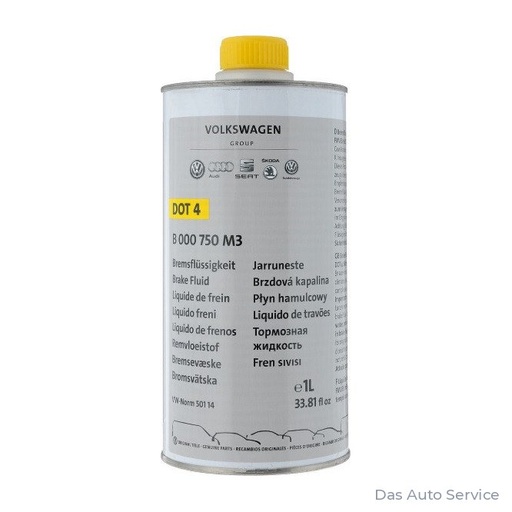
Genuine VAG DOT 4 brake fluid B000750M3 1 l
Genuine DOT 4 brake fluid. We change brake fluid every 2 years, and whenever we inspect the suspension, we check the brakes too.
View in shop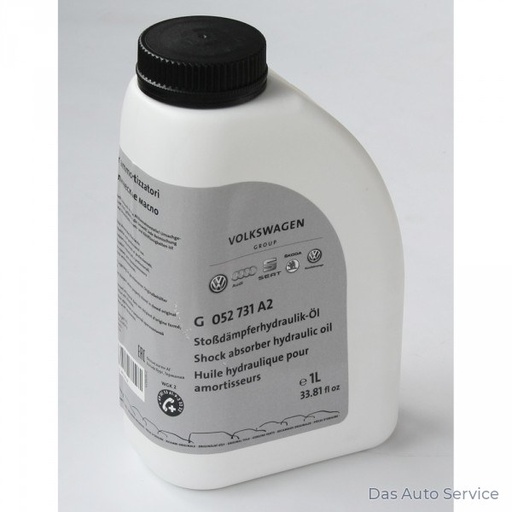
Genuine shock absorber oil G052731A2 for Audi RS 1 l
Genuine shock absorber oil G052731A2. On Audi RS models equipped with the relevant system, the shock absorbers have their own oil and service interval.
View in shopRead more
- Suspension and brakes
- Diagnostics
- Vibration when braking: discs, hubs or something else?
- Noise when turning: CV joints and driveshafts on VAG cars
- Car pulling to one side: wheel alignment, tyres or brakes
Frequently asked questions
Why does my suspension knock when cold but go quiet after 5 minutes?
The shock absorber or top mount bearing could be responsible. At low temperatures, the oil inside the shock absorber thickens, which changes how it behaves. However, the exact cause needs to be checked.
Could the knocking come from the brakes rather than the suspension?
Yes. Brake pads, caliper guide pins and anti-rattle clips can also knock or squeak. That’s why we inspect the brakes alongside the suspension.
How long do anti-roll bar drop links last?
Genuine drop links typically last around 60,000–80,000 km on Bulgarian roads. Some aftermarket alternatives start knocking after just 20,000 km.
Do I need wheel alignment after replacing suspension arms?
Yes, we always carry out wheel alignment afterwards. Without correct alignment, you risk uneven wear on the new components and tyres.