If you've ever brought your car to us at Das Auto Service, you've probably noticed that we hardly ever tighten anything by feel. Wheel bolts, the oil sump drain plug, spark plugs, suspension bolts – we get the torque wrench out for all of them. Sometimes people ask me, "Kris, isn't that a bit much? We used to just tighten everything with a long bar and be done with it." You're right, my friend. But back then, engines were made of cast iron too. Things are very different today. That's why we use a torque wrench for wheel bolts and plenty of other parts.
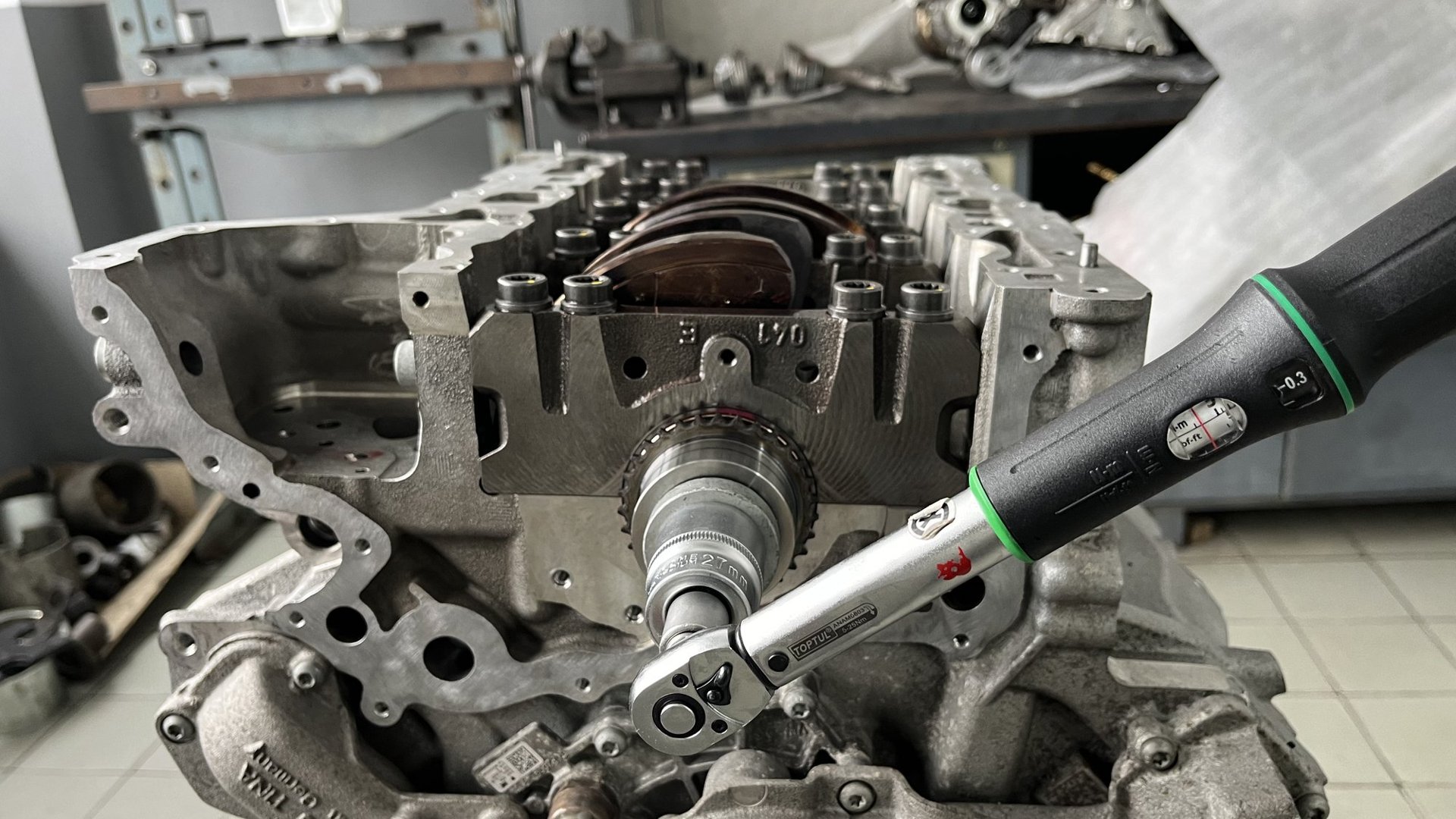
What exactly is tightening torque?
Every bolt on your car has a specific tightening torque. We measure it in newton metres (Nm). The manufacturer works out how tight the bolt needs to be so it holds everything securely without stretching too far, stripping the threads or bending the part it's holding in place. I set the torque wrench to the correct value, and when I reach it, the wrench clicks. Simple as that. But incredibly important.
What happens when you tighten bolts by feel?
- You tighten the oil sump drain plug with an impact gun, strip the threads in the aluminium sump and end up having to replace the whole sump.
- Someone tightens your wheel bolts as hard as the impact gun will go. Then you get a puncture on the road and can't undo them. I've told you about this in "How Were Your Winter Wheels Tightened?".
- You overtighten the spark plugs and strip the threads in the cylinder head. Suddenly, what should have been a simple job turns into a serious problem.
- You leave the brake caliper or suspension bolts too loose, and they could work themselves free. Now we're not just talking about money and repairs. We're talking about your safety.
On VAG cars, some bolts are designed to be used only once. These are called torque-to-yield bolts. You'll find them on the cylinder head, in parts of the suspension and on the driveshafts. They stretch when we tighten them, which is why we must never reuse them. Fit an old torque-to-yield bolt and tighten it again, and you risk snapping it.
Why is the correct tightening torque so important on VAG cars?
Modern engines and suspension components are getting lighter and lighter. We've got aluminium oil sumps, aluminium cylinder heads and parts with thin walls. There's very little room for mistakes here. For example, quite a few models have a plastic oil sump drain plug that only needs a low tightening torque. Tighten it as though it were a steel plug and you could crack it straight away. And it's exactly these little mistakes during an oil change that end up costing you money. I've explained this in more detail in my article about oil and service parts.
What should you ask when you leave your car at a garage?
- Do they tighten the wheel bolts with a torque wrench, or do they just use an impact gun?
- Do they replace the drain plug seal at every oil change?
- When a job involves single-use bolts, do they fit new ones?
Those are three perfectly reasonable questions, my friend. And if the answers surprise you, at least you'll know what to insist on next time.
What about locking wheel bolts?
Locking wheel bolts need the same tightening torque as ordinary wheel bolts. The difference is that the locking wheel bolt key is more delicate, and an impact gun can easily break it. Then, when you need to take a wheel off, you've got a real headache on your hands. So always keep your locking wheel bolt key in the car, and never let anyone tighten those bolts with an impact gun.
A tip from Kris Mladenov: A torque wrench isn't some fancy extra that a garage uses to show off. It's the easiest way to avoid stripped threads, cracked oil sumps and bolts you can't undo when you're stuck at the side of the road. I'm telling you this for your own good. Insist that your mechanic uses one.
I hope you now understand why you hear the torque wrench clicking so often at our workshop. We don't do it to make the repair look more complicated. We do it because every bolt needs to be tightened just right. Not too tight, not too loose. If you've found this helpful, share the article with your friends.
The solution in our shop
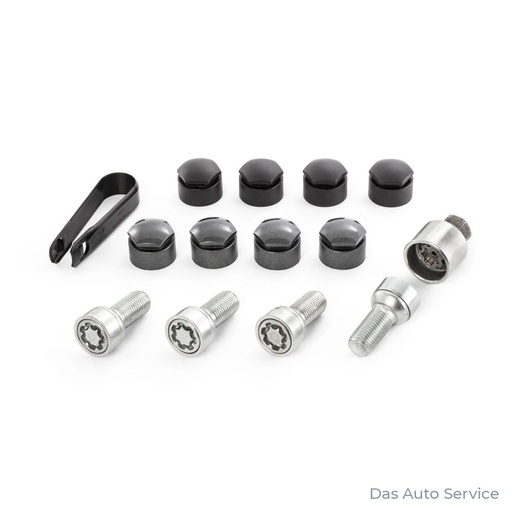
Audi locking wheel bolts M14 x 1,5 x 27
Genuine Audi locking wheel bolts M14 x 1,5 x 27. We tighten them to the same torque as ordinary wheel bolts.
View in our shop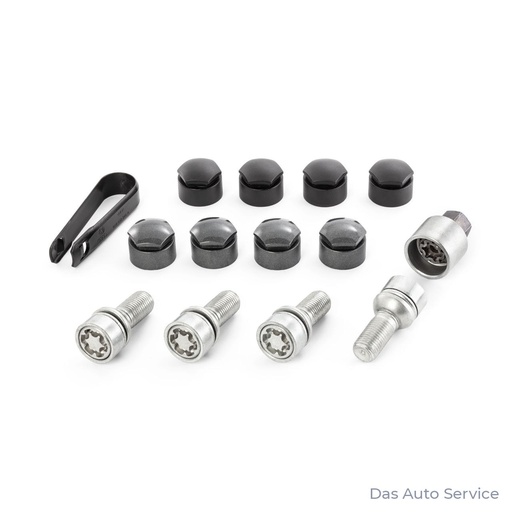
Audi locking wheel bolts M14 x 1,5 x 35,5
Audi locking wheel bolts M14 x 1,5 x 35,5 for models that need a longer bolt.
View in our shopRead more
- Routine Servicing at Das Auto Service
- Complete Engine Overhauls
- How Were Your Winter Wheels Tightened?
- When Should I Change the Oil and Service Parts on My VAG Car?
- When Should I Fit Winter Tyres and How Should I Store My Summer Tyres?
- Oil Change: Why We Replace the Washer and Use a Torque Wrench
Frequently Asked Questions
What torque should Audi and VW wheel bolts be tightened to?
It's 120 Nm on most models. We tighten them with a torque wrench, and it's worth checking them again after 50–100 km.
Why shouldn't you overtighten the oil sump drain plug?
Because many models have an aluminium oil sump, and the drain plug can be aluminium or plastic. Tighten it too much and you could strip the threads.
What is a torque-to-yield bolt?
It's a single-use bolt that stretches as you tighten it. Once it's been used, it must never be refitted.