Want a Golf, but find it too low, a bit cramped and never quite big enough for the kids and all their stuff? Then you've probably looked at the Golf 5 Plus. It's that slightly taller Golf that's much easier to get in and out of without folding yourself in half. It was built from 2005 to 2014, with a facelift in 2009, and carries the model code 5M. It's popular with families, older drivers and anyone who wants more room without driving a big car. But here's the thing! Under that practical bodywork, you'll find engines and gearboxes you really need to understand before handing over your money. I'll walk you through what I look for at Das Auto Service and which version I'd choose myself.
Who is the Golf 5 Plus right for?
Imagine a regular Golf, but with a higher seating position and more room for everyone inside. That's the whole idea behind the Golf Plus. If you've got young children, you'll know how annoying it is to bend down every single day to get them settled in the back. This makes life easier. And if you simply don't enjoy sitting low down and climbing out of your car like it's a sports coupe, you'll notice the difference the moment you get in.
What I like about the Golf Plus is that it doesn't pretend to be something it isn't. It's not a big family MPV, but it's more comfortable and practical than a regular Golf. It keeps its compact dimensions while feeling roomier inside. That's exactly why I tell people not to judge it from photos alone. Get in, sit in the front, then try the back seats. You might discover it's exactly the car you've been looking for.
VW Golf 5 Plus buying guide: engines and gearboxes?
This is where I really want you to pay attention. Two Golf Plus cars can look identical from the outside but be completely different when it comes to their engines, maintenance and potential problems. You've got conventional petrol engines, turbocharged TSI petrol engines and several generations of diesels. That's why I'd never choose one based purely on the badge on the boot. First, I want to know exactly which engine and gearbox it has.
- 1.4 and 1.6 petrol – options for someone who prefers a petrol engine.
- 1.4 TSI – a turbocharged petrol engine with a timing chain that needs particular attention.
- 1.9 TDI and 2.0 TDI PD – diesels with unit injectors, where the fuel injection system works differently from the newer common-rail system.
- 1.6 TDI common rail – the later diesel option, introduced after 2009.
- Gearboxes – manual, DSG and automatic. The important thing is knowing exactly which gearbox is fitted to the car you're looking at.
What problems do we see with the Golf 5 Plus?
Whenever someone tells me, "Kris, I've found a brilliant Golf Plus", the first thing I ask is which engine and gearbox it has. Not because the model is bad, but because different versions have different weak points. One car might keep you happy for years, while another could start emptying your wallet soon after you buy it. And quite often, the difference isn't how the car looks. It's what you didn't check.
1.4 TSI – why does the timing chain rattle?
With the EA111 family of 1.4 TSI engines, the first things I pay attention to are the timing chain and its tensioner. If you hear a rattling noise on a cold start, don't just accept it as normal because the seller says, "They all do that." The timing chain is part of the system that keeps everything inside the engine moving in perfect time. When something goes wrong there, the consequences can be serious. I've explained it in detail in my article about the 1.4 TSI EA111 and its timing chain problems.
1.9 TDI – why do so many people prefer it?
The old 1.9 TDI with unit injectors has a good reputation, and I understand why. It's an engine I'd put near the top of my list when looking for a Golf Plus. But please don't fall for the stories about it lasting forever and never going wrong. The unit injectors are part of the fuel system, and their condition matters, just like the overall condition of the engine. If you're considering one, have a read of what you need to know about the 1.9 and 2.0 TDI unit-injector engines.
2.0 TDI PD – what should I check?
On some 2.0 TDI engines with balance shafts, there's one area I'd never overlook: the oil pump drive. The oil pump supplies the oil the engine needs to keep running properly. If its drive mechanism fails, you're not looking at a small repair. That's why I want to know the exact engine code and what's already been checked. I've covered this in more detail in my article about the 2.0 TDI oil pump problem.
DSG – why does the gearbox jerk and shudder?
"Kris, the gearbox jerks a little, but the seller says that's normal." I hear things like this all the time, and I don't like them one bit. With the DSG DQ200 and its dry clutch, you need to pay attention to how the car pulls away, how it changes gear and whether it jerks or gives you a thump. You can't diagnose the cause just by how it feels or by reading someone's comment on a forum. It needs checking properly. If you're looking at a car with this gearbox, read my article on why the DSG DQ200 jerks and shudders.
What should I check before buying a Golf 5 Plus?
Here's something I tell people all the time. You're not just buying a model, an engine and a list of optional extras. You're also buying everything the previous owner did, or didn't do, to that car. So I'm not satisfied just because it looks nice and drives well on a quick trip around the block. I want to know what you're actually getting for your money.
- Start with the engine. Find out its exact engine code and listen to it on a cold start. Don't let the seller warm it up beforehand if you want to see how it starts and sounds when cold.
- Check the gearbox. Whether it's a manual, DSG or another type of automatic, you need to see how it behaves. With DSG, pay particular attention to any jerking and how smoothly it changes gear.
- Check the service history. I want to see what maintenance has been carried out, when it was done and whether there's paperwork to prove it. Someone simply telling you the mileage is genuine isn't enough.
If you like the car but aren't sure what's hiding under the bonnet, book a pre-purchase inspection. This is when you want to find out what condition it's really in, not after you've already brought it home. Trust me, it's better to walk away from a questionable car than end up paying for somebody else's neglect.
How should I maintain my Golf 5 Plus to make it last?
There's no secret trick here. Just regular servicing and the right parts and fluids. I'm not a fan of long engine oil change intervals, whatever the LongLife service schedule might say. Manufacturers' recommendations are often influenced by environmental requirements, but I'm interested in what's best for your engine in Bulgarian driving conditions. I want your car to last a long time, not simply survive until its next service.
- Engine oil and all filters – oil, fuel, air and cabin – every 10,000 km or once a year, whichever comes first, regardless of the oil used. The engine oil must always meet the correct VW specification for your particular engine.
- DSG – change the gearbox oil every 60,000 km using genuine oil. Always carry out a gearbox adaptation after servicing.
- Brake fluid – every 2 years, and coolant – every third heating season.
- Workshop inspection – every 6 months, so we can catch problems early, before you even notice anything wrong behind the wheel.
IMPORTANT! If you're considering a Golf Plus with a 2.0 TDI unit-injector engine and balance shafts, have the oil pump and its drive mechanism checked before buying. Don't leave this inspection until after you've paid for the car.
What's my verdict on the Golf 5 Plus?
Yes, I like the Golf Plus. It's a practical, comfortable, easy-going car for someone who isn't trying to impress anyone and simply wants something pleasant to drive every day. Of the engines available, the 1.9 TDI would be my first choice for peace of mind, provided the particular car is in good condition. But I wouldn't buy even the most highly praised engine without having it checked first. Because a good model can never make up for poor maintenance.
Tip from Kris Mladenov: When you go to look at a Golf Plus, don't spend all your time behind the wheel. Sit in the back too, see how much room you've got and imagine using it every day. That extra comfort is exactly why people buy the Golf Plus. And before you hand over your money, check the engine, gearbox and service history. I want you to buy a car you'll enjoy, not another repair bill waiting to happen.
I hope you've found this article useful! If you have, I'd really appreciate you sharing it with a friend who's looking for a Golf Plus or already drives one. My mission is simple: when I know something useful, I want more people to know it too. Because having the right information at the right time can save you a lot of trouble and a lot of money out of your own pocket.
The solution in our shop

Genuine Longlife III FE 0W30 oil 5L
Genuine LongLife III oil is an option for engines that require the relevant VW oil specification. Always check that it's suitable for your exact engine.
View in shop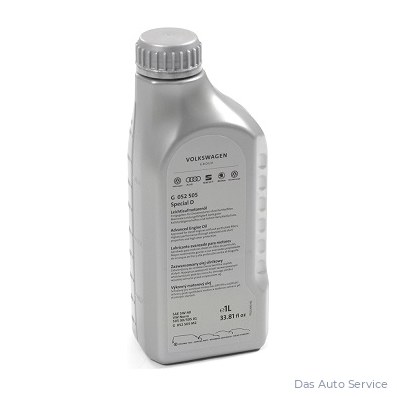
Genuine SpecialD 5W40 Volkswagen diesel oil 1L
Genuine SpecialD 5W40 oil, meeting VW 505 01, is designed for unit-injector engines that require this specification. Getting the correct approval matters more than the name on the bottle.
View in shopRead more
- Pre-purchase inspection
- Routine servicing
- 1.4 TSI Timing Chain Problems: Rattle and Turbo
- 1.9 TDI PD Common Problems and Weak Points
- 2.0 TDI Oil Pump Failure: The Balance Shaft Problem
- DSG DQ200 Problems: Jerking and Gearbox Faults
Frequently asked questions
What are the most common Golf Plus problems?
It depends on the engine and gearbox. On the 1.4 TSI, I check the timing chain. On certain 2.0 TDI unit-injector engines, I focus on the oil pump. And with the DSG DQ200, I look for jerking and check how the gearbox behaves.
Should I choose a Golf Plus or a Touran?
If you want a compact car with a higher seating position and more comfort, the Golf Plus is a very good choice. If you need a bigger family car, it's worth looking at the Touran too.
Is the Golf Plus 1.9 TDI or 1.4 TSI the better choice?
Personally, I'd go for the 1.9 TDI as the more reassuring option. With the 1.4 TSI, you need to pay particular attention to the timing chain and tensioner.
How often should I change the oil in my Golf Plus?
I recommend changing the engine oil every 10,000 km or once a year, whichever comes first, regardless of the LongLife interval or the oil used. Change all the filters at the same time: oil, fuel, air and cabin.