You put your foot down, wait, wait a bit longer… and suddenly the car takes off. Sound familiar? I hear this all the time at Das Auto Service: "Kris, my car has no power at low revs, then suddenly it takes off like a rocket." That's called turbo lag, and today I'll explain exactly what's happening under the bonnet. Because a slight delay when you press the accelerator is perfectly normal on many turbocharged engines. But when you put your foot down and the car takes ages to respond, we need to find out why.
What is turbo lag?
Think of the turbo as a little fan that uses the engine's exhaust gases to force more air into the engine. The more exhaust gas flows through the turbine, the faster it can spin and the more boost pressure it can produce. But at low revs, there isn't much exhaust gas flowing, so the turbo hasn't got enough energy yet to deliver the air needed for a quick burst of acceleration. You press the accelerator, the engine produces more exhaust gas, the turbo spins up, and only then do you feel the car start to pull. That short delay is what we call turbo lag.
Here's something important: turbo lag doesn't automatically mean something is broken. It's simply part of how a turbocharged engine works. In some cars, you barely notice it. In others, there's a clear delay before the power arrives. The trouble starts when that delay becomes excessive or the car begins behaving differently from how it used to. That's when we're no longer talking about a normal characteristic of the engine.
How do manufacturers reduce turbo lag?
Car manufacturers know perfectly well how annoying it is to press the accelerator and wait for something to happen. That's why they've developed different ways to get the turbo working sooner. The idea is always the same: give you plenty of pulling power at low revs, without making you wait for the engine to spin up. Here are a few of the solutions they use.
- Variable-geometry turbos on diesel engines. Inside the turbo are movable vanes that change how the exhaust gases flow through the turbine. This helps the turbo respond better at low revs, when there's less exhaust gas available.
- Smaller turbos and twin-turbo systems. A smaller turbo spins up more easily, while engines with two turbos can share the work between them. The aim is to give you good pulling power at both low and high revs.
- Superchargers on the 1.4 TSI Twincharger and 3.0 TFSI. A supercharger produces boost pressure without having to wait for exhaust gases to spin up a turbo. On the Twincharger, it works alongside the turbo, while on the 3.0 TFSI, the supercharger is the main source of boost pressure.
- Mild hybrid systems. On some engines, the electrical system gives the car a helping hand when pulling away and accelerating. This can make the response feel smoother and quicker while the engine builds up revs.
All these systems have one job: to make the car respond as quickly as possible when you press the accelerator. But even a well-designed system can have a slight delay. What matters to me as a mechanic is whether that delay is normal for that particular engine. Because there's a big difference between a car that's always had a little turbo lag and one that was pulling beautifully yesterday but feels completely flat today.
When does turbo lag mean something is wrong?
Now this is where things get interesting. If your car used to respond normally but now seems to think about it every time you press the accelerator, don't just accept someone telling you, "That's how all turbos behave." They don't. Several faults can make that delay much worse. And here's the important bit: not all of them mean you need a new turbo.
- The turbo mechanism is sticking. If the mechanism that controls the turbo isn't moving properly, boost pressure can arrive late. The car feels flat at low revs, then suddenly comes alive. I've explained this in more detail in my article about 2.0 TDI turbo problems.
- Air is leaking from the hoses or intercooler. The turbo is compressing the air, but some of it escapes before reaching the engine. That means the engine isn't getting the boost pressure it expects, so the car doesn't pull properly. Have a look at my article about oil in the intercooler.
- A problem with the turbo control valve. This valve helps regulate boost pressure. If it isn't working properly, the turbo may respond late or fail to produce the pressure the engine needs.
- A blocked DPF or catalytic converter. When exhaust gases can't flow freely through the exhaust system, both the engine and turbo struggle to work properly. The car can feel sluggish and stop accelerating the way it used to.
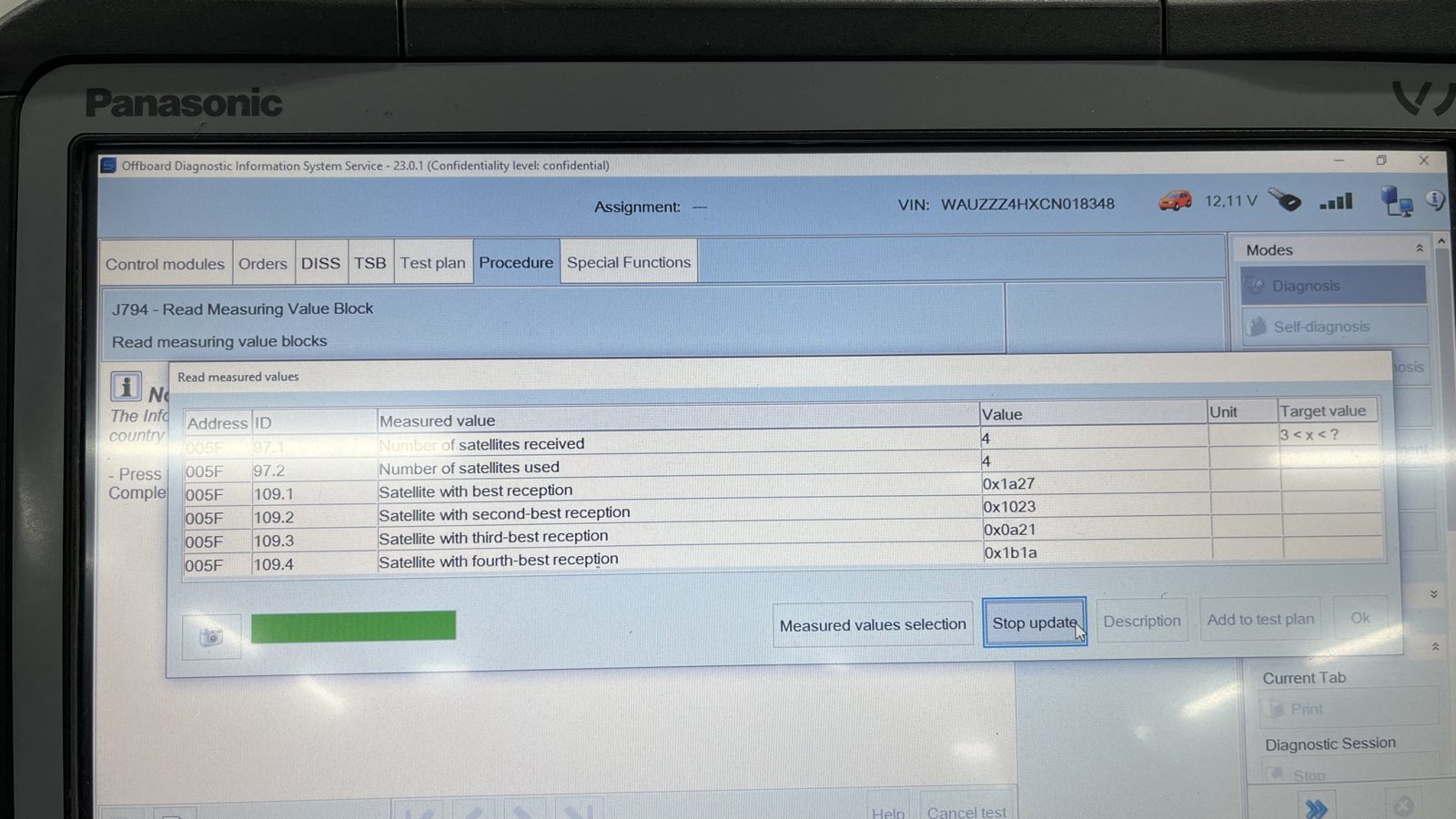
Now, notice something important. The symptom can be exactly the same: your car has no pulling power at low revs. But the causes can be completely different. That's why it drives me mad when someone decides to replace the turbo without checking what's actually going on first. That's not diagnostics. That's throwing parts at a problem and hoping for the best. And guess who's left paying the bill? You.
How do we check whether turbo lag is normal?
At Das Auto Service, we don't start by guessing. First, we need to see what the engine is asking for and what it's actually getting. Because how the car feels from behind the wheel matters, but the measurements tell us what's really happening inside the system. Here's how we approach it.
- We compare requested and actual turbo boost pressure. The engine control unit knows how much boost pressure it wants, and the sensors tell us how much it's actually getting. If there's a big difference between the two, we start looking for the cause. You can read more about this in my article on diagnostic measuring blocks.
- We carry out a boost leak test. We check whether the air being compressed by the turbo is escaping through the hoses or intercooler. After all, there's not much point in the turbo doing its job if the pressure is disappearing before it reaches the engine.
- We check the turbo mechanism. We need to make sure the control system is working properly and nothing is sticking. Only after these checks can we tell you whether the fault is actually in the turbo or somewhere else.
WARNING! Don't try to get rid of turbo lag with an ECU remap before finding out what's causing it. That kind of modification can put extra strain on the turbo and clutch. If there's already a fault, adding more power won't fix it.
Tip from Kris Mladenov: If turbo lag has suddenly appeared, don't put it down to the way your car drives. There's a reason for it, and that reason needs to be found. Start with proper diagnostics, check the boost pressure and turbo control system, and only then think about repairs. That's how you avoid replacing perfectly good parts for no reason.
I hope you've found this article useful! If you have, I'd love you to share it with a friend who's wondering why their car has no power at low revs. My mission has always been simple: when I know something, I want more people to know it too. Because the better you understand your car, the harder it is for someone to convince you to pay for a repair you never needed in the first place.
Read more
- Diagnostics
- Routine servicing
- 2.0 TDI Turbo Problems: Whistling, Smoke and Power Loss
- Oil in TDI Intercooler: Turbo or Breather?
- VAG Live Data Diagnostics: What the Readings Reveal
Frequently asked questions
What is turbo lag?
Turbo lag is the short delay between pressing the accelerator and the turbo producing enough boost pressure. A little delay is normal, but an excessive delay can be a sign of a problem.
Why does my car have no power at low revs?
The turbo may simply not have built up enough boost pressure yet. But if your car used to pull normally, the cause could be a sticking turbo mechanism, a boost leak, a turbo control problem, or a blocked DPF or catalytic converter.
Can turbo lag be eliminated?
Turbo lag can be reduced, but it can't always be eliminated completely on every turbocharged engine. If the delay is caused by a fault, you need to fix the underlying problem first, not try to hide it with an ECU remap.