"AdBlue additive" – I hear that quite often, and I understand why people get confused. Many drivers think AdBlue is something you add to diesel to help the engine run better. But AdBlue has absolutely no business going into the fuel tank! It has its own separate tank and a completely different job. And because your car has several reservoirs for different fluids, I want to explain what goes where, what each fluid does and how to avoid a mistake that could end up costing you money out of your own pocket.
What are AdBlue, coolant and screenwash?
These three fluids do completely different jobs, and you can't use one in place of another. I know it can seem confusing if you don't work with cars every day. But it's actually very simple. Each fluid has its own place and a specific job to do.
- AdBlue – used in diesel engines fitted with an SCR system. This system cleans up the exhaust gases before they leave through the exhaust pipe. AdBlue doesn't mix with the diesel. It goes into a separate tank, where the system draws it from to help clean up the exhaust gases.
- Coolant (antifreeze) – the fluid that cools your engine and helps it stay at its normal operating temperature. Without the right amount of coolant, your engine temperature can start climbing. And trust me, an overheating engine is the last thing you want.
- Screenwash – used to clean your windscreen and, on cars fitted with headlight washers, the headlights too. It has nothing to do with cooling the engine or cleaning up exhaust gases. Its job is simply to help you see clearly through the windscreen.
That's why you shouldn't think of these fluids as things you just top up whenever they run low. Each one works in a completely different part of your car. And if you pour one into the wrong reservoir, you could end up with a much bigger problem than a simple top-up.
Where do AdBlue, coolant and screenwash go?
This is where I really want you to pay attention. The reservoirs aren't in the same places on every VW, Audi, Škoda, SEAT or other model. Just because you've seen where a fluid goes on another car doesn't mean yours is the same. Check your own car first.
- AdBlue – look for the blue cap. It's usually next to the diesel filler, but on some models you'll find it under the bonnet or in the boot. It's a separate tank designed for AdBlue only.
- Coolant – goes into the expansion tank under the bonnet. This tank is part of the engine's cooling system, and its cap is pressurised. Never open it when the engine is hot. You could seriously burn yourself.
- Screenwash – goes into the reservoir with a cap showing a windscreen being sprayed with water. That's the easiest way to recognise it. Even so, check the symbol before you start pouring.
If you're not sure where a particular reservoir is, open your car's owner's manual. It will show you exactly where to find it. Don't guess, and don't pour anything in just because the cap looks familiar. Spending a minute checking is much better than having to work out how to fix an expensive mistake afterwards.
What are the most common mistakes when topping up fluids?
The worrying thing about these mistakes is that they usually happen because someone's not paying attention, rather than because they don't know what they're doing. You're in a hurry, you open a cap, start pouring and only then wonder whether you've picked the right reservoir. That's why I want you to remember these three situations.
- AdBlue in the diesel tank – this is a serious mistake. If you've poured AdBlue into the fuel tank, do not start the car. The contaminated fuel needs to be pumped out and the system cleaned. The sooner you stop, the better.
- Screenwash in the coolant – these two fluids aren't designed to work together. One cleans your windows, while the other cools your engine. If you've mixed them up, don't assume everything is fine just because they're both liquids.
- Water in the AdBlue tank – that's another mistake. AdBlue must be used as supplied, without diluting it with water. Don't try to top it up with something else just because you haven't got any AdBlue handy.
There's something else I want you to understand. If you've poured the wrong fluid into a reservoir, don't try to fix the mistake by adding more of the correct one. That won't remove what's already gone in. First, we need to establish exactly what has entered the system.
WARNING! If you've poured AdBlue into the fuel tank, do not start the engine or even attempt to start it. Give us a call and we'll tell you what to do next. The system must be cleaned before the car is used again.
How often should I check and top up these fluids?
There's no single interval that applies to all three. You top up AdBlue when the car tells you to, check the coolant regularly and make sure your screenwash is suitable for the season. Let me explain what I look out for and what I recommend you do.
- AdBlue – top it up when your car gives you a warning. Don't ignore messages on the dashboard. On some diesels, you may see a warning that the engine won't start after a certain number of kilometres. I've explained exactly what this means in my article AdBlue on the 2.0 TDI.
- Coolant – check the level every month when the engine is cold. At Das Auto Service, I recommend changing the coolant every third heating season. It's also important to use the correct coolant, because you shouldn't just mix different types together. Have a read of my article on whether different types of coolant can be mixed.
- Screenwash – keep an eye on the level and top it up whenever necessary. In winter, use winter screenwash with frost protection. Don't wait until the first really cold morning to remember it. I've explained everything in my article on which screenwash to use in winter.
These are small checks you can easily do yourself. You don't need any special equipment to check your coolant level or see whether you've got enough screenwash. And when your car warns you about AdBlue, just don't put off topping it up.
Which fluids should I use in my car?
When it comes to AdBlue and coolant, I prefer genuine products designed for the system in question. The reason is simple: I want to know exactly what we're putting into your car. With coolant in particular, it's important that the fluid meets your engine's requirements. Don't choose it just by the colour of the bottle.
Tip from Kris Mladenov: Remember one very simple thing: the AdBlue cap is blue, and the diesel pump nozzle is larger. If something doesn't fit or you're not sure you've opened the right cap, stop. Check your owner's manual before pouring anything in. One minute of care could save you a lot of trouble.
I hope you've found this article useful! If you have, I'd really appreciate you sharing it with a friend who drives a diesel or simply wants to look after their car properly. My mission has always been simple: when I know something useful, I want more people to know it too. Because getting the right information at the right time can save you from a mistake you'd otherwise have to pay for out of your own pocket.
The solution in our shop
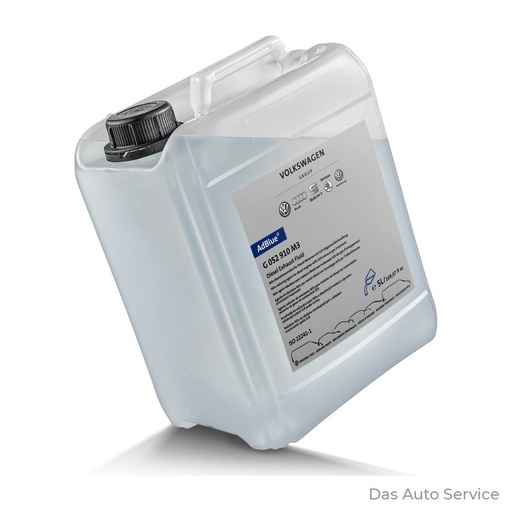
Genuine VAG AdBlue® fluid G052910M4 10l
Genuine AdBlue, 10 litres, designed for diesel vehicles with an SCR system. Only use it in the separate AdBlue tank.
View in shop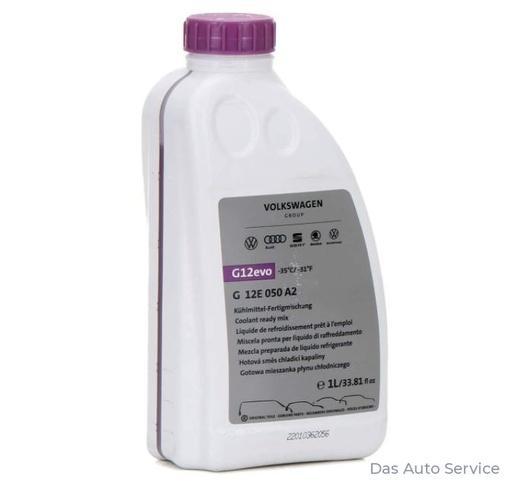
Genuine VAG G12Evo antifreeze G12E050A2 1.0l
Genuine G12evo coolant for the cooling systems of compatible vehicles. Before topping up, check that it's the correct coolant for your engine.
View in shopRead more
- Routine servicing
- Genuine VAG parts and accessories
- AdBlue No Start in 1000 km: 2.0 TDI (EA288)
- Winter Windscreen Washer Fluid: What Should You Use?
- G12 G13 G12evo Coolant Compatibility Guide
Frequently asked questions
Is AdBlue a diesel fuel additive?
No. AdBlue is not a fuel additive and must never be poured into the diesel tank. It's used by the SCR system to clean up exhaust gases.
What happens if I put AdBlue in the diesel tank?
Do not start the engine. The contaminated fuel must be pumped out and the system cleaned before the car is used again.
Where do I put AdBlue?
Into a separate tank with a blue cap. It's usually next to the fuel filler, but on some models you'll find it under the bonnet or in the boot.
Can I top up AdBlue with water?
No. Never dilute AdBlue with water or pour other fluids into its tank. Only use the product designed for the system.