You start your car in the morning, and for the first few seconds the engine shakes as if it's only running on three cylinders. Then it settles down. There's more vibration at idle than there used to be, and when you put your foot down, it just doesn't pull like it once did. You've already changed the spark plugs and the ignition coils. Sound familiar? If you've got a direct-injection petrol engine, there's a good chance you're dealing with TFSI carbon build-up on the intake valves.
Why does TFSI carbon build-up on intake valves happen?
On older petrol engines, fuel was injected before the intake valve, washing over it every time. But things work differently on direct-injection FSI, TFSI and TSI engines. The petrol goes straight into the cylinder, leaving the valve dry. Meanwhile, oil vapour from the crankcase ventilation system still passes over it. That vapour sticks to the hot valve, gets baked on and, over the years, turns into hard, black carbon deposits.
And that's where the trouble starts. The carbon narrows the passage the air flows through and can stop the valve from closing properly. The more miles you put on the car, the thicker that layer gets.
Which engines suffer most from carbon build-up?
- 2.0 TFSI from the EA113 generation, found in the Golf 5 GTI, A3 8P, A4 B7, Leon 2 and Octavia 2 RS.
- 1.8 and 2.0 TFSI from the first and second generations of EA888.
- 3.2 FSI and especially the 4.2 FSI V8.
Things improved with the third generation of EA888. Many versions also have a second set of injectors in the intake ports, which greatly reduces carbon build-up.
How can you tell if your intake valves are clogged with carbon?
- The engine shakes and runs roughly when cold, but settles down once it warms up.
- The engine misfires and stores fault codes from P0300 to P0304.
- You notice stronger vibrations than usual when the engine is idling.
- The car doesn't pull as well as it used to, and it's starting to use more petrol.
Can you remove the carbon with a fuel additive?
No. And I'll tell you why. The additive goes into the petrol, but on a direct-injection engine, that petrol never passes over the intake valves. People might try to sell you all sorts of miracle liquids that promise to "clean your engine", but they simply can't reach these carbon deposits. Think about it. How can you clean something if the cleaner never even touches it?
What's the proper way to clean carbon off the valves?
First, we remove the intake manifold. Then we turn the engine until the valves in the cylinder we're cleaning are closed. We remove the carbon by blasting it with finely crushed walnut shells under pressure. Yes, actual walnut shells! Sounds strange, I know, but there's a good reason for it. They're hard enough to remove the carbon but soft enough not to damage the metal. Afterwards, we carefully clean and vacuum everything out. Nothing must be left behind in the intake port.
If your engine is burning a lot of oil, cleaning the valves alone won't fix things. You'll just be putting off the problem. First, you need to find out why the engine is burning oil and fix the cause. I've explained more in my article about excessive oil consumption in 1.8 and 2.0 TSI/TFSI engines.
How can you reduce carbon build-up?
- Change your engine oil and oil filter every 10,000 km or once a year, whichever comes first, regardless of the oil used. Always use the correct oil for your engine. Old oil produces more vapour.
- Check the crankcase ventilation system. If its valve is leaking, oil ends up going straight towards the intake valves.
- Whenever you can, take the car on a longer drive, including a run on the motorway. Doing nothing but short trips around town is the worst option.
A tip from Kris Mladenov: If you've got an older-generation TFSI and the car has already covered 100,000 km, ask your mechanic to check the intake valves with an endoscope – a small camera – at your next service. It only takes a few minutes, and you'll be able to see what's going on inside without having to take anything apart.
I hope you now have a better idea of why your TFSI might be shaking in the morning and what's building up on those intake valves. If you've found this helpful, send the article to a friend who drives a petrol car. They might be wondering about exactly the same thing.
The solution in our shop
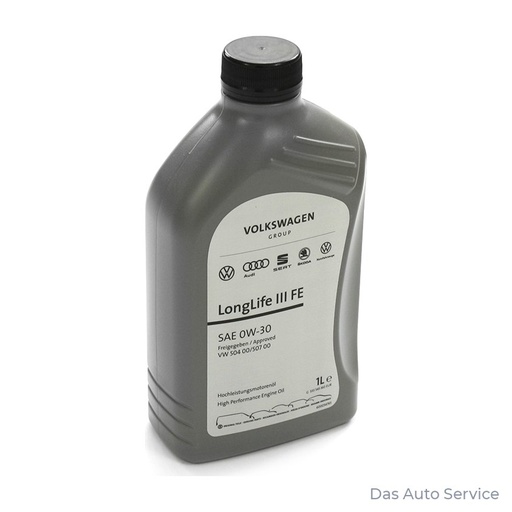
Genuine LongLife III FE 0W30 engine oil
Genuine LongLife III FE 0W30 engine oil, 1 litre. For topping up between oil changes.
View in our shop
Genuine LongLife III FE 0W30 engine oil 5L
Genuine LongLife III FE 0W30 engine oil, 5 litres. For an oil change, provided it meets your engine's specification.
View in our shopRead more
- Complete engine rebuilds
- Diagnostics
- 1.8 and 2.0 TSI/TFSI engines – excessive oil consumption
- How can you tell if your 1.8 or 2.0 TFSI has a timing chain problem?
- When should I change the oil and service parts on my VAG car?
- 1.5 TSI (EA211 evo): why does it hesitate when pulling away cold?
- 1.2 and 1.4 TSI (EA111): timing chain rattle, tensioner and turbo problems
Frequently asked questions
Why does carbon build up on TFSI intake valves?
Because with direct injection, petrol goes straight into the cylinder instead of washing over the intake valves. Oil vapour from the crankcase ventilation system sticks to the valves, gets baked on by the heat and gradually turns into hard carbon deposits.
Do fuel additives help clean the intake valves?
Not with direct injection. Petrol never passes over the intake valves, so the additive simply can't reach the carbon deposits on them.
How do you remove carbon deposits from intake valves?
We remove the intake manifold, make sure the valves in the cylinder we're working on are closed, then blast away the carbon using finely crushed walnut shells under pressure.