"My car's smoking. Can I keep driving, or should I stop?" I hear this question almost every day at the workshop. The truth is, exhaust smoke colours can tell you a lot about the condition of your engine before we've even connected the diagnostic equipment. White, blue or black – each points towards a different problem involving coolant, oil or fuel. But! Not every cloud of smoke means something's broken. I'll explain how to tell the difference and when you really need to worry.
White exhaust smoke on a cold morning – is it normal?
You start the car in the morning, glance in the mirror and see a white cloud behind you. Don't worry if it's just a thin cloud of steam that disappears after a few minutes as the engine warms up. That's condensation evaporating from the exhaust, especially during autumn and winter when the weather's damp and you're making short journeys. There's no noticeable smell and it leaves no residue. Just water, not a fault.
But if the engine is already warm and thick white smoke is still coming out of the exhaust, that's a different story. Now we need to find out where it's coming from.
What does thick white exhaust smoke with a sweet smell mean?
If your car produces thick white smoke even when the engine is warm, there's a sweet smell and the coolant level keeps dropping without a puddle underneath, coolant is most likely getting into the cylinders and burning. That's serious. There are three main places we look for the cause:
- Blown cylinder head gasket – coolant is getting into places it shouldn't.
- Cracked cylinder head or engine block.
- Cracked EGR cooler on diesel engines.
On TDI engines, the EGR cooler is a well-known culprit. Coolant enters the exhaust system, the car produces white smoke and the level in the expansion tank keeps dropping. I've explained this in detail in White Exhaust Smoke from a Diesel Engine. And if you can smell something sweet inside the car as well, read Why Is My Car Losing Coolant and Smelling Sweet?.
WARNING! If your car is producing thick white smoke and losing coolant, stop! Don't risk driving it to the workshop. The engine could overheat within minutes, the cylinder head could warp and what started as a head gasket problem could turn into a complete engine rebuild. And you'll be the one paying the bill.
What if a diesel produces white smoke that smells of fuel?
In this case, the smoke is more greyish-white and has a sharp smell of unburnt diesel. It usually happens on a cold start, the engine shakes and sometimes the glow plug warning light flashes. The problem is that the fuel isn't burning properly. A faulty glow plug is the most common culprit, but it could also be an injector that isn't spraying correctly. This isn't the same as burning coolant.
The good news is that there's usually no immediate danger to the engine. The bad news is that if you leave it like this, one morning it simply won't start. I've explained what we check when this happens in TDI Hard to Start When Cold – Glow Plugs and Checks.
Why is my car producing blue exhaust smoke?
Blue or bluish-grey smoke means the engine is burning oil. You might notice it when starting the car in the morning, after a long period of idling or when driving downhill. And that's when all the guesswork starts on the forums: "The turbo's gone", "It's the valve stem seals", "It's the piston rings". Don't jump to conclusions. There are several possible causes:
- Turbocharger – worn seals allow oil into the intake or exhaust.
- Valve stem seals – oil seeps past the valves, particularly when starting the engine.
- Piston rings – excessive oil consumption is a known problem on some 1.8 and 2.0 TFSI engines.
- Crankcase ventilation – when the system fails, oil ends up where it shouldn't.
- Overfilled engine – the oil level is above the maximum mark.
What really annoys me is when someone replaces a turbo just because the car is producing blue smoke. Then it carries on smoking because the actual problem was the crankcase ventilation system. That's why we take measurements first and replace parts afterwards. Also read My Car Is Burning Oil but There's No Smoke, as well as Oil in the Intercooler – Turbo or Crankcase Ventilation?.
What does black smoke from the exhaust mean?
Black smoke is soot – the fuel isn't burning completely because there isn't enough air. On an older diesel without a DPF, a little black smoke under hard acceleration can be normal. But on a modern TDI with a DPF, you shouldn't see any black smoke. If you do, we also check whether the filter is cracked or has been removed. And let's be clear – we don't remove DPFs or EGR systems. We find the actual fault.
Most often, the cause is one of the following:
- A blocked air filter restricting airflow.
- A mass airflow sensor giving incorrect airflow readings.
- A split intercooler hose – the turbo builds boost, but the air escapes.
- An EGR valve that isn't closing properly.
- Injectors that leak or deliver too much fuel.
Owners often arrive saying, "It's got no power, it's blowing black smoke and the engine management light is on." Those symptoms point us in the right direction, but they're not a diagnosis. I've covered the details in Black Smoke Under Acceleration – MAF, EGR or Injectors?.
How do we diagnose exhaust smoke colours at the workshop?
The colour points us in the right direction, but we don't replace parts based on smoke colour alone. First, we read the fault codes with diagnostic equipment and check live data – turbo boost pressure, airflow readings and injector corrections. With white smoke, we pressure-test the cooling system and check for combustion gases in the coolant. With blue smoke, we measure crankcase pressure and engine compression, while with black smoke, we look for boost leaks and check the injectors. That's how you find the actual fault instead of replacing parts and hoping for the best.
How can I protect my engine from these problems?
Many of these problems start with missed servicing. For cars driven in Bulgaria, I recommend changing the engine oil and all filters – oil, fuel, air and cabin – together every 10,000 km or once a year, whichever comes first. Even if you're using LongLife oil. The manufacturer's extended service intervals are designed around environmental standards, but I'd rather protect your engine.
We replace the crankcase ventilation filter every 60,000 km on petrol engines and every 80,000 km on diesels. We change the coolant every third heating season because old coolant can cause tiny pits in the aluminium engine block, and we check its protective properties every autumn. I also recommend having the car inspected every 6 months. That way, we can catch oil leaks and dropping coolant levels before they become serious problems.
Advice from Kris Mladenov: My advice is simple: don't get used to the smoke! If you notice a new smoke colour or white steam that doesn't disappear once the engine is warm, check the oil and coolant that same day and book a diagnostic check, but don't keep driving if you suspect a serious fault. An early diagnosis could save you from a complete engine rebuild. And when major repairs really are necessary, we also carry out complete engine rebuilds using genuine parts.
I hope you've found this article useful! If you have, I'd be glad if you shared it with a friend whose car is smoking. I'm Kris Mladenov, and my mission is simple – when I know something, I want more people to know it too. Because one timely check can save you a lot of headaches.
The solution in our shop
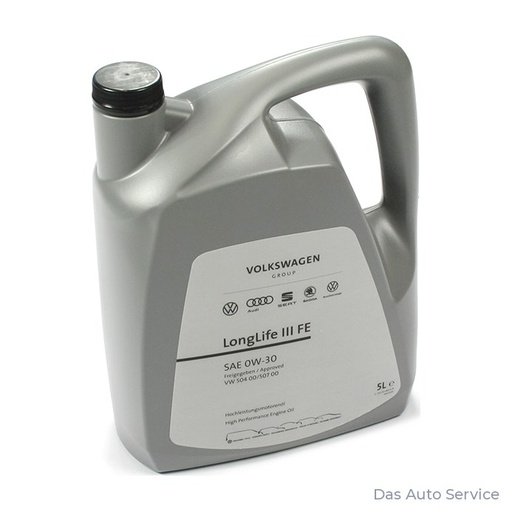
Genuine LongLife III FE 0W-30 Engine Oil 5L
Genuine LongLife III 0W-30 engine oil for servicing every 10,000 km or once a year, provided it's suitable for your particular engine.
View in shop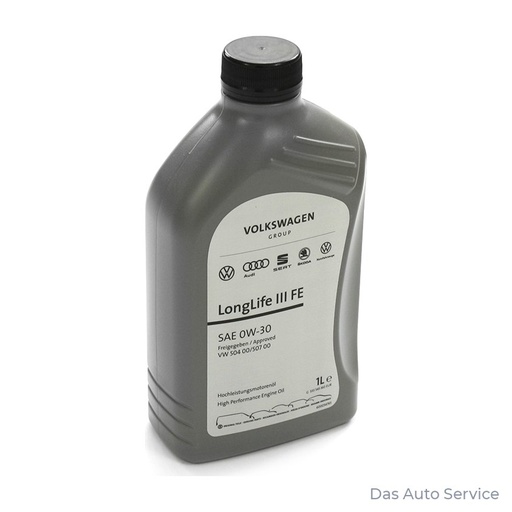
Genuine LongLife III FE 0W-30 Engine Oil 1L
Genuine LongLife III 0W-30 engine oil in a 1-litre bottle, handy for topping up between services when your engine requires this specification.
View in shop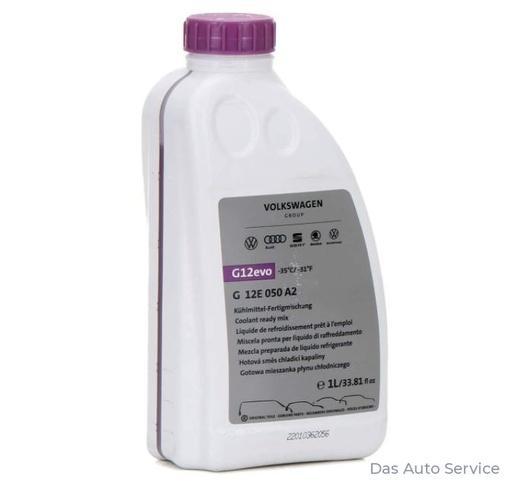
Genuine VAG G12evo Coolant G12E050A2 1.0L
Genuine G12evo coolant, to be replaced every third heating season.
View in shopRead more
- Diagnostics
- Complete Engine Rebuilds
- White Exhaust Smoke from a Diesel – Why Does It Smoke When Warm?
- Black Smoke Under Acceleration – MAF, EGR or Injectors?
- My Car Is Burning Oil but There's No Smoke – Where Is the Oil Going?
- TDI Hard to Start When Cold – Glow Plugs and Checks
Frequently Asked Questions
Is white exhaust smoke normal in the morning?
Yes, if it's a thin cloud of steam that disappears after a few minutes. If there's still thick white smoke when the engine is warm, a sweet smell and a dropping coolant level, there's a problem.
What does blue smoke from the exhaust mean?
The engine is burning oil. The cause could be the turbo, valve stem seals, piston rings or crankcase ventilation system. We carry out tests first and only replace parts when necessary.
Why does my diesel produce black smoke?
The fuel isn't burning completely. We check the air filter, mass airflow sensor, intercooler hoses, EGR and injectors. A TDI with a DPF shouldn't produce visible black smoke.
Can I keep driving if there's white smoke and I'm losing coolant?
No! Stop and call the workshop. If the engine overheats, the cylinder head can warp, turning a relatively straightforward repair into something much more serious.